
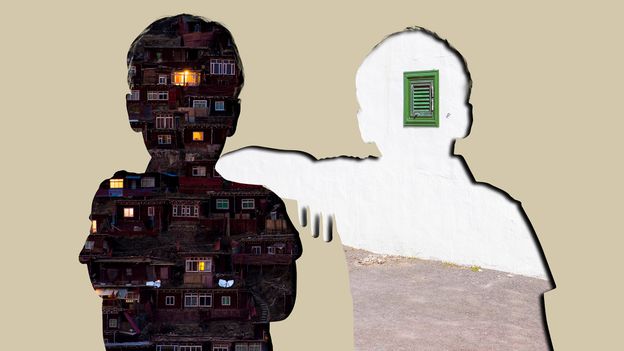
"While genetics provides the biological blueprint for our existence, culture acts as the master architect, physically and psychologically sculpting our personalities, moral frameworks, and perceptions of reality based on where we are raised."
The age-old debate of nature versus nurture has long sought to determine whether we are born with a fixed identity or if we are the malleable products of our surroundings. Recent advancements in cross-cultural psychology suggest that identity is far more fluid than previously believed, revealing that the "self" is not a static monument but a dynamic construct shaped by the social, ethical, and cognitive norms of our environment. By examining how different societies influence everything from our visual perception to our core personality traits, researchers are discovering that who we are is inextricably linked to where we have been.
Imagine a sweltering afternoon in a rural village near Kolkata, India. Two young cousins sit on the floor, sharing a simple meal of puffed rice seasoned with mustard oil. One child, raised in Sweden, nods with a sense of burgeoning cultural dissonance as the other asks, "Is it true that people in Sweden eat cows and pigs?" The follow-up question—"So do they eat dogs and cats too?"—is a masterclass in local logic. To a child raised in a culture where cows are sacred and vegetarianism is a moral standard, the distinction between eating a heifer and a hound is arbitrary. To the child raised in Scandinavia, where beef is a dietary staple and pets are family, the distinction is absolute.
This anecdote serves as a window into a profound psychological reality: our environments do more than just provide a backdrop for our lives; they dictate the very lenses through which we view right, wrong, and the self. If that Swedish child had been raised in the heart of West Bengal, would they possess the same sense of humor, the same dreams, or the same moral compass? According to the emerging field of cross-cultural psychology, the answer is a resounding no.
The Genetic Baseline
To understand the impact of culture, one must first acknowledge the role of biology. Every human being possesses a unique genetic code that remains constant regardless of geography. However, as Ziada Ayorech, a psychiatric geneticist at the University of Oslo, points out, DNA is not destiny. Ayorech’s own life—spanning Uganda, Canada, the United Kingdom, and Norway—reflects the interplay between heritable traits and environmental influences. She argues that while our genetic makeup provides a range of possibilities, the specific traits that manifest are often those nurtured by our surroundings.
Scientists often utilize twin studies to untangle these influences. By comparing identical twins, who share 100% of their DNA, with non-identical twins, who share roughly 50%, researchers can estimate the "heritability" of certain traits. A landmark 2015 meta-analysis, which reviewed 50 years of research involving 14 million pairs of twins across 17,000 different traits, reached a startlingly consistent conclusion: genetics accounts for, on average, only about 50% of the variance in human behavior and characteristics. The remaining 50%—encompassing everything from political leanings to susceptibility to mental health conditions—is driven by the environment.
The Neuroplasticity of Culture
The influence of culture is not merely psychological; it is physiological. Ching-Yu Huang, a cross-cultural psychologist at National Taiwan University, asserts that culture is an "absolutely crucial part" of biological development. According to Huang, the brain is a highly plastic organ that solidifies neural pathways based on the experiences it integrates during its formative years.
"The brain you have right now would be very different if you were born and had grown up in Taiwan, even if you have the same DNA," Huang explains. This suggests that culture acts as a repetitive stimulus that carves specific "grooves" into our neurology. A child raised in a linguistic environment that emphasizes tonal shifts, or a social environment that requires constant monitoring of others’ emotions, will develop a brain physically optimized for those specific demands.
Challenging the Universalist Myth
For much of the 20th century, the field of psychology operated under the assumption of universalism. It was believed that the results of behavioral studies conducted in the United States and Europe could be applied to all of humanity. However, Vivian Vignoles, a cross-cultural psychologist at the University of Sussex, notes that this "WEIRD" (Western, Educated, Industrialized, Rich, and Democratic) bias ignored the vast diversity of the human experience.
When researchers began looking beyond the West, they found that fundamental psychological constructs varied wildly. For instance, Western cultures are predominantly individualistic. In these societies, people tend to define themselves through internal traits—viewing themselves as "independent," "ambitious," or "creative." In contrast, many East Asian cultures are collectivistic, where identity is defined through social roles and relationships. In Japan, a person is more likely to define themselves as a "devoted son," a "loyal employee," or a "member of a specific community" rather than focusing on isolated personality traits.
Mapping Personality Across Borders
The impact of geography on personality was further highlighted in a 2022 study that compared personality traits across 22 countries. The research identified distinct "clusters" of traits associated with specific cultural values. Countries that emphasize self-discipline and social order—such as India, China, Germany, and Albania—tended to produce individuals who scored higher in measures of dutifulness, organization, and conscientiousness.
Conversely, countries with more egalitarian and individualistic social structures—including Canada, Norway, Australia, and the Philippines—produced populations that scored higher in "openness to experience" and "agreeableness." This suggests that the "ideal" personality type in a given society is not just a social preference but a developmental outcome. We become what our culture rewards.
The Lens of Perception
Culture even dictates how we process visual information. In a famous study, participants were asked to describe underwater scenes. Western participants typically focused on the "salient" objects—the biggest, brightest fish in the foreground. They described the scene in terms of individual actors. Japanese participants, however, focused on the context. They were far more likely to mention the color of the water, the plants in the background, and the relationship between the fish and their environment.
This difference in "analytic" versus "holistic" thinking extends to how we judge human behavior. This is often seen in the "fundamental attribution error," a psychological phenomenon where people overemphasize personality and underemphasize situation. Vignoles notes that Westerners are more likely to see a person crying in a doctor’s office and conclude they are an "anxious person." Someone from a more context-aware culture might instead conclude that the person is simply in a "stressful situation."
The Monumental vs. The Malleable Self
Another critical distinction lies in how we perceive the stability of the self. Western cultures often adopt a "monumentalist" view, treating the self as a stable, unchanging entity—a monument to one’s own authenticity. In this framework, "changing" who you are is often seen as a sign of being "fake" or inconsistent.
In many East Asian cultures, the self is viewed as "malleable." Fluidity is seen not as a lack of integrity, but as a sign of maturity and social intelligence. In these societies, it is expected that a person will be different versions of themselves depending on whether they are with their boss, their parents, or their friends.
A Dialogue Between Nature and Nurture
While the evidence for cultural shaping is overwhelming, researchers like Vignoles caution against oversimplification. Identity is an incredibly complex tapestry woven from genetics, culture, socioeconomic status, and individual life choices. It is nearly impossible to completely disentangle these threads.
However, the takeaway for our understanding of identity is profound. We are not merely the products of our genes, nor are we entirely the products of our choices. We are a continuous dialogue between our biological potential and the world that greets us at birth. Had you grown up on the other side of the globe, your DNA would be identical, but the person looking back at you in the mirror—their morals, their memories, and even the way they see the color of the sea—would be a stranger.