
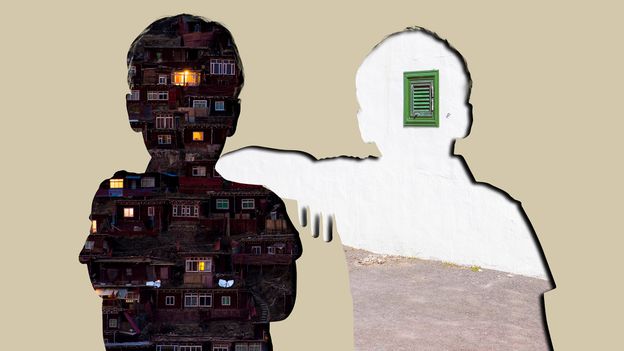
"While DNA provides the fundamental blueprint of our biology, culture acts as the primary architect of the mind, shaping our neural pathways, moral frameworks, and perceptions of reality into a version of ourselves that is inseparable from our surroundings."
The age-old debate of nature versus nurture has long sought to determine whether our identities are etched into our genetic code or forged by the environments in which we reside. Recent advancements in cross-cultural psychology and psychiatric genetics suggest that the answer is not a simple binary, but a complex, lifelong dialogue between our biological predispositions and the cultural landscapes we navigate. By examining how different societies prioritize individualism, social roles, and even the way we perceive physical objects, researchers are uncovering the profound extent to which our "self" is a product of our geography.
The Mirror of Culture: A Personal Awakening
Consider the experience of a child raised at the intersection of two vastly different worlds. In a small village near Kolkata, India, a young visitor from Sweden might find themselves confronted with a question that shatters their perceived normalcy: "Is it true that people in Sweden eat cows and pigs? So do they eat dogs and cats too?" To a ten-year-old raised in a European context, where meat-eating was the unquestioned norm, this logical progression is startling. In the Swedish context, cows were seen as a resource; in the Indian village, through the eyes of a cousin who rescued animals and practiced vegetarianism, the distinction between a pet and a food source was non-existent.
These moments of "cultural friction" reveal the invisible scaffolding of our identities. If that same child had been raised entirely within the moral and social framework of India, would their dreams, hobbies, and sense of humor have evolved differently? Would the very core of their "self" be recognizable? These are the questions that cross-cultural psychologists are now answering with empirical data, suggesting that our environment does not just influence our choices—it fundamentally rewires our brains.
The Genetic Baseline and the 50% Rule
To understand the impact of culture, one must first establish the role of biology. Every human being possesses a unique DNA sequence that remains constant regardless of their location. However, as Ziada Ayorech, a psychiatric geneticist at the University of Oslo, points out, DNA alone is not a destiny. Ayorech, whose own life spans Uganda, Canada, the UK, and Norway, notes that the different perspectives she gained in each location were not merely cosmetic changes but fundamental shifts in her worldview.
To quantify this, scientists rely heavily on twin studies. By comparing identical twins (who share 100% of their DNA) with non-identical twins (who share roughly 50%), researchers can isolate the influence of genetics. A massive 2015 meta-analysis, which synthesized five decades of research involving 14 million twins and 17,000 different traits, reached a landmark conclusion: genetics accounts for approximately 50% of the variance in human traits. This leaves the remaining 50% to the environment—the culture, the family, the education, and the unique experiences that define a life.
Neuroplasticity: The Brain as a Cultural Artifact
The impact of the environment is not just psychological; it is physiological. Ching-Yu Huang, a cross-cultural psychologist at National Taiwan University, asserts that the brain itself is a "cultural artifact." According to Huang, the neural pathways that form during our developmental years are a direct reflection of our cultural immersion. "The brain you have right now would be very different if you were born and had grown up in Taiwan, even if you have the same DNA," she explains.
This neuroplasticity means that the brain integrates cultural experiences into its physical structure. The languages we speak, the social hierarchies we navigate, and the sensory inputs we prioritize all leave physical imprints on our gray matter. Consequently, identity is not a static monument housed within the skull, but a dynamic process that is constantly being sculpted by the cultural "weather" around it.
Beyond Universalism: The Rise of Cross-Cultural Psychology
For much of the 20th century, the field of psychology operated under the assumption of universalism—the belief that human behavior and mental processes were identical across the globe. Most studies were conducted in Western, Educated, Industrialized, Rich, and Democratic (WEIRD) societies, with the results generalized to all of humanity. Vivian Vignoles, a cross-cultural psychologist at the University of Sussex, notes that this assumption was fundamentally flawed.
As researchers began to look beyond the West, they discovered profound differences in how people perceive themselves. In Western cultures, individualism is the dominant paradigm. People tend to define themselves through personal traits—"I am smart," "I am funny," or "I am kind." In contrast, in many East Asian cultures, such as Japan, identity is more collectivistic. Individuals are more likely to define themselves through their social roles and relationships—"I am a son," "I am a student," or "I am a member of this company."
The Spectrum of Personality and Self-Discipline
A comprehensive 2022 study of personality traits across 22 countries further highlighted these cultural clusters. The research found that cultures emphasizing self-discipline and social order—including India, China, Hong Kong, Albania, France, and Germany—consistently scored higher on measures of dutifulness and organization. In these societies, the "ideal self" is often one that fulfills obligations and maintains social harmony.
Conversely, countries with more egalitarian and individualistic leanings—such as Canada, Norway, Australia, the Philippines, and the UK—showed higher levels of agreeableness and openness to experience. In these contexts, the "self" is viewed as a project of personal exploration and expression rather than a vessel for social duty.
Monumentalism vs. Malleability
Another fascinating distinction identified by researchers like Vignoles is the concept of "monumentalism." In many Western cultures, the self is viewed as a stable, unchanging entity—a monument to one’s true nature. This leads to a high value being placed on "authenticity" and "being true to oneself."
In many East Asian cultures, however, the self is viewed as more malleable and context-dependent. This flexibility allows individuals to adapt their behavior to different social situations without feeling that they are being "fake." From this perspective, the ability to change based on the needs of the group is a sign of maturity and social intelligence, rather than a lack of character.
How We See the World: Analytic vs. Holistic Thinking
The influence of culture even extends to basic visual perception. In a famous study, participants were asked to describe underwater scenes. Western participants typically focused on the "salient" objects—the largest fish or the brightest coral. They viewed the scene analytically, isolating individual components from their surroundings.
In contrast, Japanese participants described the scene holistically. They focused on the context—the color of the water, the relationship between the fish and the plants, and the overall environment. This suggests that culture trains our eyes to see the world differently; some are taught to see the "hero" of the story, while others are taught to see the entire "ecosystem."
The Attribution Bias: Person vs. Situation
These differing perspectives also change how we judge others. In Western societies, there is a strong tendency toward the "fundamental attribution error"—the habit of attributing a person’s behavior to their personality rather than their situation. For example, if a person appears anxious in a dentist’s waiting room, a Westerner is more likely to conclude that the person is an "anxious person" by nature.
In many other cultures, observers are more likely to recognize the power of the situation. They would see the person as "someone who is currently afraid of dental work." This subtle shift in perception has massive implications for how we build legal systems, manage workplaces, and conduct interpersonal relationships.
Conclusion: The Dialogue of Identity
While it is tempting to seek a definitive answer to whether we are born or made, the reality is that we are a continuous dialogue between the two. Our genes provide the potential, but our culture provides the map. As we move through different societies, our brains adapt, our morals shift, and our sense of "self" expands to accommodate new contexts.
Research in cross-cultural psychology reminds us that there is no "default" human experience. We are each a unique intersection of biological inheritance and geographical chance. Understanding this does not diminish our sense of identity; rather, it highlights the incredible adaptability of the human spirit and the profound ways in which we are connected to the world around us. Whether we are "monuments" or "malleable," we are undeniably the children of our culture.