
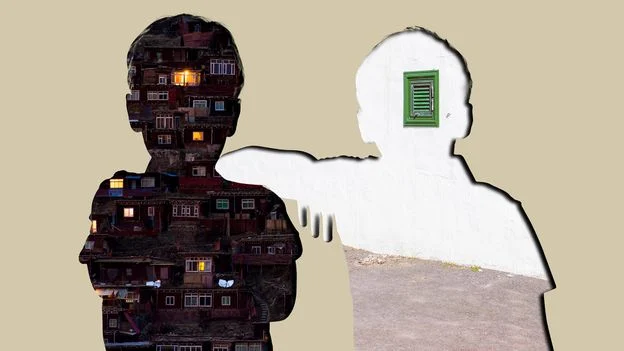
"While genetics provides the foundational blueprint of our existence, it is the cultural landscape we inhabit that constructs our worldview, determining whether we see ourselves as independent monuments or interconnected parts of a greater whole."
The age-old debate of nature versus nurture has long sought to delineate the boundaries between our biological inheritance and our lived experiences. For decades, the scientific community leaned heavily on the universality of human psychology, assuming that the fundamental ways we think, feel, and perceive the world were hardwired into our DNA. However, the burgeoning field of cross-cultural psychology is dismantling this assumption, revealing that our environment—specifically the cultural framework of our upbringing—acts as a secondary architect of the human brain. By examining how different societies prioritize individualism, collectivism, and contextual awareness, researchers are uncovering the profound ways in which "where" we are defines "who" we are.
The journey into understanding the cultural self often begins with the realization of relativity. Consider the disparate perspectives on something as fundamental as dietary ethics. In many Western nations, such as Sweden, meat consumption is a normalized, secular aspect of daily life, where livestock like cows and pigs are viewed primarily as food sources. Conversely, in many regions of India, where vegetarianism is deeply rooted in spiritual and social history, the consumption of such animals is often viewed with a mixture of confusion and moral discomfort. These differences are not merely matters of taste; they are the external manifestations of internal moral compasses calibrated by the societies in which we are raised. If an individual born in Stockholm had instead been raised in a village near Kolkata, their dreams, aspirations, and even their sense of humor would likely have undergone a fundamental shift, raising the provocative question: would they still be the same person?
To answer this, scientists have traditionally turned to the study of genetics. DNA is the constant variable in the human equation; its structure remains the same regardless of geographic relocation. However, as psychiatric geneticist Ziada Ayorech of the University of Oslo notes, DNA alone is insufficient to explain the complexities of identity. Having lived in Uganda, Canada, the United Kingdom, and Norway, Ayorech’s personal trajectory mirrors her professional findings: that the places we inhabit leave an indelible mark on our perspective.
The primary tool for measuring the weight of nature versus nurture is the twin study. By comparing identical twins, who share 100% of their genetic material, with non-identical twins, who share roughly 50%, researchers can isolate environmental influences. A landmark 2015 meta-analysis, which synthesized five decades of research involving 14 million pairs of twins across 17,000 different traits, reached a definitive conclusion: genetics accounts for approximately 50% of the variance in human traits. The remaining 50%—encompassing everything from political leanings and educational attainment to psychiatric resilience—is shaped by the environment.
This environmental half of the identity equation is where culture exerts its most potent influence. Ching-Yu Huang, a cross-cultural psychologist at National Taiwan University, posits that culture is an "absolutely crucial part" of biological development. She argues that the physical structure of the brain—the neural pathways that form and solidify through experience—would look markedly different in an individual raised in Taiwan compared to the same individual raised in the West. This suggests that the brain is not a static organ but a malleable one, continuously sculpted by the cultural signals it receives during its formative years.
Historically, the field of psychology suffered from a "universalist" bias. For much of the 20th century, it was assumed that research conducted on participants in the United States and Europe—often referred to as WEIRD (Western, Educated, Industrialized, Rich, and Democratic) populations—could be applied to all of humanity. Vivian Vignoles, a cross-cultural psychologist at the University of Sussex, notes that this assumption began to crumble as researchers expanded their horizons. They discovered that Westerners tend to be more individualistic, defining themselves through personal traits such as being "intelligent," "charismatic," or "ambitious." In contrast, individuals in many East Asian cultures, such as Japan, are more likely to define themselves through social roles and relationships, such as being a "dutiful son" or a "loyal employee."
These cultural distinctions extend into the very architecture of personality. A 2022 study comparing personality traits across 22 countries found that cultures emphasizing self-discipline and social order—including India, China, and Germany—scored significantly higher on measures of dutifulness and organization. Meanwhile, more egalitarian and individualistic cultures, such as those in Canada, Norway, and Australia, showed higher levels of "openness to experience" and "agreeableness." This suggests that societies "select" for certain personality traits that allow individuals to thrive within their specific social structures.
One of the most striking differences identified by researchers like Vignoles is the concept of "monumentalism" versus "malleability." Western cultures frequently view the "self" as a stable, unchanging entity—a monument that stands firm regardless of the situation. In many East Asian cultures, however, the self is viewed as flexible and context-dependent. This cultural lens changes not only how we see ourselves but how we perceive others.
This divergence in perception was famously illustrated in a study involving underwater scenes. When asked to describe what they saw, Western participants focused almost exclusively on the largest, most prominent fish—the individual "actors" in the scene. Japanese participants, however, provided a much more holistic description, noting the color of the water, the plants, and the relationships between the various organisms. This "holistic" versus "analytic" cognitive style has real-world implications for how we judge human behavior.
In a Western context, if a person appears anxious in a dentist’s waiting room, an observer is likely to conclude that the individual is an "anxious person"—a trait-based attribution. In a more context-sensitive culture, the observer is more likely to recognize that the anxiety is a temporary response to the specific situation of facing a dental procedure. This fundamental difference in attribution can lead to vastly different social outcomes, from how we approach workplace management to how we administer justice in a courtroom.
Despite these compelling findings, experts caution against oversimplification. The interplay between culture, personality, and biology is incredibly complex, and disentangling these threads remains one of the greatest challenges in modern social science. People are not merely passive recipients of culture; they are also its creators and critics. Furthermore, in an increasingly globalized world, many individuals navigate "bicultural" identities, shifting their cognitive lenses depending on their immediate social environment.
Ultimately, the burgeoning research in cross-cultural psychology suggests that the "self" is not a fixed destination but a journey influenced by the terrain we cross. If we had grown up elsewhere, we might indeed be different people—possessing different values, different neural patterns, and different ways of seeing the world. Recognizing this does not diminish our identity; rather, it highlights the incredible adaptability of the human species. It reminds us that our perspective is just one of many possible ways to experience the world, fostering a deeper sense of empathy and a more nuanced understanding of the global human tapestry. As we continue to map the geography of the soul, we find that while our DNA provides the compass, it is our culture that determines the destination.