

"For the first time, an individual has witnessed air pollution particles directly within their own blood, a stark visual confirmation that the microscopic toxins we breathe don’t just affect our lungs, but are actively transported throughout the body, silently impacting every major organ system."

This groundbreaking personal observation underscores the pervasive and insidious nature of modern air pollution. Far from being merely a respiratory irritant, recent scientific investigations are revealing that ultra-fine particulate matter, often invisible to the naked eye, can penetrate deep into our biological systems, hitchhiking on red blood cells and distributing harmful substances across the entire human anatomy. This direct evidence transforms abstract health warnings into a tangible, deeply personal reality, urging a renewed focus on the profound systemic damage caused by compromised air quality.
For years, the dangers of air pollution have been discussed in broad terms, often focusing on respiratory illnesses. However, a recent experiment conducted by BBC Radio 4’s Inside Health presenter, James Gallagher, has provided a visceral, undeniable illustration of just how deeply these environmental contaminants can permeate the human body. After merely ten minutes of exposure to the bustling, exhaust-laden atmosphere of central London, Gallagher observed black particulate matter directly within his own red blood cells under a microscope. This experience marks him as one of the first individuals to visually confirm the presence of air pollution building up inside their own circulatory system.

The "exposure chamber" for this striking demonstration was a typical busy London street, a four-lane thoroughfare where the air carried a palpable grittiness, a metallic taste that is unfortunately familiar to many urban dwellers. This was not an extreme or unusual scenario, but rather a snapshot of daily life in countless cities worldwide. The majority of the pollution inhaled stemmed from traffic – not only the invisible gases and fine particles spewing from exhaust pipes but also the microscopic debris generated by the wear and tear of tyres and brakes, a often-overlooked source of particulate matter.
Professor Jonathan Grigg from Queen Mary University of London, who oversaw the experiment, highlighted a common misconception: that the body’s natural defenses, such as the nose and throat, effectively filter out all harmful pollutants. While these defenses do capture larger particles, Grigg emphasized that the smallest, most insidious particles, known as PM2.5 (particulate matter smaller than 2.5 micrometres), are capable of bypassing these protective barriers. These ultra-fine particles, born from the incomplete combustion of fuel and other sources, are so tiny that they can penetrate deep into the lungs’ alveoli – the small air sacs where oxygen is absorbed into the bloodstream. From there, they can cross the delicate lung-blood barrier and enter the circulatory system.

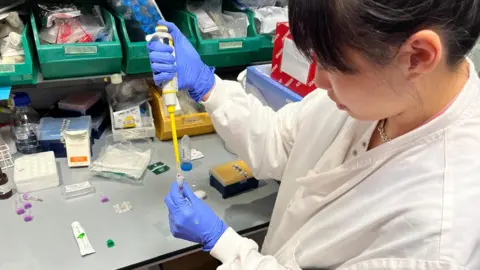
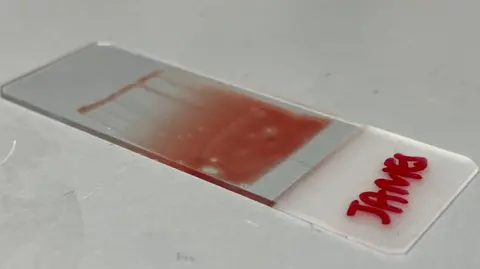
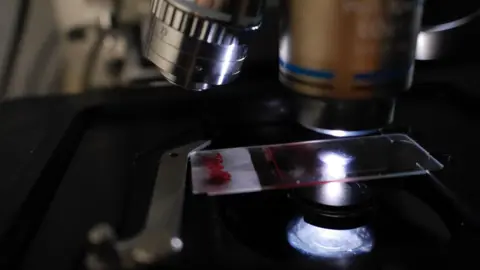
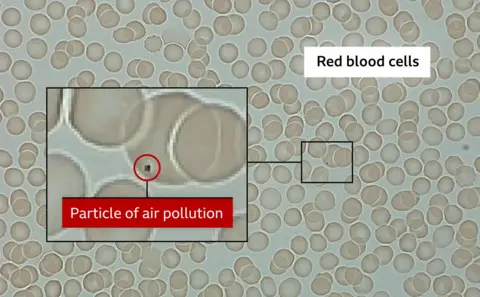
Back in the laboratory, a simple finger-prick blood sample revealed the startling truth. Under magnification, amidst the pristine, disc-shaped red blood cells responsible for oxygen transport, numerous cells were visibly tainted with tiny black dots. These were the PM2.5 particles – miniature lumps of carbon and other chemical residues. The visual confirmation was profound, evoking a visceral sense of contamination and vulnerability.
Dr. Norrice Liu, a researcher involved in the study, has examined blood samples from over a dozen volunteers. Her findings indicated that, on average, one in every two to three thousand red blood cells had effectively "picked up a hitch-hiking piece of pollution." While this ratio might seem small, scaling it up to the five litres of blood circulating in an average adult suggests a staggering figure: an estimated 80 million red blood cells potentially ferrying these pollutants around the body at any given moment after even short-term exposure. Dr. Liu expressed a sentiment of unease, stating that the sight of these particles makes one reconsider time spent near busy roads.
The research also offered a glimmer of hope: the levels of air pollution in the blood did appear to decrease after approximately two hours of breathing cleaner air, suggesting the body has mechanisms to clear these invaders. However, the critical question, as Prof. Grigg noted, is where these particles go. They are not simply exhaled, and while some may be filtered by the kidneys and expelled in urine, the most probable and concerning answer is that these tenacious particles "wiggle their way through the lining of the blood vessels and lodging in various organs." This process of translocation across endothelial barriers is a key area of ongoing research.
This understanding is beginning to unravel the complex web of health problems linked to air pollution, extending far beyond the lungs. Deposits of black carbon from air pollution have been identified in human placentas after birth, indicating direct exposure to developing fetuses. Dr. Liu surmises that if these particles are found in one organ, "chances are they’re everywhere," given their systemic distribution. Furthermore, it’s crucial to remember that visible carbon particles are only one facet of the problem; other harmful gaseous pollutants, such as nitrogen oxides, also contribute significantly to health damage, albeit invisibly under a microscope.
The global health crisis posed by air pollution is immense. The World Health Organization (WHO) reports that 99% of the world’s population breathes polluted air, leading to an estimated seven million premature deaths annually. In the UK alone, poor air quality is believed to cause 30,000 deaths each year, according to a report by the Royal College of Physicians. Sir Stephen Holgate, who led that influential report, unequivocally stated that the evidence linking air pollution to health damage is "nailed, it’s game set and match." He pointed to the clearest evidence emerging from areas that have successfully reduced air pollution and subsequently observed significant health improvements.
The primary mechanism through which dirty air harms various organs is thought to be inflammation. While inflammation is a vital part of the body’s immune response to injury or infection, chronic, low-grade systemic inflammation, triggered by persistent exposure to pollutants, can have devastating effects. It can damage blood vessel linings, contributing to atherosclerosis, increasing the risk of heart attacks and strokes. In the lungs, chronic inflammation has been shown to awaken dormant cancerous cells, leading to the development of deadly tumours; air pollution is now understood to be responsible for approximately one in ten lung cancer cases in the UK.
The impact of air pollution begins even before birth. Research indicates that exposure while in the womb can alter a developing baby’s DNA function during critical developmental stages, potentially leading to "small lungs, small heart and some problems with brain development," as Sir Stephen explained. At the other end of the lifespan, components of air pollution are believed to accelerate the progression of dementia by facilitating the formation of toxic protein plaques in the brain, contributing to cognitive decline and neurodegenerative diseases.
Given the pervasive nature of this threat, understanding how to minimize exposure is crucial. Individual actions, while not a complete solution, can offer some protection. Simple strategies include choosing quieter side streets when walking or cycling, thereby reducing direct exposure to traffic emissions. Maintaining a greater distance from the edge of busy roads is also beneficial, especially for babies in buggies, who are often at the height of vehicle exhaust pipes. Professor Grigg’s study indicated that a tight-fitting FFP2 mask could reduce the amount of air pollution entering the bloodstream, though he clarified this recommendation is primarily for clinically vulnerable individuals, such as those recovering from a heart attack or suffering from chronic respiratory disease, when in highly polluted areas.
However, the fundamental challenge with air pollution is its often involuntary nature; individuals are frequently exposed to pollution generated by others, and moving away from a home on a busy road is not always feasible. Therefore, systemic changes are paramount. Advances in vehicle technology, including the increasing adoption of electric vehicles and stricter emissions standards for newer diesel and petrol engines, are already contributing to improved air quality.
Ultimately, as Professor Grigg concluded, "the more we understand the mechanisms of how it can cause these effects, the more we can add to the pressure for policy makers to reduce exposure – because that’s the answer in the end." This pressure must translate into comprehensive policy interventions, such as the expansion of Clean Air Zones, investment in robust public transport networks, and the promotion of active travel infrastructure. By combining scientific insight with public awareness and determined policy action, societies can work towards a future where clean air is a universal right, safeguarding human health from the invisible, yet profoundly damaging, threat of pollution.