
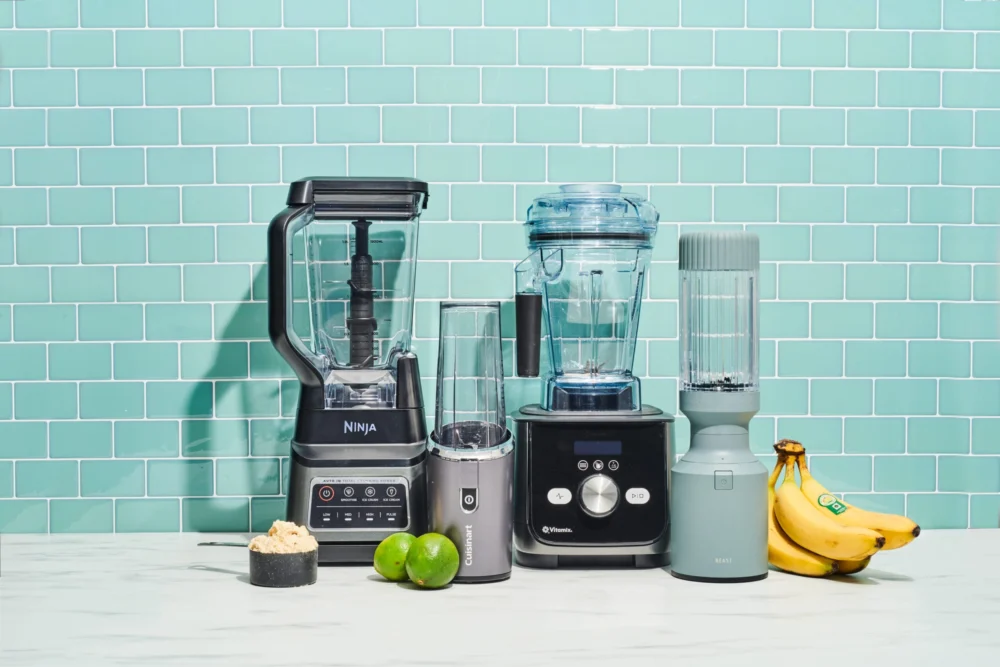
"The contemporary blender has evolved from a simple smoothie-maker into a precision culinary tool, capable of bridging the gap between raw nutrition and professional-grade gastronomy through high-wattage engineering and smart automation."

In the modern landscape of health and wellness, the blender serves as the cornerstone of the kitchen, functioning as a vital instrument for anyone from the high-performance athlete to the home cook. As nutritional science emphasizes the importance of whole foods and bioavailable nutrients, the technology powering these machines has seen a significant surge in sophistication, offering everything from cordless portability to aircraft-grade stainless steel components. Choosing the right unit requires an understanding of how wattage, blade geometry, and container design intersect to handle diverse tasks like emulsifying leafy greens, crushing ice, and even heating soups through sheer kinetic friction.
The New Standard of Versatility: The Ninja Professional Plus
For many consumers, the search for a blender begins and ends with the balance between price and performance. The Ninja BN701 Professional Plus Blender currently occupies the "best overall" position in the market, largely due to its 1,400-watt motor. In the world of kitchen appliances, wattage is a direct indicator of torque; higher wattage allows the blades to maintain speed when encountering resistance from frozen fruit or fibrous vegetables.

The Ninja’s standout feature is its Auto-IQ technology. These smart presets—specifically for smoothies, frozen treats, and ice crushing—utilize unique pulsing patterns that take the guesswork out of texture. While traditional blenders require the user to manually pulse to avoid air pockets, the Ninja automates this process. However, its unique tri-blade design, which features blades stacked vertically on a central spindle, offers a different experience than traditional bottom-mounted blades. While excellent for rapid ice crushing in its massive 72-ounce pitcher, users should note that it may require longer run times to fully emulsify leafy greens or fine protein powders, which can occasionally lump near the base.
The Professional Benchmark: Vitamix and the Engineering of Power
When discussing professional-grade performance, Vitamix remains the industry standard. The Vitamix 5200 is often cited as the "instant classic" of the culinary world. Built around a two-horsepower motor capable of 1,500 watts, this machine is less of an appliance and more of a "workhorse." Its power is so significant that the friction generated by the blades can actually heat raw ingredients to steaming temperatures in roughly six minutes—a feature prized by those who make fresh winter soups or sauces without wanting to use a stove.

However, the Vitamix 5200 is famously loud, often compared to the sound of a helicopter. For those seeking that same level of performance with a more modern, user-friendly interface, the Vitamix Ascent X5 represents the brand’s evolution. It matches the 1,440-watt output but incorporates aircraft-grade stainless steel blades and a significantly quieter motor housing. The Ascent X5 also introduces 10 smart presets and a digital display, addressing the needs of a tech-forward kitchen. Its self-cleaning mode—a cycle that uses a drop of dish soap and warm water—mitigates one of the primary deterrents of high-end blending: the cleanup of sharp, fixed blades.
The Rise of Personal and Portable Blending
As lifestyles become increasingly mobile, the demand for compact, efficient blending solutions has birthed a new category of "personal" blenders. The Beast Mighty 850 is a prime example of this trend, proving that a smaller footprint doesn’t have to mean a sacrifice in capability. Operating at 850 watts, it is specifically designed for single-serve efficiency. Its one-button functionality simplifies the user experience: a quick tap for pulsing or a long press for a programmed one-minute cycle. Its primary appeal lies in its aesthetic design and the ease with which it fits onto crowded countertops, though its interior "ribbed" design requires diligent cleaning to prevent residue buildup.

Parallel to this is the NutriBullet Ultra Plus+, the successor to the original "Bullet" that revolutionized the market. At 1,200 watts, the Ultra Plus+ is remarkably powerful for its size, handling whole nuts and frozen fruit with an ease that previous generations of personal blenders lacked. The inclusion of a suction-cup base is a subtle but critical safety upgrade, preventing the unit from "walking" across the counter during high-intensity blends.
The ultimate frontier of this category, however, is the cordless movement. The Cuisinart EvolutionX Compact Cordless Blender utilizes a 7.4-volt lithium-ion battery to provide roughly 20 minutes of continuous runtime. While it may not match the raw wattage of a plug-in Vitamix, its ability to reach 15,000 RPMs makes it more than capable of handling protein shakes at the gym or gazpacho at a campsite. The trade-off for this freedom is weight; the battery pack makes the base heavier than many expect for a portable unit.

Specialized Engineering: Blade Geometry and Vortex Control
Beyond raw power, the "science of the blend" often comes down to how ingredients are moved within the jar. The Breville "Fresh and Furious" utilizes what the brand calls the Kinetix blade system. This design features hemisphere-shaped blades at the base that mimic the shape of the bowl, effectively pulling ingredients downward into a continuous vortex. This prevents the common "bridging" effect where ingredients get stuck above the blades. At 1,100 watts, it is particularly quiet, making it an ideal choice for early-morning households.
Similarly, the KitchenAid K400 focuses on the "vortex" through an asymmetrical blade design. By blending at four different angles, the K400 forces ingredients toward the center, ensuring that even tough greens like kale and spinach are pulverized into a silky texture rather than a gritty one. Its die-cast metal base provides the stability needed for its 1,200-watt motor, ensuring the machine doesn’t vibrate excessively when tackling heavy loads.

Maintenance, Longevity, and Warranty
A blender is an investment, and the warranty often reflects the manufacturer’s confidence in the motor’s durability. Vitamix leads the industry with a 10-year warranty on the Ascent X5 and a 7-year warranty on the 5200. In contrast, mid-tier options like the Ninja and KitchenAid typically offer 5-year warranties, while personal blenders like the NutriBullet may only offer one year of coverage.
For longevity, users should prioritize "dishwasher-safe" components, though many experts recommend hand-washing blades to maintain their sharpness over time. High-performance motors also require airflow; when blending thick mixtures like peanut butter, utilizing the "tamper"—a plastic tool designed to push ingredients into the blades without hitting them—prevents the motor from overheating.

Conclusion: Matching Machine to Lifestyle
Choosing the "best" blender is ultimately a matter of identifying your primary use case. If you are a culinary enthusiast looking to make hot soups and nut butters from scratch, the Vitamix series offers an unmatched return on investment. If you are a fitness professional looking for a dependable daily smoothie machine that won’t break the bank, the Ninja Professional Plus or the KitchenAid K400 provides the necessary power and capacity.
For those in small apartments or with on-the-go schedules, the Beast Mighty 850 or the cordless Cuisinart EvolutionX represents the peak of modern convenience. Regardless of the choice, the transition to high-wattage blending technology allows for a higher intake of fiber and nutrients, proving that the right kitchen gear is an essential component of a modern health strategy.