
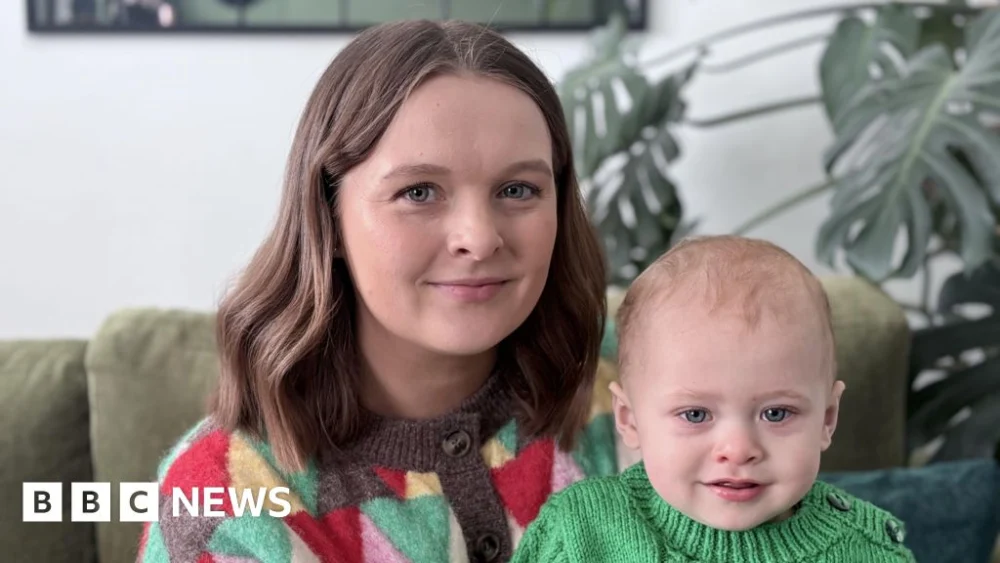
"Being torn away from my home and support network during my most vulnerable state prolonged my suffering. No new mother experiencing a mental health crisis should have to travel hundreds of miles, separated from her community, for essential specialist care."
The harrowing experience of Lizzy Berryman, a new mother from York who was forced to travel 90 miles to Derby for emergency mental health treatment just days after giving birth, casts a stark light on the critical shortage and geographical disparity of specialist Mother and Baby Units (MBUs) across the UK. Her ordeal, which saw her transported while in a state of severe psychosis and "soaked in urine," underscores a systemic challenge in perinatal mental health care that leaves vulnerable families isolated and financially burdened, potentially hindering recovery and exacerbating distress during a crucial period of their lives.
A Descent into Postpartum Psychosis
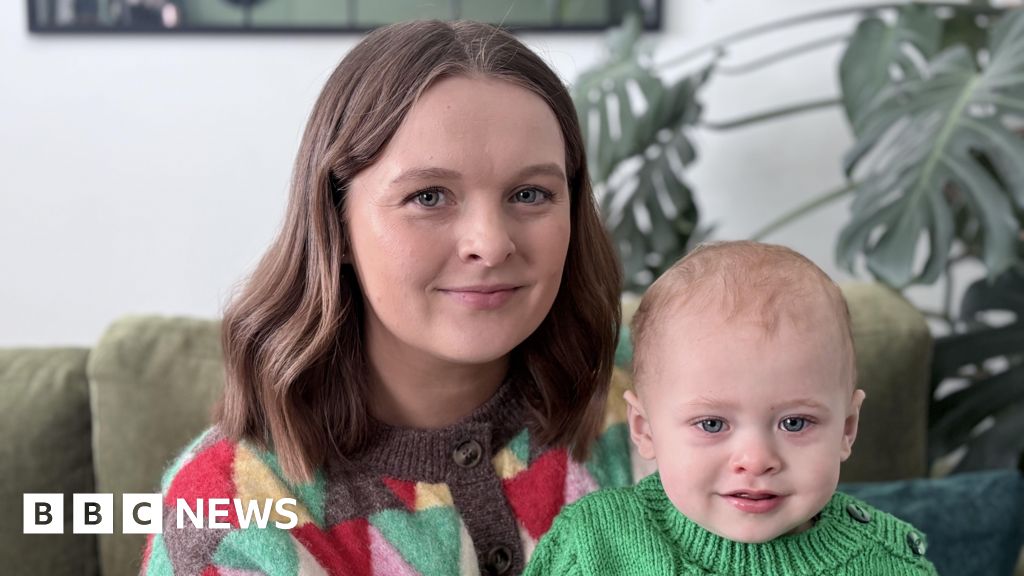
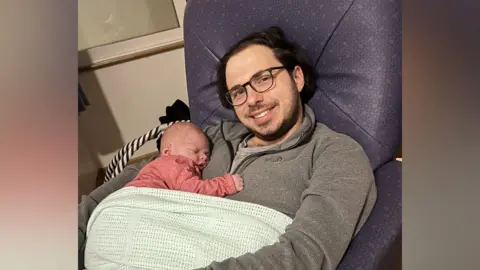
In 2024, four days after the birth of her son, Patrick, Lizzy Berryman’s world fractured. What began as an inability to sleep following a traumatic birth rapidly escalated into postpartum psychosis (PPP), a severe and potentially life-threatening mental health condition. PPP is a rare but acute psychiatric emergency affecting approximately one to two in every 1,000 women after childbirth. Unlike the more common postnatal depression, PPP has a rapid onset, typically within the first two weeks post-delivery, and is characterized by a dramatic shift in mood, thoughts, and perception. Symptoms can include hallucinations, delusions, severe insomnia, mania, paranoia, and rapid mood swings, often accompanied by confusion and disorganisation. For Lizzy, these symptoms manifested terrifyingly.
"I was getting increasingly anxious and confused. I couldn’t make a cup of tea or change Patrick’s nappy," Lizzy recounted, describing the early, disorienting signs. The situation quickly spiralled into a profound crisis: "I started screaming, I ran at the windows. I thrashed about on the floor for hours and I thought I was in hell." Her family, witnessing this terrifying deterioration, were forced to physically restrain her at home for two agonizing hours while awaiting an ambulance. Upon arrival at York Hospital’s emergency department, Lizzy was sectioned under the Mental Health Act, a legal framework used when a person’s mental health poses a risk to themselves or others, necessitating compulsory treatment.
The Distressing Journey for Specialist Care
The immediate challenge for Lizzy’s family was finding an appropriate facility. The ideal placement for a mother experiencing severe perinatal mental illness is a Mother and Baby Unit (MBU). These specialized psychiatric wards are designed to provide intensive care for mothers while allowing them to remain with their infants, facilitating bonding and recovery within a therapeutic environment. However, the family was informed there were no available beds at the only MBU in Yorkshire, located in Leeds. This dire scarcity forced a critical decision: Lizzy had to be transported to the closest available unit equipped to manage psychosis and severe postnatal depression – 90 miles away in Derby.
The journey itself became another layer of trauma. Lizzy’s description of being "soaked in my own urine because I’d been pushing as if I was giving birth again every time I was in psychosis" paints a stark picture of her extreme vulnerability and distress during transport. This indignity, coupled with the immense physical and psychological toll of her condition, highlights the critical importance of swift, compassionate, and geographically accessible specialist care. Being moved such a significant distance from her home, family, and established support network undoubtedly compounded her feelings of disorientation and fear at a time when stability and familiar comfort were paramount.
The Lifeline of Mother and Baby Units (MBUs)
Mother and Baby Units are considered the gold standard of care for severe perinatal mental illnesses like postpartum psychosis. Their unique model ensures that mothers can receive intensive psychiatric treatment, medication management, and psychological therapies without being separated from their infants. This co-location is vital for several reasons: it promotes mother-infant bonding, which can be severely disrupted by mental illness; it allows staff to observe and support the mother-infant dyad; and it enables partners and families to visit and participate in the recovery process more easily. Separation, conversely, can deepen a mother’s distress, guilt, and anxiety, potentially hindering her recovery and impacting the baby’s early development.
Lizzy began an eight-week intensive treatment program at the Derby MBU. While she later praised the staff for "saving" her life, the geographical distance presented immense challenges for her family. Her husband, Adam, and other relatives spent thousands of pounds on nearby accommodation to remain close and provide support. However, Adam’s paternity leave eventually ended, forcing him to return home to York, curtailing his daily visits.
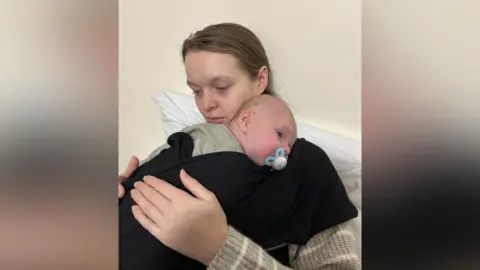
"I felt really lonely," Lizzy recalled. "I didn’t have my home comforts around me and I needed Adam, he was missing out on a lot. There were a lot of firsts that Adam was missing out on, and I needed him as well – I was in a depression." The isolation, financial strain, and the painful absence of her husband during crucial moments undoubtedly added to her emotional burden, potentially prolonging her recovery. Access to local MBUs would have mitigated these significant challenges, allowing her family to be a consistent, comforting presence without incurring prohibitive costs or sacrificing work.
The "Postcode Lottery" in Perinatal Mental Health Care
Lizzy’s experience is not isolated. A BBC Freedom of Information request revealed that over the last five years, approximately 100 women from Yorkshire alone were sent to MBUs outside their local area, with some enduring journeys to as far as Birmingham and London. This phenomenon, often referred to as a "postcode lottery," highlights a severe disparity in access to specialized perinatal mental health services across the UK. While some regions may have adequate MBU provision, others are "complete deserts," leaving vulnerable mothers and their families scrambling for care, often at great personal cost.
Laura Kyrke-Smith, MP for Aylesbury, whose close friend tragically died by suicide after having a baby, passionately articulated this concern. She stated, "The statistics sadly remain that suicide is the leading cause of death for women from six weeks to a year after giving birth, which is shocking and appalling. MBUs are the right model of care and any woman who needs it should be able access it." This sobering statistic underscores the critical and urgent need for accessible, high-quality perinatal mental health services. The lack of local MBUs can lead to delays in treatment, placement in unsuitable general psychiatric wards (where mothers are often separated from their babies), or, as Dr. Jessica Heron, CEO of the Action on Postpartum Psychosis charity, warned, women and families declining care altogether due to the prohibitive travel distances.
Dr. Heron elaborated on the risks: "In places where people can’t access MBUs we know they’re likely to be admitted to a general psychiatric unit and that’s totally inappropriate for newly delivered mothers. We hear of families very often who are travelling two or three hours for that specialist care. The risks are that women and families turn down that care." This refusal of care, while understandable given the circumstances, can have devastating consequences for both mother and child.
Systemic Challenges and Future Outlook
The current situation in Yorkshire exemplifies the national challenge. The MBU in Leeds, the region’s only specialist centre, has just eight beds, though it is slated for expansion to 14 in the coming months. While this expansion is a welcome step, it raises questions about whether it will be sufficient to meet the growing demand and eliminate the need for long-distance transfers for a region as populous as Yorkshire.
The Department of Health and Social Care (DHSC) acknowledges the issue, stating that "women experiencing severe mental illness after giving birth should receive compassionate, specialist care as quickly as possible, close to home." They highlight that "decisions about the location of mother and baby units are made by local trusts" and that a "wide range of support is available for new and expectant mothers, including access to specialist perinatal services which are available in all areas in England." However, general perinatal services, while crucial for milder conditions, cannot substitute for the highly specialized, inpatient MBU care required for acute conditions like postpartum psychosis.
NHS England in North East and Yorkshire echoed this, explaining that "MBUs are commissioned as specialised services and based on concentrated clinical expertise, which is achieved by operating from a single, well-resourced unit – in this case, Leeds." They emphasize a "provider collaborative model" to support joint working across integrated care boards, recognizing the challenge of distance. While this model aims to ensure consistent, safe, high-quality care, the lived experience of mothers like Lizzy Berryman demonstrates that the current capacity and geographical spread are insufficient to prevent profound distress and disruption to families.
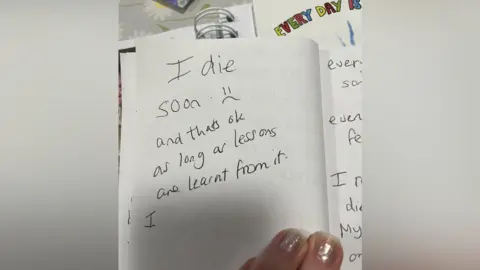
Lizzy, who has since made a full recovery and returned to work, is now a passionate advocate for systemic change. Her delusion during psychosis, captured in a poignant note, read: "I die soon and that’s OK, as long as lessons are learnt from it." This powerful sentiment fuels her campaign for more MBUs across the country. Her journey underscores that while specialist care is life-saving, its effectiveness is intrinsically linked to its accessibility. Being near family and friends, and integrating back into "real life" gradually, is crucial for psychological healing and successful reintegration. The ongoing expansion of mental health services, including an extra £688m this financial year and the hiring of almost 8,000 mental health workers, as cited by the DHSC, must translate into tangible, equitable access to specialized MBU beds for all new mothers, irrespective of their postcode. Only then can the UK truly address the "shocking and appalling" statistics of maternal suicide and ensure that no new mother faces a perilous, lonely journey in her darkest hour.
If you have been affected by any of the issues raised in this story, information and support can be found at the BBC’s Action Line.