
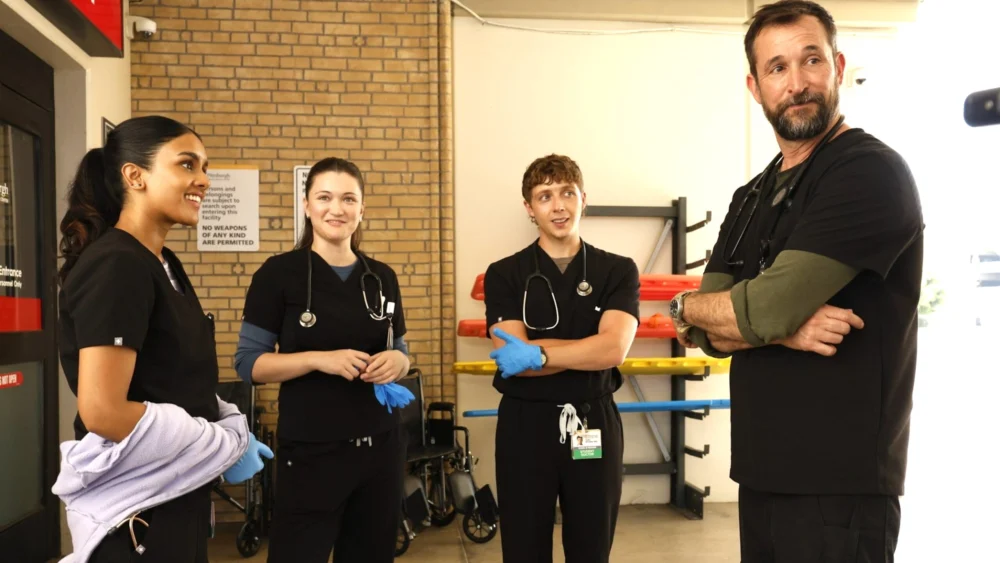
"By merging the relentless pace of a real-time thriller with the emotional weight of a modern hospital, The Pitt captures the fractured focus of the digital age and transforms it into an unmissable television event."
The television landscape is currently defined by an "attention economy" where viewers are often distracted by second screens and overstimulation, making it difficult for a single program to command absolute focus. HBO Max’s The Pitt has successfully disrupted this trend by employing a high-concept, real-time narrative structure that demands undivided attention, effectively reviving the "appointment television" model for the streaming era. After a triumphant first season that swept major categories at the Emmy Awards—including Best Drama, Best Actor for Noah Wyle, and Best Supporting Actress for Katherine LaNasa—the series has returned for a second season that raises the stakes even further. By placing the audience in the center of a Pittsburgh emergency room during one of the busiest holidays of the year, the show explores the intersection of professional duty, personal fallibility, and the grueling reality of modern healthcare.
The Evolution of the Medical Drama
Medical dramas have been a staple of the television medium for decades, from the paternalistic tone of Marcus Welby, M.D. to the kinetic energy of ER. However, The Pitt represents a significant evolutionary step in the genre. Much like the groundbreaking series 24 redefined the action-thriller by aligning the show’s clock with the viewer’s clock, The Pitt utilizes a real-time gimmick to heighten the tension of the clinical environment. In this series, every minute of screen time corresponds to a minute in the lives of the staff at a fictional Pittsburgh trauma center. This choice eliminates the traditional "time jumps" often used to skip over the tedious or repetitive aspects of medical care, forcing the audience to experience the mounting fatigue and cumulative stress that healthcare workers endure during a single shift.
The return of Noah Wyle to the medical genre is particularly noteworthy. Having spent over a decade as Dr. John Carter on ER, Wyle brings a layer of meta-textual gravitas to his role as Dr. Robby. While Carter was often the moral compass of his hospital, Dr. Robby is a more complex, weathered figure—a "Dr. Jack Bauer" of the emergency room who must navigate bureaucratic hurdles and life-or-death decisions within the constraints of sixty-minute windows. His Emmy win for Best Actor underscores the depth of this performance, which balances the technical precision of a surgeon with the exhaustion of a man who has seen too much.
Season 2: A Holiday Under Pressure
The second season of The Pitt begins nearly a year after the tumultuous events of the Season 1 finale. The writers have chosen the Fourth of July as the backdrop for the premiere, a decision that serves both thematic and practical purposes. In any major American city, Independence Day is notorious for a spike in emergency room admissions, ranging from firework-related injuries and heatstroke to alcohol-induced accidents and interpersonal violence. By setting the season during this window, the show creates an immediate environment of chaos that tests the limits of the hospital’s resources.
When we reconnect with the staff, we find them in vastly different circumstances than where we left them. Dr. Robby is on the precipice of a significant life change; the premiere marks his final day before embarking on a three-month sabbatical. This looming departure adds a "ticking clock" element to his personal arc, as he attempts to tie up loose ends and ensure the department remains stable in his absence.
In contrast, other characters are returning to the fold under clouds of controversy or personal recovery. Dr. Langdon, portrayed by Patrick Ball, faces the daunting task of his first day back after a career-threatening scandal involving the theft of patient prescription drugs. His storyline touches upon the very real crisis of physician burnout and substance abuse within the medical community, providing a grounded, often uncomfortable look at the path to professional redemption. Simultaneously, Katherine LaNasa’s Nurse Dana returns from her own hiatus, re-entering an environment that has only grown more demanding in her absence.
New Faces and Philosophical Friction
A critical component of the new season is the introduction of Dr. Baran Al-Hashimi, played by Sepideh Moafi. Brought in to fill the void left by Dr. Robby’s upcoming sabbatical, Al-Hashimi is not merely a replacement but a philosophical foil. The friction between Robby and Al-Hashimi is immediate and palpable. While Robby relies on years of institutional knowledge and perhaps a more traditional approach to triage and treatment, Al-Hashimi brings a different perspective that frequently clashes with the established order.

This dynamic is further complicated by the departure of Dr. Collins (Tracy Ifeachor) from the main cast. The shifting personnel reflects the high turnover rate common in urban hospitals, ensuring the show remains realistic in its depiction of the "revolving door" of medical staffing. The remaining ensemble—including characters like Whitaker, Jevadi, Dr. Mohan, and Dr. McKay—provides a multifaceted view of the hospital hierarchy, from the administrative pressures at the top to the hands-on labor of the residents and nursing staff.
The Pittsburgh Setting: A Character in Itself
Unlike many medical dramas that are filmed in Los Angeles or Vancouver while pretending to be in Chicago or Seattle, The Pitt leans heavily into its Pittsburgh identity. The city’s unique geography, its history as a blue-collar industrial hub, and its modern transition into a center for technology and medicine all inform the narrative. The Fourth of July setting allows the show to showcase the city’s character, while the real-time format captures the specific rhythm of a Pittsburgh summer. The city is not just a backdrop; it is a stakeholder in the drama, representing the diverse patient population that the hospital is sworn to protect.
The Mechanics of Real-Time Storytelling
The technical achievement of The Pitt cannot be overstated. Producing 15 episodes that must flow seamlessly into one another without the luxury of temporal compression requires a Herculean effort from the writers, editors, and actors. Each episode of Season 2 represents a single hour of the day, beginning at 7:00 AM and concluding at 9:00 PM. This structure creates a "slow-burn" intensity where small mistakes in the morning can snowball into catastrophic failures by the afternoon.
For the viewer, this creates a unique psychological effect. We are not just watching a story; we are surviving a shift alongside the characters. This immersion is what helped the show build its massive fanbase during the first season and what continues to drive its critical acclaim. In an age of binge-watching where entire seasons are often consumed in a weekend and quickly forgotten, The Pitt’s weekly release schedule on HBO Max encourages communal discussion and anticipation, making each "hour" of the day a significant cultural event.
Viewing Guide and Release Schedule
As Season 2 progresses, the tension within the emergency room is expected to reach a breaking point. With nine episodes already available for streaming, the series is entering its final act, where the consequences of the day’s earlier decisions will finally come to a head.
The next installment of The Pitt is scheduled to debut on HBO Max on Thursday, March 12, at 9:00 PM EST. Fans can look forward to six more weeks of high-octane drama as the clock continues to tick toward the 9:00 PM finale.
The Complete Season 2 Release Schedule:
- Episode 1, "7:00 AM": Released January 8
- Episode 2, "8:00 AM": Released January 15
- Episode 3, "9:00 AM": Released January 22
- Episode 4, "10:00 AM": Released January 29
- Episode 5, "11:00 AM": Released February 5
- Episode 6, "12:00 PM": Released February 12
- Episode 7, "1:00 PM": Released February 19
- Episode 8, "2:00 PM": Released February 26
- Episode 9, "3:00 PM": Released March 5
- Episode 10, "4:00 PM": Streaming March 12
- Episode 11, "5:00 PM": Streaming March 19
- Episode 12, "6:00 PM": Streaming March 26
- Episode 13, "7:00 PM": Streaming April 2
- Episode 14, "8:00 PM": Streaming April 9
- Episode 15, "9:00 PM": Streaming April 16
As the season marches toward its conclusion on April 16, The Pitt stands as a testament to the power of innovative storytelling. By stripping away the fluff and focusing on the raw, unedited reality of a single day, it has secured its place as the definitive medical drama of the current decade. For those who have yet to dive into the chaos of this Pittsburgh ER, there is no better time to catch up and experience the real-time intensity that has captivated critics and audiences alike.