
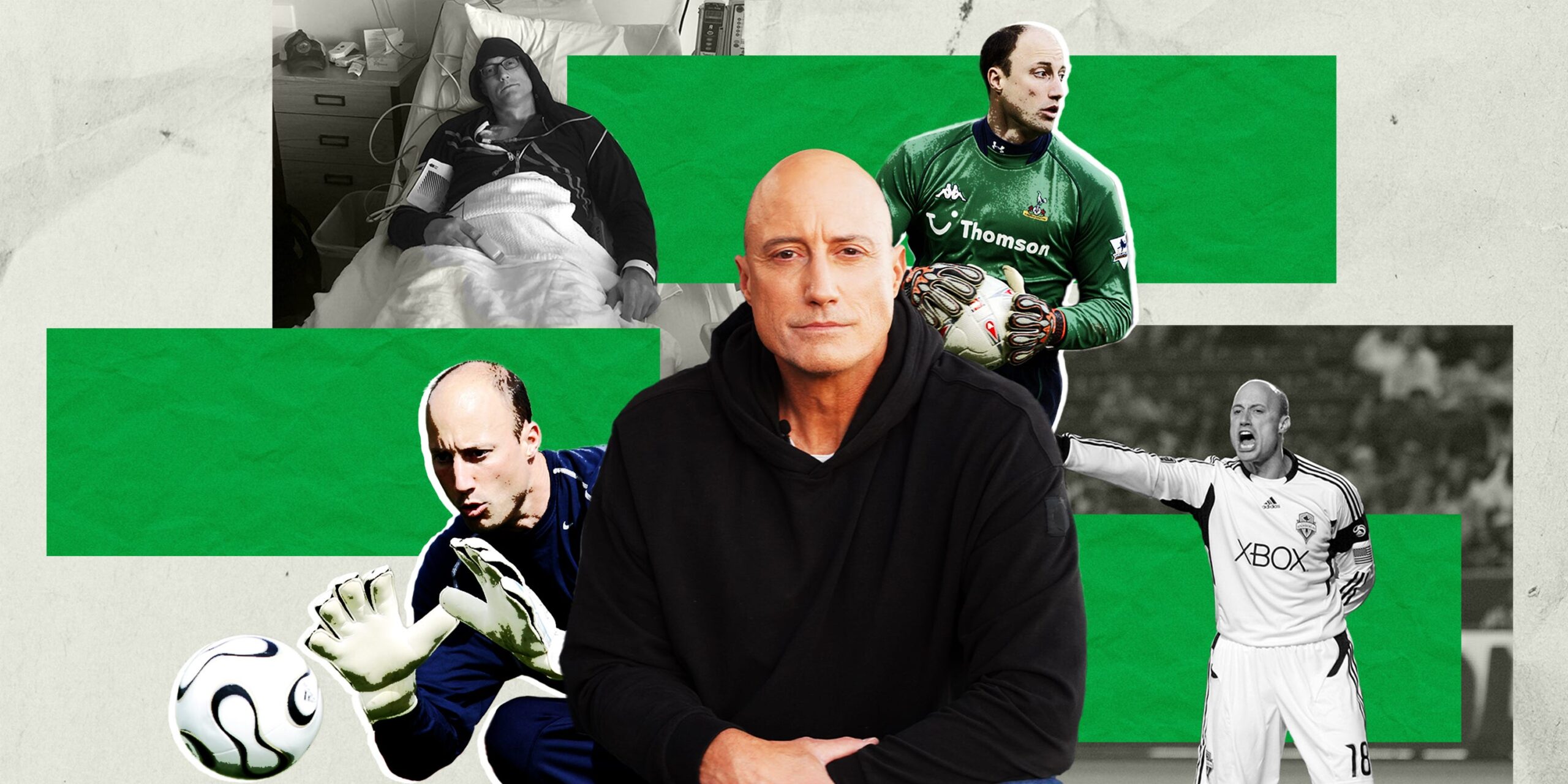
"In professional sports, you learn to control the controllables and compartmentalize the rest; cancer became just one more opponent I had to manage with the same mental discipline I used on the pitch."
For over a decade, legendary American goalkeeper Kasey Keller lived with a secret that stood in stark contrast to his public image as a symbol of peak physical performance. After being diagnosed with a slow-moving form of blood cancer at the tail end of his professional career, Keller utilized the psychological fortitude of an elite athlete to navigate years of "watchful waiting" before eventually undergoing a revolutionary cell-based therapy that has since brought him into full remission.
The Quiet Discovery
In 2010, Kasey Keller was 40 years old and nearing the end of an illustrious career that had spanned the English Premier League, the Spanish La Liga, the German Bundesliga, and the United States Men’s National Team (USMNT). Having recently joined the Seattle Sounders during their formative years in Major League Soccer (MLS), Keller was focused on finishing his two-year contract on a high note. However, persistent hip pain began to interfere with his training.
For a goalkeeper with over 700 professional matches and four World Cup cycles under his belt, hip discomfort was an expected occupational hazard. Keller sought an MRI to ensure there was no structural damage that would force him onto the "treatment table" for his final season. The scan took place at midday; by 2 PM, the trajectory of his life had shifted.
The team doctor’s phone call was atypical. Rather than discussing cartilage or bone density, the physician asked if Keller had already eaten lunch. Because Keller had, he was instructed to return at 6 AM the following morning for a biopsy. The urgency was a harbinger of the diagnosis to follow: Non-Hodgkin’s lymphoma (NHL), a type of cancer that begins in the lymphatic system, which is part of the body’s immune-fighting network.
In Keller’s case, the discovery was incidental. The hip pain that prompted the scan was unrelated to the cancer; the MRI had simply captured the presence of abnormal cells that were otherwise asymptomatic. An oncologist informed Keller that the cancer was slow-moving, suggesting a "watch and wait" approach—a common but psychologically taxing protocol for indolent lymphomas.
The Psychology of the Goal Line
The news of a cancer diagnosis would be debilitating for many, but Keller found himself uniquely prepared by his decades between the posts. In soccer, the goalkeeper is the ultimate individual within a team framework—the last line of defense who must remain stoic while chaos unfolds in front of them. This "goalkeeper’s mindset" became Keller’s primary tool for managing his health.
"So much of pro sports is being able to control the controllables," Keller noted, reflecting on the philosophy that guided his career. In his view, he had no control over the cancer’s biology, just as he had no control over a teammate’s error or a coach’s selection. He chose to focus on his attitude and effort. This ability to compartmentalize allowed him to play his final professional season in 2011 while harboring the knowledge of his diagnosis.
The results of this mental resilience were staggering. Despite the underlying shadow of lymphoma, Keller’s 2011 season was one of his best. He maintained a 1.09 goals-against average, secured 18 wins, and was named the MLS Goalkeeper of the Year. To the fans and the media, he was an aging star defying the clock; in reality, he was an athlete managing a life-threatening condition with the same cold-blooded efficiency he used to stop a penalty kick.

The Transition to Aggressive Disease
Following his retirement from active play, Keller transitioned into a successful career as a commentator and analyst for ESPN and the Sounders’ local broadcasts. For eight years, the lymphoma remained largely dormant, requiring only periodic monitoring. However, the nature of blood cancers is often unpredictable.
In 2018, the warning signs became impossible to ignore. Keller began experiencing unexplained weight loss, a classic "B symptom" of lymphoma. The turning point came when his wife noticed a prominent physical abnormality: a large, visible bump in his groin. Lymphoma often manifests as swollen lymph nodes in areas where the nodes are concentrated, such as the neck, armpits, or groin. In Keller’s case, the nodes were so enlarged they appeared ready to break through the skin.
Subsequent medical evaluations revealed a concerning development. His cancer had transformed from a slow-moving, indolent state into a more aggressive form known as Large B-cell lymphoma (LBCL). This transition necessitated immediate and more intensive intervention. While initial treatments provided temporary relief, the cancer proved resilient, leading Keller to explore the frontiers of modern oncology.
The CAR T-Cell Revolution
By 2021, Keller’s condition made him eligible for a cutting-edge treatment known as Breyanzi (lisocabtagene maraleucel), a CAR T-cell therapy developed by Bristol Myers Squibb. Unlike traditional chemotherapy, which uses chemicals to kill rapidly dividing cells, CAR T-cell therapy is a form of immunotherapy that "reprograms" a patient’s own immune system to recognize and attack cancer.
The process is a feat of genetic engineering. Keller’s T-cells—the "soldiers" of the immune system—were extracted from his blood through a process called leukapheresis. These cells were then sent to a laboratory where they were modified to produce special structures called chimeric antigen receptors (CARs) on their surface. These receptors allow the T-cells to identify and latch onto specific proteins on the surface of lymphoma cells.
Once the cells were "armed" and multiplied in the lab, they were infused back into Keller’s body. This "living drug" then began its hunt. However, the treatment is not without significant risks. One of the most common side effects is Cytokine Release Syndrome (CRS), an inflammatory response that often manifests as a high fever.
Keller was warned by his medical team to prepare for a severe reaction. After two days of normalcy, his temperature spiked to 102.5°F on the third day, resulting in a five-day hospital stay. Despite the intensity of the side effects, the response within his body was exactly what the doctors had hoped for. The engineered cells were successfully eradicating the lymphoma.
A New Lease on Life
Two months after the infusion, a follow-up scan provided the words every cancer patient hopes to hear: "no evidence of disease." After a decade of uncertainty, several years of physical decline, and the rigors of cellular therapy, Keller had reached remission.
For years, Keller chose to keep his battle private, a decision rooted in the athlete’s instinct to hide vulnerabilities from the public eye. Now, having maintained his health for a significant period, he has stepped forward to share his story. By partnering with Bristol Myers Squibb, Keller aims to shed light on the realities of blood cancer and the potential of personalized medicine.
His journey from the 2006 World Cup to the forefront of cancer treatment serves as a testament to the evolution of medical science and the enduring power of a disciplined mind. Today, at 56, Keller remains a fixture in the soccer world, but his legacy has expanded beyond the pitch. He stands as a prominent example of how the "controllables"—attitude, resilience, and a trust in scientific advancement—can lead to a victory far more significant than any clean sheet or trophy.