
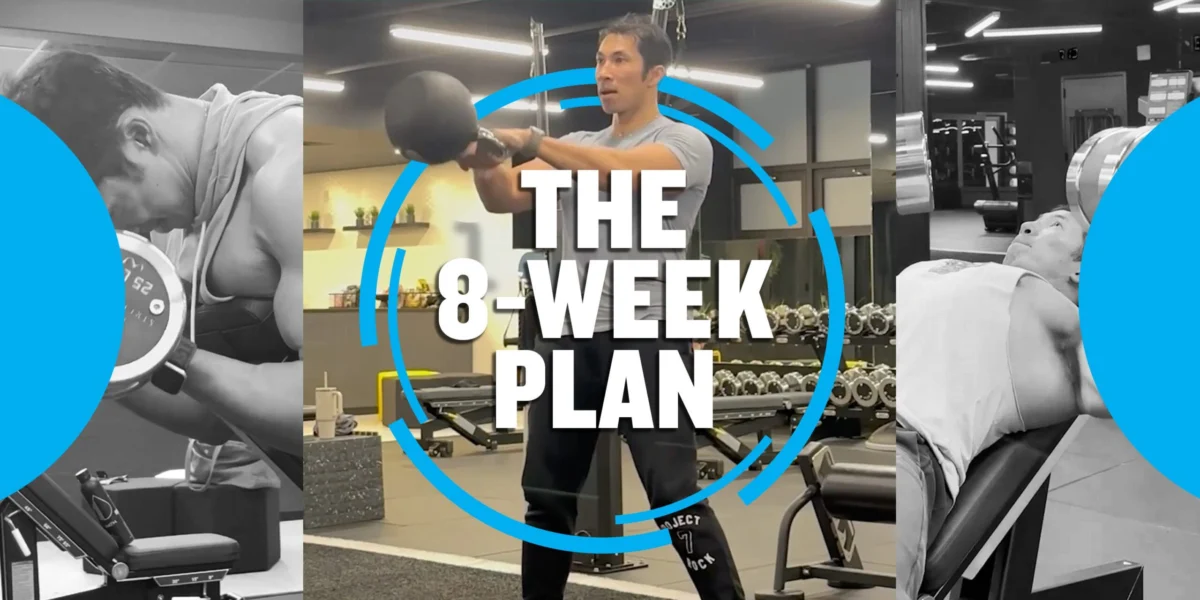
"True physical capability is not defined by a single metric of power, but by the ‘StrengthSpan’—a comprehensive spectrum of force production that bridges the gap between isolated gym performance and the unpredictable demands of real-world vitality."
The traditional approach to resistance training often prioritizes specialization, leading many athletes to excel in one narrow domain, such as maximal lifting, while suffering significant deficits in agility, cardiovascular health, or multi-planar stability. This phenomenon, often termed being "gym strong," creates a paradox where an individual can deadlift five hundred pounds yet lack the functional capacity to climb stairs without breathlessness or play a game of pickup basketball without injury. To address this, fitness experts are shifting toward a more holistic framework known as the StrengthSpan. This philosophy posits that to maintain high-level physical autonomy into one’s 50s, 60s, and beyond, training must encompass five distinct pillars of force: absolute, explosive, functional, aesthetic, and aerobic strength.
The Evolution of Strength
Strength, at its most fundamental level, is the body’s ability to produce force. However, the context in which that force is applied determines its utility. For decades, the fitness industry focused heavily on "Absolute Strength"—the raw ceiling of what a muscle can move in a single effort. While this provides a necessary foundation, it represents only one end of the continuum.
As Ebenezer Samuel, C.S.C.S., fitness director for Men’s Health, notes, a singular focus on maximal loads often comes at a cost. Many lifters find that as their one-rep maxes increase, their "explosion" or rate of force development (RFD) begins to decline. They become slower, less adaptable, and more susceptible to the "stiffness" associated with heavy, slow-speed training. The StrengthSpan program is designed to fill these gaps, ensuring that the human body remains a versatile machine capable of both moving heavy objects and reacting with lightning-fast precision.
The Five Pillars of the StrengthSpan
To build a complete physical profile, one must understand and train the five specific types of strength that govern human movement:
1. Absolute Strength: The Force Ceiling
This is the "raw horsepower" of the body. It is the maximum amount of force a muscle or group of muscles can exert in a single maximal contraction. In a gym setting, this is typically measured by a one-rep max on a barbell lift. Training for absolute strength improves the nervous system’s ability to recruit motor units. In the StrengthSpan framework, this is addressed through heavy compound movements, such as the trap bar deadlift, performed at high intensity but low volume to stimulate neurological adaptation without excessive metabolic fatigue.
2. Explosive Strength: The Speed of Force
If absolute strength is horsepower, explosive strength is the vehicle’s acceleration. It is the ability to express force as quickly as possible. This is critical for athletic maneuvers like jumping, sprinting, or even catching oneself during a fall. Because heavy weights cannot be moved quickly, explosive training utilizes lighter loads—often 10% to 30% of a maximum—moved with "maximal intent." Exercises like trap bar jumps and kettlebell cleans teach the body to "turn on" its muscles instantly, a trait that naturally diminishes with age if not specifically trained.
3. Functional Strength: Multi-Planar Resilience
Real-world movement rarely occurs in the perfectly symmetrical, sagittal plane (forward and backward) found in most gym machines. Functional strength is the ability to produce force while bending, twisting, lunging, and rotating. It involves "transverse" and "frontal" plane movements that challenge the core and stabilizers. By incorporating lateral lunges and windmills, the StrengthSpan program ensures that strength is "portable"—meaning it carries over to carrying groceries, lifting a child, or navigating uneven terrain.
4. Aesthetic Strength: The Structural Foundation
While often dismissed as "vanity training," muscle hypertrophy (size) is inextricably linked to performance. A larger muscle generally has a higher potential for force production. Aesthetic strength focuses on the 8-to-12-rep range, targeting smaller muscle groups like the deltoids and arms that compound lifts might miss. This "armor" not only improves the physique but also provides joint stability and metabolic health, as muscle tissue is a highly active endocrine organ.
5. Aerobic Strength: The Recovery Engine
Aerobic strength is the body’s ability to sustain effort over time and, perhaps more importantly, to recover between bouts of high-intensity work. Without a solid aerobic base, an athlete will find their strength sessions curtailed by fatigue. This pillar supports heart and lung health, ensuring that "gym strength" is backed by a cardiovascular system that can handle the demands of daily life, such as climbing several flights of stairs when an elevator is out of service.
Prerequisites for Total-Body Mastery
The StrengthSpan program is not merely a collection of exercises; it is a lifestyle protocol that requires specific foundational habits to be effective.
Movement Beyond the Gym
The program emphasizes a daily step count of 6,000 to 8,000. This is not for "cardio" in the traditional sense, but for Non-Exercise Activity Thermogenesis (NEAT) and lymphatic drainage. Walking helps manage body fat and keeps joints lubricated, acting as a low-intensity recovery tool that offsets the rigors of heavy lifting.
Nutritional Maintenance
Unlike extreme "bulking" or "cutting" cycles, the StrengthSpan approach favors eating at maintenance calories. The goal is to provide the body with enough fuel to repair tissue and adapt to new stressors without the inflammatory effects of overeating or the recovery-stunting effects of a severe deficit. It is about fueled performance rather than aesthetic deprivation.
The Science of Intensity: Reps in Reserve (RIR)
To avoid burnout while still stimulating growth, the program utilizes the Reps in Reserve (RIR) method. This subjective measure of intensity asks the lifter to finish most sets feeling as though they could have performed two more reps with perfect form. This ensures the intensity is high enough to trigger adaptation (the "effective reps" theory) while leaving enough "in the tank" to ensure the nervous system isn’t overtaxed for the next session.
The Five-Day Tactical Split
The StrengthSpan workout is structured to touch every point on the continuum over a weekly cycle.
- Day 1: Total-Body Power. This session focuses on the "Explosive" pillar. It utilizes movements like the Trap Bar Deadlift Jump and Kettlebell Dead Cleans. The goal here is not muscular "burn" but the "snap" of high-velocity movement.
- Day 2: Upper Body Strength and Hypertrophy. This combines "Absolute" and "Aesthetic" pillars. It pairs heavy incline presses for raw force with cable flies and pullovers to build the structural "armor" of the chest and lats.
- Day 3: Lower Body Strength and Hypertrophy. Centered on the Trap Bar Deadlift, this day pushes the absolute force ceiling. It is supplemented by "Half-Full" Goblet Squats—a technique that increases time under tension to maximize muscle growth.
- Day 4: Multiplanar and Functional. This is the "Real-World" day. Walking lunges and half-kneeling windmills challenge the body’s ability to stabilize under shifting centers of gravity. It bridges the gap between the gym and the field.
- Day 5: Accessory (Optional). This day is dedicated to joint longevity and aesthetic balance. By targeting the biceps, triceps, and the often-neglected adductors (via Copenhagen planks), it ensures the body is resilient against the small, nagging injuries that often derail training.
Longevity and the Strength Continuum
The ultimate goal of the StrengthSpan is longevity. As humans age, we naturally lose muscle mass (sarcopenia) and explosive power (dynapenia) at an accelerating rate. By training across the full spectrum, individuals can mitigate these losses.
Building a StrengthSpan means being a "generalist" in the best sense of the word. It is the refusal to trade cardiovascular health for a bigger bench press, or to trade functional mobility for raw size. By integrating explosive power, multi-planar movement, and aerobic conditioning into a traditional strength framework, the modern athlete can ensure they are not just "gym strong," but capable of meeting any challenge life presents—well into their later decades. Training the full spectrum is the only way to become truly stronger in every sense of the word.