
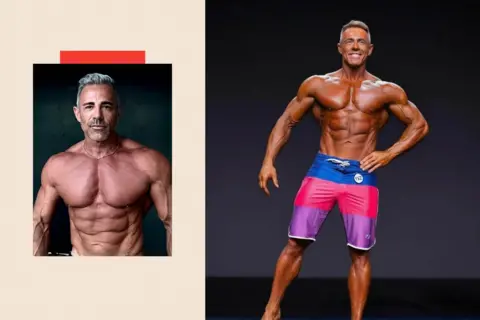
"Once a ‘pin-up’ performing for thousands, Alan Reeves’ journey from a celebrated Dreamboy to a man struggling with vanishing libido encapsulates a growing societal trend. While testosterone replacement therapy has proven transformative for many, its surging popularity ignites a critical debate: is it a medical marvel addressing a widespread issue, or a ‘gravy train’ fueled by hype and profit?"
The United Kingdom is witnessing a remarkable surge in testosterone replacement therapy (TRT) prescriptions, with a staggering 135% increase between 2021 and 2024. This trend unfolds against a backdrop of declining sexual frequency across the nation, prompting a complex discussion about the interplay of hormones, lifestyle, and modern living. As more individuals seek to reclaim lost vitality and intimacy, the medical community grapples with the ethics of burgeoning private clinics and the nuanced understanding of what truly drives desire.
The Personal Odyssey: Reclaiming Lost Vitality
For many, the journey into testosterone replacement therapy begins with a profound personal struggle. Alan Reeves, once a sought-after member of The Dreamboys, captivating audiences with his stage performances and even appearing in the Spice Girls film Spice World, found himself facing an unexpected crisis in his 30s. "I just didn’t feel right," he recounts, describing a pervasive low mood and a near-total disappearance of his libido. This shift profoundly impacted his long-term relationship, leading to months without intimacy and the looming threat of a breakup. Now 52, Reeves credits TRT with restoring his sex drive and transforming him from a "grumpy old man" to feeling "back in his 20s," describing the experience as "phenomenal."
Reeves’s story is echoed by others, including Rachel Mason, a 37-year-old menopause blogger, who hails testosterone as "amazing" for its positive effects on her energy, concentration, and libido. Similarly, Melissa Green, 43, battling perimenopausal symptoms, found her marriage strained by a severely diminished sex drive. Despite being prescribed oestrogen and progesterone through conventional hormone replacement therapy (HRT), her GP initially refused to test her testosterone levels. Forced to seek answers privately, Green discovered her levels were indeed low. After securing a partial NHS prescription and a private top-up, she asserts, "It’s given me my life back. In some ways, I feel like I’m back in my 20s," highlighting increased energy, mental sharpness, and a revitalized sex drive. These powerful testimonials underscore the profound impact that hormonal balance can have on an individual’s quality of life and relationships.

A National Decline in Intimacy: Unpacking the Causes
The dramatic increase in TRT prescriptions coincides with a broader societal phenomenon: a steady decline in sexual frequency across the UK. Data from the National Surveys of Sexual Attitudes and Lifestyles (Natsal), which surveys over 10,000 people each decade, reveals a concerning trend. In 1990, individuals aged 16 to 44 reported having sex an average of five times a month. By 2000, this had dropped to four, and by 2010, to just three. Researchers anticipate this downward trajectory will continue when new figures are released later this year, though they emphasize that no singular cause is evident.
Soazig Clifton, Natsal academic director, notes that the decline is observed "across every demographic," including a decrease even among cohabiting couples, where some of the steepest drops in sexual frequency have been recorded. While a definitive explanation remains elusive, experts point to a confluence of modern factors. The pervasive influence of the digital world, with its endless distractions and constant connectivity, is a significant contender. Dr. Ben Davis, a GP and sex therapist, highlights that the digital landscape, alongside increased stress levels, depression, and loneliness, contributes to a collective inability to "switch off" and connect intimately. The relentless pace of modern life, economic anxieties, and the sheer volume of choices for entertainment can all divert attention and energy away from sexual intimacy, leaving individuals feeling overwhelmed and less inclined towards physical connection.

The Physiological Underpinnings: Testosterone and Modern Lifestyles
Against this backdrop of waning desire, the role of testosterone has come under intense scrutiny. Professor Geoffrey Hackett, a consultant urologist and member of the British Society for Sexual Medicine (BSSM), unequivocally states, "Testosterone levels in men are definitely reducing." He attributes this decline to prevailing modern lifestyle factors, including the escalating rates of obesity, the rise of type 2 diabetes, and increasingly sedentary lives. These conditions are known to directly impact the body’s natural hormone production, leading to lower testosterone levels.
Testosterone, often perceived solely as a male sex hormone, plays a crucial role in both sexes, influencing not only libido but also energy levels, mood, cognitive function, muscle mass, and bone density. While a direct correlation exists between low testosterone and diminished libido, Professor Hackett stresses the nuance: "having low testosterone does increase the likelihood of a low libido, but that does not mean that everyone with low testosterone will have a low sex drive." This distinction is critical, separating physiological deficiency from other contributing factors to low desire. Nevertheless, the growing prevalence of lifestyle-related health issues means that a larger segment of the population may indeed be experiencing physiologically driven low testosterone, or hypogonadism.

The Rise of TRT: Hype, Hope, and a "Gravy Train"
The confluence of declining libido and scientifically recognized drops in testosterone levels has created fertile ground for a burgeoning industry. Advertisements promising to cure "low libido? Brain fog? Tired?" with a simple testosterone check now saturate tube stations, bus stops, and social media feeds. This aggressive marketing positions TRT as a panacea, a quick fix for a complex array of symptoms.
However, this commercial expansion has ignited a fierce debate within the medical community. Dr. Paula Briggs, an NHS consultant in sexual and reproductive health, sharply criticizes the phenomenon, describing it as a "gravy train" where private clinics "profiteer by selling TRT as a quick fix to a complicated problem." She laments that "the wellbeing industry has created this gap in the market they’re using to their advantage," leading many to pay exorbitant sums for treatments they may not genuinely need. The concern extends to the potential for over-diagnosis and the blurring of lines between normal age-related hormonal fluctuations and clinical deficiency.

Conversely, private clinics argue they are merely addressing a significant gap in NHS provision. Jeff Foster, an NHS GP and medical director at Voy, a multi-million-pound men’s health clinic, contends that "the NHS is not currently set up to diagnose or treat the thousands of men who may have low testosterone." Michael Kocsis, who founded Balance My Hormones in 2016, corroborates this, noting an "exponential" growth in demand. He highlights that many patients, after being told by the NHS that their testosterone levels are within acceptable limits, seek private care because their symptoms persist. Kocsis emphasizes that the diagnostic thresholds used by the NHS can be rigid, arguing that "Just because their level of testosterone might be a bit higher than the threshold set by the NHS, does not mean that TRT can’t help them. It’s not black and white, it’s more nuanced than that."
This tension reveals a systemic challenge: the NHS, constrained by resources and strict guidelines, struggles to meet the growing demand for nuanced hormonal assessments and treatments, particularly when symptoms exist above the established clinical deficiency thresholds.

The Nuances and Risks of Hormone Replacement
While the success stories of Alan Reeves and Melissa Green are compelling, TRT is not without its complexities and potential downsides. Cheryl O’Malley’s experience serves as a crucial counterpoint. After a year on testosterone, she found it helped with her menopausal energy slump but also induced an uncomfortably high sex drive and, more alarmingly, "feelings of intense rage." "I was really horny. I wanted to have sex with my husband, but at the same time I hated him," she explains, describing a distressing sense of being "out of control." Her relief upon stopping the treatment underscores that more isn’t always better, and individual responses to hormonal interventions can vary dramatically.
The side effects of TRT, while often manageable, require careful consideration. For women, common effects can include excess hair growth (hirsutism), acne, and weight gain, which are usually reversible with dosage adjustments or discontinuation. Rarer but more severe effects can include alopecia and a deepening of the voice. For men, potential side effects encompass weight gain, painful or prolonged erections (priapism), male pattern baldness, and mood swings. Critically, TRT can also lead to lower sperm production, impacting fertility, necessitating careful medical advice and monitoring.

Another significant challenge, particularly for women, is the current "off-label" status of testosterone prescription on the NHS. The National Institute of Care Excellence (NICE) guidelines recommend testosterone only after a trial of HRT and the exclusion of all other factors contributing to low sexual desire. Furthermore, accurately measuring women’s testosterone levels is inherently difficult due to the minute quantities involved and the lack of standardized tests. This regulatory and diagnostic complexity often pushes women towards private clinics, where they may face higher costs and less standardized care.
Beyond the "Silver Bullet": A Holistic Approach to Sexual Health
The enthusiasm surrounding TRT, while understandable given its transformative potential for some, must be tempered with a broader, more holistic understanding of sexual health. Dr. Ben Davis cautions against viewing testosterone as a "silver bullet," highlighting the significant placebo effect that can accompany any medical intervention. Patients, often desperate for a solution, may experience perceived benefits that are not solely attributable to the hormone itself, leading to unnecessary private expenditure.
Davis argues that a low sex drive is rarely a singular issue. "GPs might not have time to discuss with a patient what is behind their low sex drive, could it be their relationship with their partner, could it be how they view themselves, could it be the sex they are currently having is no longer turning them on?" he poses. These complex psychological, emotional, and relational factors are often overlooked in the rush for a biochemical solution. Stress management, improved sleep, a balanced diet, regular exercise, and addressing mental health concerns like depression and anxiety are all crucial components of sexual well-being.
Alan Reeves, despite his personal success with TRT, echoes this sentiment. Now a fitness and lifestyle coach, he firmly believes that testosterone alone is insufficient. "It is not a silver bullet," he asserts, drawing an analogy: it’s like "putting a Ferrari engine in a ‘clapped out car’" without addressing the underlying mechanics. He credits his dramatically improved life not just to testosterone, but to combining it with significant lifestyle changes. "I walk taller now," he concludes, acknowledging that this renewed confidence is "partly down to testosterone, partly down to me."

Ultimately, while testosterone replacement therapy can be a powerful and life-changing intervention for individuals with clinically low levels and associated symptoms, it represents just one piece of a complex puzzle. Addressing the national decline in intimacy requires a multi-faceted approach that acknowledges the intricate interplay of physiological, psychological, social, and lifestyle factors. True sexual well-being, for both men and women, often demands more than just a hormonal boost; it necessitates introspection, open communication, and a commitment to overall health and vitality.