
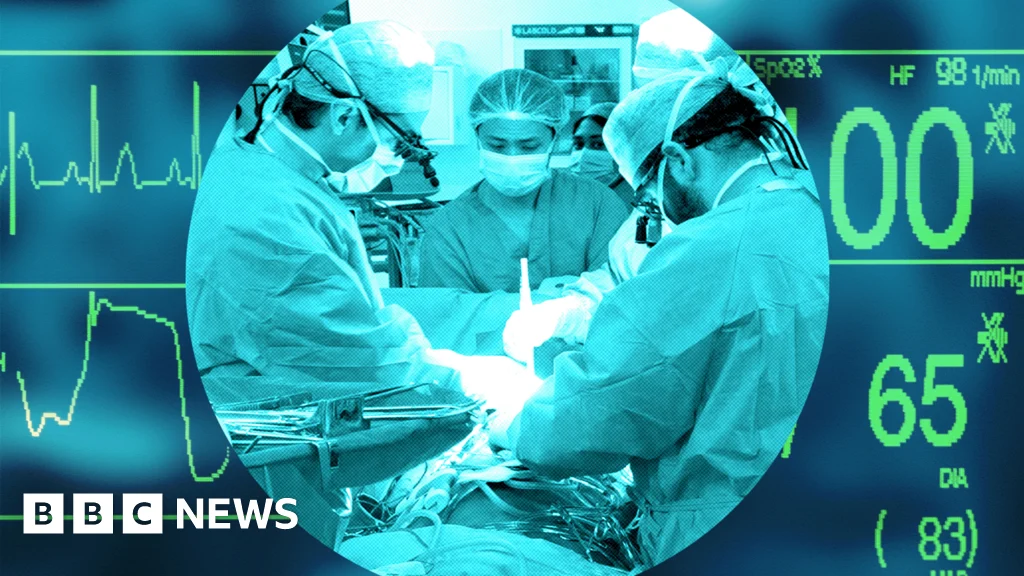
"Once at the forefront of medical innovation, the UK’s heart and lung transplant system is now marked by outdated technology, chronic underinvestment, and a critical ‘brain drain’ of expertise, leaving patients in prolonged limbo and jeopardizing life-saving opportunities."
This stark assessment reveals a profound decline in a vital area of British healthcare. What was once a beacon of pioneering surgery and exceptional patient outcomes, lauded globally for its advancements in organ transplantation, now struggles to keep pace with its Western counterparts. A BBC File on 4 investigation has uncovered systemic failures ranging from technological stagnation and insufficient funding to a debilitating loss of skilled surgeons, all contributing to a system where the number of critical heart and lung transplants has remained stagnant for three decades, leaving hundreds of patients like Jodie Cantle caught in a cycle of hope and devastating cancellations.
The United Kingdom, particularly in the latter half of the 20th century, boasted a formidable reputation in organ transplantation. Visionary surgeons like Sir Magdi Yacoub, a titan in the field, propelled the nation to the forefront of cardiac surgery, performing groundbreaking procedures that saved countless lives and inspired global medical practice. Yet, the current reality paints a drastically different picture. Despite a robust organ donation rate comparable to or even exceeding many European nations, the actual utilization of donated hearts and lungs in the UK lags significantly. Only one in ten donated lungs and one in seven donated hearts are ultimately transplanted, a stark contrast to some leading countries that manage to utilize twice as many. This inefficiency translates directly into fewer life-saving operations, with the NHS performing fewer heart transplants and half as many lung transplants per capita compared to many European peers.
For individuals like Jodie Cantle, a 34-year-old battling severe cystic fibrosis, the system’s failings are a lived reality. Dependent on an oxygen cylinder around the clock, Jodie desperately awaits a double lung transplant, her only pathway to a semblance of a normal life. Over the past seven years, she has endured the agonizing cycle of hope and despair seventeen times, each offer of new lungs ultimately cancelled. Reasons for these devastating setbacks have varied, from the unavailability of an operating theatre to the organs being deemed unsuitable. "I feel the world is moving on without me," Jodie shares, her voice tinged with the weariness of prolonged uncertainty. "I’m just here, on hold." While she praises her care team at London’s Harefield Hospital, the systemic frustrations are palpable. Harefield Hospital acknowledges the complexity of such decisions, stating that "multiple, complex factors" are carefully considered for each patient. However, the repeated cancellations highlight a deeper issue within the broader infrastructure.
A primary culprit identified by a dozen surgeons and experts interviewed by the BBC is the outdated technology and infrastructure plaguing the NHS. Crucially, the UK health service has failed to invest in advanced diagnostic tools such as CT coronary angiogram machines, which are routinely used in other developed nations. These sophisticated imaging devices allow clinicians to meticulously scan donor hearts, providing detailed insights into their condition and preventing the tragic discarding of healthy, viable organs due to a lack of comprehensive assessment. Conversely, without such detailed knowledge, there is an inherent risk of transplanting organs that may harbor undetected diseases, leading to severe post-operative complications for recipients.
Furthermore, the archaic reliance on ice boxes for transporting precious donor hearts and lungs between hospitals persists in many parts of the UK. While seemingly a minor detail, this method of cold storage can cause significant damage, leading to the hardening of delicate transplant organs and increasing the likelihood of complications post-surgery. Modern alternatives, such as normothermic ex-vivo perfusion machines (often referred to as Organ Care Systems or OCS), offer a revolutionary approach. These devices maintain donor organs in a near-physiological state, keeping them beating and oxygenated during transport. Critically, they also allow for real-time assessment of an organ’s viability, expanding the window for transplantation and enabling the use of organs that might otherwise be deemed unsuitable. Yet, these life-changing technologies are only part-funded by the NHS, creating a postcode lottery of access. In contrast, Scotland, with additional financial backing from its government, has seen its Glasgow transplant centre "substantially" improve its ability to accept donor hearts through greater adoption of these advanced devices.
The challenges extend beyond the operating theatre, impacting long-term patient outcomes. Even after a successful transplant, the UK’s five-year survival rates for both heart and lung recipients lag behind global best practices. Long-term follow-up care is paramount for transplant patients, who require lifelong immunosuppressant medication to prevent organ rejection. While essential, these powerful drugs carry significant side effects, including increased risks of skin cancer, kidney failure, and other severe health issues. Consistent, integrated, and specialist post-transplant care is crucial to manage these complications and ensure patient well-being.
Zanib, 34, experienced this critical gap firsthand. Following a successful lung transplant in Manchester in January 2020, her kidneys began to fail five years later, necessitating admission to intensive care. She recounts how repeated referrals from her transplant team to the trust’s renal specialists were consistently ignored. It was only after she, while critically ill, escalated her case to senior hospital management that she finally received the necessary attention. Now, Zanib endures energy-sapping dialysis three times a week, a permanent consequence of her kidney failure, severely impacting her employment and social life. "The system… just doesn’t work for patients like me," she laments, highlighting the profound emotional and physical toll. "We should feel safe and supported, rather than more anxious, more vulnerable and more stressed." Manchester University NHS Foundation Trust, while not commenting on individual cases, affirmed that "patient outcomes and safety are at the forefront of our treatment plans for all our patients." Patient advocate Jess Jones echoes this sentiment, emphasizing the absurdity of excelling in surgery only to falter in subsequent care. She points to countries like Australia, which boasts five-year survival rates "20% above what we do," as a model for comprehensive, wraparound support.
The geographical disparity in service provision within the UK further exacerbates the problem. England has five heart and lung transplant centres (Newcastle, Manchester, Birmingham, Cambridge, London), alongside a heart transplant unit in Glasgow. Patients from Wales and Northern Ireland must travel to one of these English or Scottish centres for their life-saving procedures. The waiting times reveal a shocking unevenness: a patient in Birmingham might wait over four and a half years for a heart transplant, while a counterpart in Cambridge faces an average wait of approximately eight months. Birmingham’s inability to expand its service due to a lack of funding starkly contrasts with Cambridge’s Royal Papworth Hospital. Papworth, which performed the UK’s first successful heart transplant in 1979, has made transplantation its central focus. Unburdened by A&E or maternity services, its dedicated teams benefit from robust managerial backing to maximize transplant activity. Dr. Steve Pettit, Papworth’s clinical lead, states that the hospital "bends over backwards to make transplants happen to ensure that we say yes to every good donor organ." Notably, Papworth also pioneered the Donation after Circulatory Death (DCD) technique, a significant advancement that now accounts for roughly a quarter of all heart transplants in the UK. However, even this innovation was funded by the hospital’s charity, not by direct NHS investment, underscoring the systemic funding challenges.
Adding to these woes is a debilitating "brain drain" of highly skilled professionals. The UK’s once-revered transplant sector is losing its brightest minds to more appealing and lucrative opportunities overseas. In the last two years alone, half of the six UK heart and lung transplant centres have lost their top surgeons, with others actively seeking positions abroad. Mr. Jorge Mascaro, formerly the director of heart and lung transplants in Birmingham, made the difficult decision to move to the United States. His departure was driven, in part, by profound frustration over the NHS’s chronic lack of investment in its transplant service and critical staffing shortages. Mascaro warns of a grim future: "transplantation is going to shrink and shrink progressively [in the NHS], and it may be that you’re going to end up with only a couple of [hospitals] doing transplantation because the others will not be able to recruit enough staff." He also highlights a ripple effect: as experienced surgeons depart, junior colleagues lose vital mentorship, becoming increasingly "risk averse" and consequently more selective about the organs they are willing to accept, further reducing the utilization rate of donated organs. "It’s getting worse," Mascaro concludes, painting a stark picture of a system in steady decline.
The systemic issues plaguing heart and lung transplantation were not unknown to authorities. A comprehensive report commissioned by the Conservative government in 2024 meticulously outlined these problems. NHS England was subsequently tasked with implementing the report’s recommendations, designed to make transplant services "fit for the future." However, surgeons and campaigners widely believe that progress has been painstakingly slow. Robbie Burns, a former executive director at NHS hospitals and a transplant recipient himself, now a patient representative, criticizes the lack of decisive action. "There’s been a lack of focus and a lack of oversight at a national level," he asserts. "I think the improvement has been extremely marginal and nowhere near the level that we need to achieve our goal of being a world-leading transplant service." Sir Magdi Yacoub, the very architect of the UK’s past transplant glory, attributes the current crisis to a persistent lack of investment and the deprioritization of these life-saving services. "We need to have more people, more money, physical resources," he urges, lamenting that while the expertise still exists, the capacity to apply it to patients has significantly diminished.

In a significant administrative shift, responsibility for transplant services is slated to transfer to the Department of Health and Social Care (DHSC) following the abolition of NHS England. While the Minister for Transplantation, Dr. Zubir Ahmed (himself a transplant surgeon in Glasgow), initially agreed to an interview with the BBC, the offer was later retracted by the government’s press team. Instead, a statement from the DHSC acknowledged inheriting a "broken NHS" and recognized "the systemic issues facing cardiothoracic transplantation and the impact this is having on patients waiting for a life-saving transplant, as well as their loved ones." The department pledged to write to the NHS, demanding the "urgent implementation" of the 2024 recommendations.
Mr. Aaron Ranasinghe, a Birmingham surgeon speaking on behalf of NHS Blood and Transplant (NHSBT), which oversees pre-transplantation services, confirmed awareness of the systemic problems. "We’re already trying to do better," he told File on 4 Investigates, noting that "numbers of transplants are building year on year." However, he crucially added, "But we need adequate funding to follow that to allow us to reach potential." When approached for comment, the UK’s individual transplant centres universally stated their commitment to developing services and prioritizing patient safety and outcomes.
The trajectory of the UK’s heart and lung transplant system from global leader to a struggling service is a poignant reminder of how critical sustained investment, technological modernization, and strategic workforce planning are in advanced healthcare. Without a concerted, well-funded national effort to address these deeply entrenched issues, the hope for patients like Jodie Cantle and Zanib, and the legacy of British medical excellence, remain precariously at risk. The urgency for reform is not merely administrative; it is a matter of life and death for hundreds across the nation.