
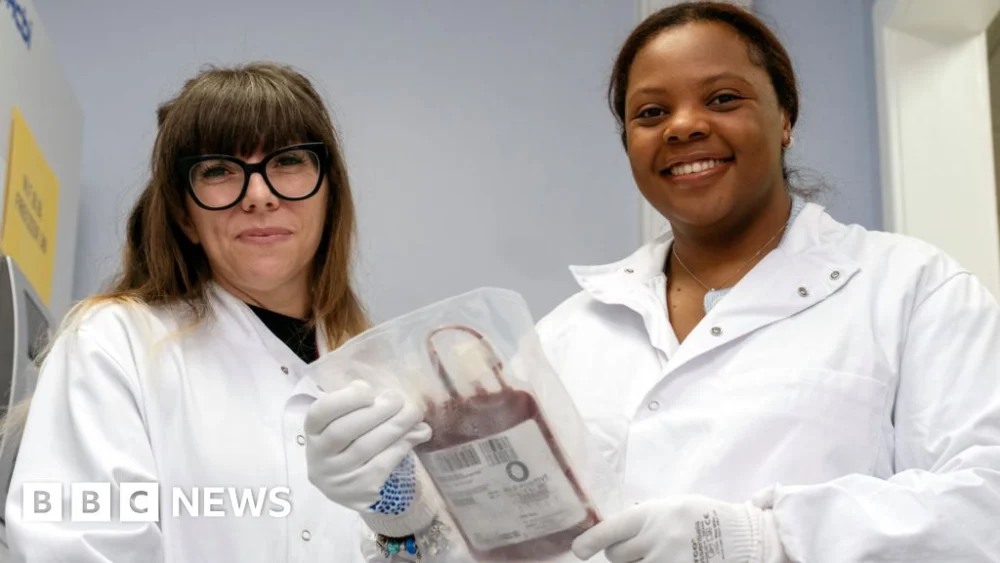
"To be among the select few whose blood is so rare it’s frozen for decades is not just a personal honour, but a profound responsibility that underpins life-saving medical interventions for patients with exceptionally unique needs."
This statement encapsulates the extraordinary contribution of individuals like Mina Stoddart-Stones, a woman whose unique blood type places her at the forefront of medical rarity, providing a critical lifeline that can be stored for up to 30 years. Her story illuminates the intricate world of blood banking, where certain donations are not merely valuable but indispensable, serving patients who depend on these highly specific, often incredibly scarce, resources for their survival and well-being.
The intricate world of human biology reveals astonishing variations, none more critical in a medical context than blood types. While most people are familiar with the ABO and Rh systems, a much deeper and complex array of antigen systems dictates the true compatibility of blood for transfusion. It is within this intricate tapestry that individuals like Mina Stoddart-Stones emerge as vital contributors, possessing blood so rare that their donations are not just appreciated but meticulously preserved, sometimes for decades, to ensure that patients with similarly unique physiological profiles have access to life-saving treatment.
Mina Stoddart-Stones, a 26-year-old from Bridgwater in Somerset, recently discovered the profound significance of her regular blood donations. What began as a routine act of altruism transformed into an understanding that she is, in the words of NHS Blood and Transplant (NHSBT) professionals, a "VIP." Her blood type, specifically U negative and N negative, signifies a deficiency in antigens that are present in nearly 100% of the UK population. This extreme rarity means that only nine donors across the entire United Kingdom share her exact blood profile.
The implications of such a rare blood type are far-reaching. When a patient requires a blood transfusion, their immune system meticulously checks for compatibility. If incompatible blood is introduced, the immune system can mount a severe, potentially fatal, reaction. For individuals with extremely rare blood types, finding a compatible donor can be a monumental challenge. This is where the strategic foresight and advanced capabilities of organisations like NHSBT become critical. They identify, track, and carefully manage a rare donor panel, a registry comprising approximately 1,200 individuals, representing a mere 0.01% of the UK’s 800,000 active blood donors. Mina is a proud member of this elite group.
Adding another layer of complexity and importance to Mina’s donations is the presence of the RO subtype. This particular subtype is not only rare but also critically important, often found in individuals of Black African or Caribbean descent. Its significance is underscored by its crucial role in treating specific patient populations, particularly those suffering from conditions like sickle cell disease, an inherited blood disorder that disproportionately affects these communities and often necessitates frequent, carefully matched blood transfusions. The RO subtype is vital because patients with sickle cell disease can develop antibodies to common blood types over time, making transfusions with standard blood increasingly risky. Rare subtypes like RO provide a safer, more effective option, preventing severe transfusion reactions and improving patient outcomes.
Joanne Mathews, manager of NHSBT’s National Frozen Blood Bank in Liverpool, articulates the profound respect and admiration held for donors like Mina, likening meeting her to encountering "royalty." This sentiment underscores the immense value placed on these unique contributions. The National Frozen Blood Bank itself is a testament to advanced medical logistics and cryopreservation technology. Here, units of exceptionally rare blood, like Mina’s, are processed and stored at ultra-low temperatures, often in liquid nitrogen, a process that can preserve them for up to 30 years. This long-term storage is essential because finding an exact match for a patient with a rare blood type can be incredibly difficult, and having a reserve available for planned surgeries, emergencies, or chronic conditions is a matter of life and death. The bank acts as a strategic reserve, ensuring that when a patient with a U negative and N negative, RO blood type requires a transfusion, a compatible unit is available, even if the original donor is not immediately able to donate.
The clinical application of these rare blood units is highly specific and meticulously managed. They are reserved exclusively for patients who share the exact same rare blood type. These patients often face unique medical challenges, ranging from complex surgical procedures where blood loss is anticipated, to individuals requiring regular, lifelong transfusions due to chronic blood disorders. Conditions such as sickle cell disease, thalassaemia, and certain forms of aplastic anemia necessitate frequent blood transfusions to manage symptoms and prevent life-threatening complications. For these patients, receiving precisely matched blood is not just beneficial but absolutely vital to avoid severe immune responses and ensure the efficacy of the treatment.
Mina’s commitment to blood donation extends beyond her unique blood type; she is also registered on the stem cell register, further demonstrating her dedication to aiding the health service. Her motivation is deeply personal, rooted in gratitude and a desire to give back. Having experienced illness as a baby and witnessing her father’s battle with cancer, Mina profoundly understands the critical role that medical care and donations play in saving lives and supporting families. Her sentiment, "That little little bit that I can do helping them as much as they’ve helped my family," eloquently captures the altruistic spirit that drives countless donors.
The identification and management of rare blood donors like Mina Stoddart-Stones are complex undertakings that rely on sophisticated laboratory testing and robust national and international collaboration. When a donor is identified with an exceptionally rare blood type, their blood undergoes comprehensive phenotyping to precisely map its antigenic profile. This detailed information is then entered into national databases, allowing NHSBT to match these unique donations with patients in need across the UK. In some cases, if a specific rare blood type is unavailable nationally, international rare donor programs facilitate global sharing, highlighting the universal nature of this critical medical need.
The existence of such specialized blood types underscores the profound diversity of human genetics and the constant need for a broad and diverse donor pool. While individuals with common blood types are always needed, the search for rare donors, particularly from ethnically diverse backgrounds, is an ongoing priority. Genetic variations that result in rare blood types are often more prevalent within specific ethnic groups. For instance, the RO subtype, which Mina also possesses, is more commonly found in people of Black African and Caribbean heritage. Encouraging donation from these communities is therefore vital to ensure that patients from these backgrounds, who may require these specific rare types, have access to compatible blood.
Mina Stoddart-Stones’ story is a powerful reminder of the hidden heroes within our communities and the intricate, often unseen, mechanisms that underpin modern medicine. Her rare blood is more than just a biological anomaly; it is a profound gift, meticulously preserved and strategically deployed, offering hope and healing to those facing the most challenging health circumstances. Her selfless act of donation, combined with the advanced science and dedication of NHSBT, creates an indispensable lifeline, ensuring that even the rarest of human needs can be met with extraordinary compassion and precision.