
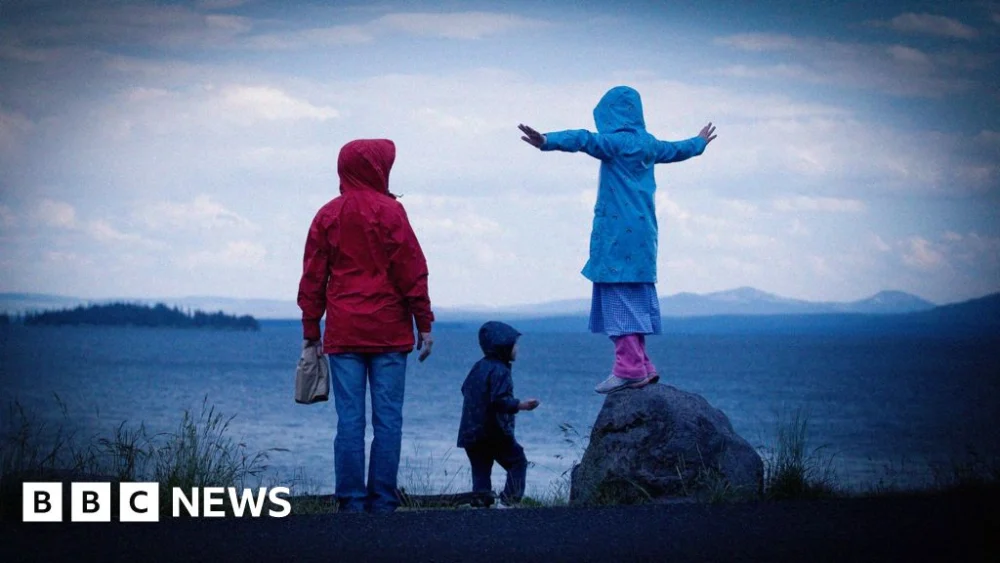
"Despite profound love for their children, a growing number of mothers are privately grappling with deep regret over becoming parents, challenging societal ideals and highlighting the immense, often unacknowledged, sacrifices of motherhood."
This sentiment, often cloaked in silence due to fear of judgment, reveals a complex truth about contemporary parenthood. It underscores a significant disconnect between the idealized image of maternal bliss and the demanding realities faced by many women, prompting a critical examination of societal expectations, support structures, and the profound personal toll of raising a family. This hidden struggle, increasingly discussed in anonymous online forums and academic studies, invites a more honest conversation about the multifaceted experiences of motherhood.
For Carmen, a teacher in her 40s, the love for her 10-year-old son, Teo, is undeniable and fierce. Yet, she openly states that if given the chance to rewind time, she would choose a different path, one that did not include motherhood. "Motherhood has taken my health, my time, my money, my strength, and my body," she laments. "The price is too high, and the cost is forever." Carmen’s candid admission places her within a clandestine community of women who harbor a profound, yet rarely voiced, regret about becoming mothers.
The immense pressure and often overwhelming sacrifice inherent in motherhood are subjects gaining traction in cultural narratives. The Oscar-nominated film If I Had Legs I’d Kick You offers a visceral portrayal of this struggle through actress Rose Byrne’s character, Linda. Linda embodies the archetype of a burnt-out mother, isolated in her relentless efforts to meet her daughter’s needs while simultaneously trying to maintain the fragile scaffolding of family life. This cinematic representation resonates deeply with women like Carmen, who describe motherhood as an "endless job" that feels like an inescapable "trap." The film’s unflinching look at the emotional and physical toll provides a rare public mirror for private suffering.
The reluctance to voice such feelings stems from a deep-seated fear of societal condemnation. Women who shared their experiences for this report did so only under strict conditions of anonymity, acutely aware that their families and broader social circles remain unaware of their internal conflict. Carmen herself once tentatively broached her feelings on a general parenting forum, only to be met with reactions ranging from empathy to outright hostility, with some labeling her "a monster." This fear of judgment effectively silences many, forcing them to wear a mask of contentment.
Psychotherapist Anna Mathur emphasizes that maternal regret rarely signifies an absence of love for the child. Instead, it frequently manifests as "a sense of isolation, exhaustion, or lost identity." Carmen’s experience aligns with this, as her regret is not directed at Teo, whom she describes as "a fantastic, adorable boy… kind, easy-going, and a brilliant student." Her love for him is unconditional; she would "give my life for him without a doubt." Her struggle is with the role itself, particularly the crushing responsibility of raising "a good citizen, a good and happy person," a burden made heavier by her self-described perfectionism.
Carmen’s own upbringing, marked by poverty, dysfunction, and violence, fueled her fervent desire to provide Teo with a childhood she never experienced. She vowed he would never feel unloved. Initially, motherhood was a "joy," with Teo being a good sleeper and maternity leave offering pleasant days of bonding. However, this idyllic period was shattered when Teo began exhibiting serious developmental delays. Every seemingly simple moment transformed into a source of "observation and concern," plunging Carmen into a vortex of guilt and anxiety about his future. Though Teo ultimately thrived without the feared conditions, the prolonged stress and constant worry took a significant toll on Carmen’s physical health, leading to the development of an autoimmune disease – a stark illustration of the profound mind-body connection in chronic stress.
Israeli sociologist Orna Donath, whose groundbreaking book Regretting Motherhood: A Study brought this phenomenon into academic discourse, argues against the careless assumption that maternal regret equates to unloving or neglectful parenting. Her interviews with 23 mothers consistently highlighted a crucial distinction: a deep love for their children coexisting with a profound regret over the decision to become a mother. Many participants expressed feeling "cheated" by the idealized, often saccharine, version of motherhood perpetuated by society, finding the reality far removed from the romanticized narrative. One mother of two teenagers articulated this paradox succinctly: "I regret having had children and becoming a mother, but I love the children that I’ve got… I wouldn’t want them not to be here, I just don’t want to be a mother."
While comprehensive data remains scarce due to the sensitive nature of the topic, what little research exists suggests these feelings are not uncommon. A 2023 study conducted in Poland estimated that between 5% and 14% of parents regret their decision to have children and would opt for childlessness if they could turn back time. This significant percentage underscores a widespread, yet largely unaddressed, parental experience.
In the absence of open societal dialogue, parents are increasingly finding solace and validation in online communities. Carmen discovered she was not alone when she joined the Facebook group "I Regret Having Children," which now boasts over 96,000 members globally. This digital sanctuary allows for anonymous sharing, fostering a sense of solidarity among those grappling with similar emotions. One mother from Australia, with a five-year-old, confided that while motherhood has its "sweet moments," they fail to compensate for the lost freedom. She describes "wearing my mask around my daughter well," but in her private moments with her husband, the mask comes off, and she yearns for solitude. Her financial situation is strained, and her ambitions – travel, starting a business, building investments – have been sidelined, leaving her with a profound loss of motivation beyond the monumental task of "trying to raise a decent human being in this messed up world."
Another mother in the UK voiced her frustration at the tendency to dismiss her unhappiness as merely postnatal depression. "People are more comfortable labeling it as that," she stated, emphasizing that her children are now adults, yet she still "grieve[s] the life I never got to have." The "caregiving never ends," she added, expressing concern about the impending responsibilities of future grandchildren. This highlights a crucial distinction: genuine regret over the life path chosen, rather than a treatable mental health condition.

The "I Regret Having Children" Facebook group, founded in 2007, operates by posting anonymous stories submitted by parents, primarily women. Gianina, 44, a laboratory scientist from the US and the group’s moderator, clarifies its purpose: "The aim has never been to shame parents or promote a particular lifestyle." Instead, it functions as a vital platform for "documenting a cultural phenomenon that doesn’t often have space in mainstream conversations." She notes the group’s substantial and active membership is a testament to the multitude of individuals "quietly grappling with feelings they were told they weren’t supposed to have." For Gianina herself, reading these stories ultimately influenced her decision not to have children.
Margaret O’Connor, an Irish counsellor and psychotherapist specializing in helping individuals navigate the decision of parenthood, observes a marked shift in how younger adults approach this choice compared to older generations. There is "much more realization that it’s a choice," she explains, rather than an automatic life stage. She counsels individuals in their 20s and 30s who, despite wanting children, seek support to understand and prepare for the challenges involved. O’Connor cautions against readily accepting the romanticized "village" ideal, where communal support is assumed. "The message we get generally is, ‘We’ll all be here to mind the baby’ – but people often aren’t – it’s your baby and you’ll be responsible for them," she warns, highlighting the pervasive myth of readily available community support in increasingly atomized societies.
While pinpointing specific "red flags" for maternal regret remains elusive due to the unique nature of each individual’s experience, O’Connor stresses the importance of making this monumental decision for one’s "own reasons," free from external pressures from partners, parents, or societal norms. She underscores that experiencing regret is a completely normal response to such an enormous and demanding role, advocating for therapy as a safe, non-judgmental space to explore and process these complex emotions.
Anna Mathur acknowledges that maternal regret is not always "reversible in a neat or total sense." For some, the feelings may "soften or change significantly with support, rest, time, and a shift in circumstances," such as improved childcare or a child reaching a more independent age. However, for others, "elements of that feeling may remain regardless, and it’s important we allow space for that honesty without the shame." Orna Donath’s study corroborates this, with some women finding solace not in the hope of regret disappearing, but in accepting its permanence. One participant, in a letter to Donath, shared that accepting her regret, rather than fighting it, prevented her from being "crushed every time she understands that it’s not going away."

Carmen, too, believes her feeling of regret is permanent, a direct consequence of the "forever" sacrifice. Yet, years of therapy have been instrumental in helping her accept herself and her feelings about motherhood, leading her to declare, "I no longer live feeling bitter." She has consciously begun to reclaim aspects of her identity and well-being, prioritizing gym visits and social outings, and crucially, giving herself permission to shed the mantle of perfectionism. Learning to set boundaries, like saying, "’No, sorry, I’m tired and I’m going to have an early night. Have whatever you want for supper; Daddy is here,’" has been transformative. She has discovered that the world does not, in fact, implode when she prioritizes her needs. This allows Teo to see her as a human being, with imperfections, and he is "okay with that."
Despite the pervasive regret, moments of profound connection and love remain central to Carmen’s life. Each night, before Teo drifts to sleep, they share a quiet ritual, climbing into the same bed to unpack the day. As Teo snuggles into the warmth of the duvet, Carmen reflects, "It’s when I truly connect with Teo and see the person I love most in the world." In these tender moments, the weight of regret momentarily lifts, allowing her to affirm, "I don’t feel like a monster anymore."
If you have been affected by any of the issues raised in this story, information and support can be found at the BBC’s Action Line.