
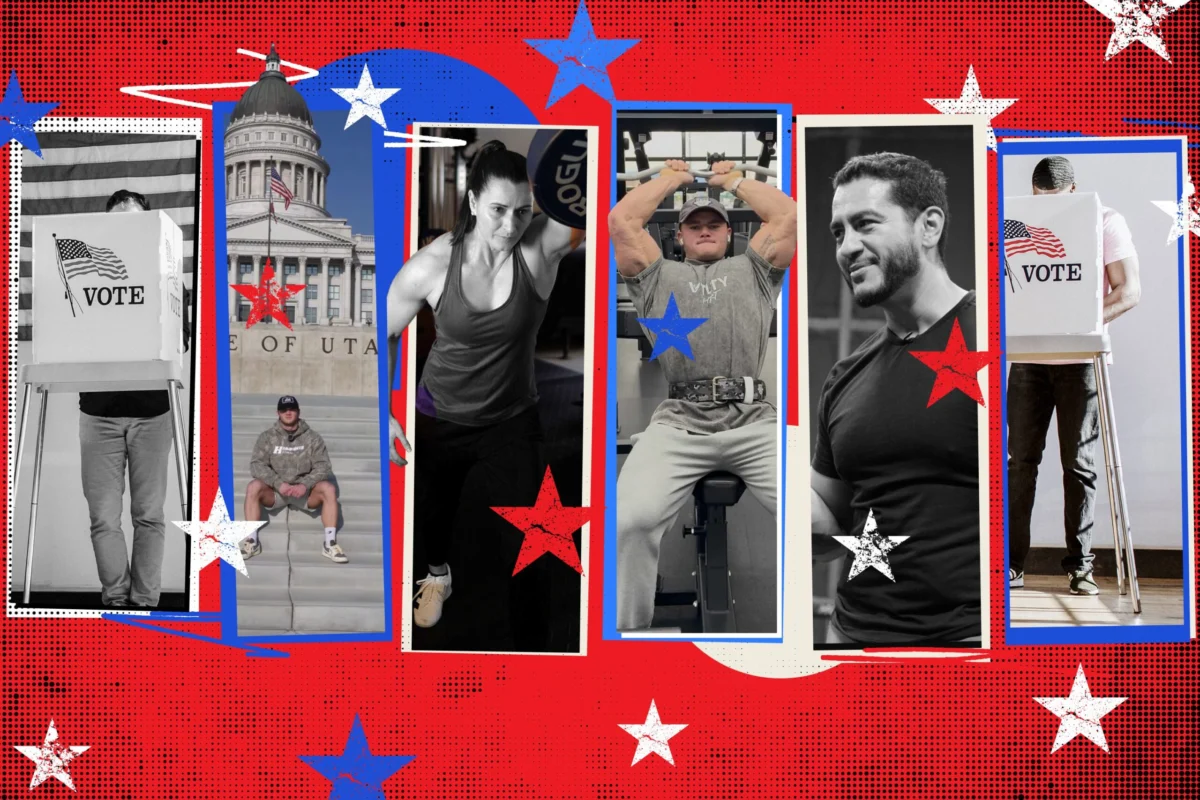
"In a political landscape dominated by aging incumbents, a new generation of candidates is leveraging physical fitness as a powerful proxy for discipline, authenticity, and the youthful vigor required for modern governance."
As the American electorate grows increasingly wary of a perceived "gerontocracy" in Washington, political hopefuls are finding unconventional ways to signal their capability and readiness for office. Beyond the traditional campaign trail of town halls and televised debates, a burgeoning movement of "fitness-first" candidates is emerging on social media, using the gym as a secondary platform for policy discourse. By showcasing their physical prowess—from bench pressing heavy iron to grueling rucks—these candidates are attempting to bridge the gap between their personal discipline and their professional promises, suggesting that a leader who can master their own body is uniquely qualified to manage the body politic.
The traditional image of an American politician has long been one of polished suits, rehearsed speeches, and a certain degree of physical removal from the everyday rigors of the average citizen. However, a 25-year-old candidate for Utah’s House of Representatives, Andrew Uz, is challenging this archetype with a simple, provocative question: "Can your congressman bench 225?" In a viral Instagram reel, Uz, clad in a suit and tie, transitions from a direct address to the camera to a weight bench, where he knocks out repetitions with 225 pounds as "Hail to the Chief" plays in the background. While the video carries a comedic undertone, the message is earnest. Uz is an IFBB professional bodybuilder who recently won his division in Classic Physique at the 2025 Amateur Olympia in Las Vegas. His candidacy represents the furthest extreme of a growing trend where physical fitness is being used as a primary tool for voter engagement and brand building.

Uz is far from an isolated case. Across the United States, candidates from both sides of the aisle are hitting the gym to prove they have the "stamina" for public service. From the mayors of Miami to Senate hopefuls in Michigan and congressional candidates in Florida and New York, the "fitness flex" has become a staple of the modern digital campaign. This shift is not merely about vanity; it is a calculated response to a specific set of voter anxieties regarding the age and energy levels of the nation’s leadership.
The demographic reality of the American government provides the necessary context for why this trend has gained such traction. According to data from the Pew Research Center, the 119th Congress remains significantly older than the general population it represents. While there has been a slight shift toward younger generations, the presence of "Booster" and "Silent Generation" members remains dominant. Donald Trump and Joe Biden consecutively set records as the oldest presidents ever inaugurated. In the House of Representatives, members over the age of 80 outnumber those 30 or younger by a ratio of 17 to one. This age gap has fueled a public appetite for change, with 79 percent of Americans surveyed by Pew in 2023 expressing support for age limits for federal elected officials.
For candidates like Uz, showing vigor is a way to distinguish themselves from the "low energy" labels often pinned on career politicians. But for others, like Abdul El-Sayed, a 41-year-old running for the U.S. Senate in Michigan, the gym is a venue for radical transparency and outreach. El-Sayed, a former D1 lacrosse player, frequently shares his morning lifts and runs on social media, occasionally collaborating with fitness influencers like Dr. Mike Israetel. El-Sayed views these interactions as a way to reach an under-addressed portion of the public—those who might not tune into a Sunday morning news program but are deeply invested in health and wellness communities.
El-Sayed’s strategy highlights the "handshake" potential of fitness content. By engaging in the shared interest of physical training, he opens a door to policy discussions that might otherwise be ignored. He famously engaged in a Twitter dispute over his bench press form after posting a video of himself lifting 315 pounds. While the interaction was contentious, El-Sayed viewed it as a net positive for his campaign. His logic is simple: if a voter follows him because of a viral moment in the gym, they may stay to hear his views on Medicare for All or corporate influence in politics. In the attention economy of modern campaigning, the gym serves as a powerful hook.

This trend also speaks to a deeper desire for "authenticity" in leadership. Cait Conley, a West Point graduate and New York congressional candidate, debuted her campaign with a high-production, slow-motion video of herself bench pressing with chains. She followed this with a series titled "Reps and Real Talk," designed to humanize the political process. Conley argues that for younger Americans, fitness is not a hobby but a core component of their identity and lifestyle. By showcasing her workouts, she is attempting to move past the "cosplay" of traditional politics—the tendency for candidates to act the part of a politician rather than simply being themselves.
The philosophy of bodybuilding, in particular, offers a unique metaphor for governance. Andrew Uz notes that in bodybuilding, one is judged solely on what they deliver on stage on a specific day. "I don’t get judged on my promises. I don’t get judged on my intentions. The only thing that matters is what I deliver," Uz explains. He believes this mindset translates directly to the legislative process. Voters are increasingly seeking leaders who can demonstrate a consistent work ethic and the discipline to pursue long-term goals where progress is measured in months and years rather than daily news cycles. In this view, a candidate’s physique is the physical evidence of their ability to endure "the hard"—the grueling, unglamorous work of incremental change.
However, the "fitness flex" is not without its risks. The line between demonstrating capability and engaging in performative machismo can be thin. If a candidate appears to be "playing a character" rather than authentically sharing their life, the strategy can backfire. El-Sayed warns that voters are savvy enough to spot a candidate who is pretending to be a "gym rat" for the sake of optics. The effectiveness of the trend relies on the candidate’s genuine history with athletics or wellness. When it is authentic, it serves as a bridge; when it is forced, it becomes another layer of the political artifice that voters are already rejecting.
The social media ecosystem also allows for a new kind of "political discourse" through fitness. Bernard Taylor, a Florida firefighter and congressional candidate, responded to Andrew Uz’s bench press video by "remixing" it and showing himself lifting even more weight. This digital interaction, while seemingly trivial, fostered a sense of mutual respect between the two candidates. Uz noted that seeing Taylor’s physical capability made him "like him as a person," despite knowing little about his specific platform. This suggests that fitness can act as a non-partisan "trust signal," creating a baseline of respect between candidates and voters that transcends traditional ideological divides.

As the 2024 and 2026 election cycles approach, the "fitness flex" is likely to become a permanent fixture of the political playbook. It reflects a broader cultural shift where health, longevity, and physical capability are seen as essential components of effective leadership. While a 225-pound bench press does not inherently qualify an individual to write legislation or manage a state budget, it serves as a modern-day "Presidential Fitness Test" performed in the public square of social media. For a generation of voters tired of stagnant leadership, the image of a candidate "doing the hard" in the gym offers a compelling vision of what a more energetic and disciplined government might look like. Whether this trend leads to better policy remains to be seen, but it has undoubtedly changed the way candidates "show up" for the job.