
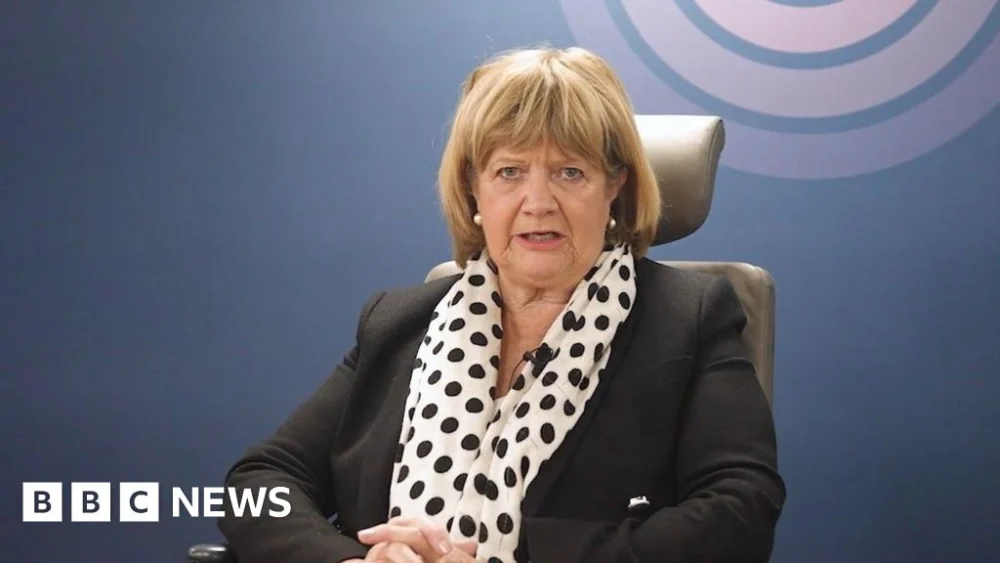
"Despite significant costs and a four-year duration, Baroness Heather Hallett steadfastly defends the UK Covid-19 Inquiry as an ‘extraordinary achievement,’ vital for comprehending the profound suffering caused by the pandemic and ensuring robust national preparedness for future health crises."
The exhaustive public hearings of the UK Covid-19 Inquiry have officially concluded, bringing to a close a nearly four-year process aimed at scrutinizing the nation’s response to the unprecedented global pandemic. On the final day of proceedings, Baroness Heather Hallett, who has chaired the inquiry since its inception, vigorously defended its considerable cost and extended timeline. Her remarks underscored the immense scale of the undertaking and the critical importance of its findings for future national resilience, even as critics continue to question the financial outlay and the inquiry’s protracted nature.
The UK Covid-19 Inquiry, formally established in 2022 with witness hearings commencing in June 2023, was tasked with the monumental responsibility of examining the pandemic’s impact and the governmental and societal responses across all four nations of the United Kingdom. From the outset, its mandate was clear: to learn lessons from the crisis to inform future preparedness and to provide a comprehensive account of events for the public. Baroness Hallett’s concluding statement highlighted the "extraordinary achievement" of completing the extensive hearings within what she deemed a challenging timeframe, emphasizing the sheer volume of evidence and testimonies meticulously gathered and reviewed.
The inquiry’s financial footprint has been a recurring point of contention. With costs for the inquiry itself surpassing £200 million and an additional £100 million spent by various government departments in providing essential documentation and support, the total expenditure is estimated to be well over £300 million. This significant investment has drawn criticism from various quarters, with some arguing that resources could be better allocated elsewhere or that the inquiry has become overly bureaucratic and slow. These voices often articulate a desire to "move on" from the pandemic, focusing instead on recovery and current challenges.
However, Baroness Hallett firmly rebutted such sentiments, asserting that the true value of the inquiry would become evident once its comprehensive reports are published. She articulated a profound belief that when the public grasps "the extent of the suffering that we’ve heard and see the results of the inquiry’s work," they will fully appreciate the "huge scale of loss caused by Covid-19" and understand the fundamental necessity of establishing such an investigative body. Her defense hinges on the principle of accountability and the moral imperative to thoroughly examine a crisis that claimed hundreds of thousands of lives and fundamentally reshaped society.
The sheer scope of the inquiry’s work offers a compelling argument for its duration and cost. Over 600,000 documents, ranging from internal government communications and scientific advice to public health data and personal testimonies, have been meticulously received, categorized, and reviewed. This colossal undertaking involved dedicated teams sifting through vast quantities of information to piece together a coherent narrative of decision-making, policy implementation, and real-world consequences. Furthermore, more than 350 witnesses, including senior government officials, scientific advisors, healthcare professionals, bereaved families, and individuals directly impacted by the pandemic, were called to give evidence. Their testimonies provided crucial insights, often revealing the complex human dimensions behind policy decisions and the profound personal toll of the virus.
The inquiry’s structure reflects the multifaceted nature of the pandemic response. It has already delivered pivotal reports, including an initial assessment of pandemic planning prior to 2020 and a detailed examination of the conduct of the UK Government and devolved administrations during the peak of the crisis. These early findings have begun to shed light on areas of strength and significant weakness in the nation’s preparedness and initial response, covering aspects such as the adequacy of emergency stockpiles, the clarity of communication strategies, and the effectiveness of early lockdown measures.
Looking ahead, Baroness Hallett is poised to publish eight further thematic reports, each delving into critical facets of the pandemic. These upcoming publications will address vital areas such as the National Health Service’s capacity and resilience, the development and rollout of vaccines, the efficacy of the test and trace system, the profound impact of the pandemic on children and young people, and the often-overlooked challenges within the social care sector. This comprehensive series of reports is anticipated to be released sequentially, stretching into the first half of next year, ensuring a thorough and detailed analysis of each domain.
A central tenet of Hallett’s concluding remarks was a fervent appeal to the public: to actively advocate for the implementation of the inquiry’s forthcoming recommendations. She articulated a clear vision that, if these recommendations are "implemented, my recommendations should reduce the number of deaths, reduce the suffering and reduce the social and economic cost" in the face of any future pandemic. This forward-looking emphasis underscores the inquiry’s ultimate goal: to translate historical analysis into actionable strategies for enhanced national security and public health. The recommendations are expected to span a wide array of policy areas, from strengthening public health infrastructure and improving inter-departmental coordination to developing robust economic support mechanisms and refining crisis communication protocols.
The inquiry’s legacy will be defined not merely by its findings but by the extent to which its recommendations are adopted and translated into tangible policy changes. Public inquiries serve a vital function in democratic societies, acting as mechanisms for accountability, historical record-keeping, and learning from national crises. The Covid-19 Inquiry, in particular, carries the immense weight of addressing a period of unprecedented disruption and loss, with the potential to fundamentally reshape how the UK prepares for and responds to future threats.
It is also important to note that the UK-wide inquiry operates alongside a separate, albeit complementary, inquiry established by the Scottish Government. Chaired by Lord Brailsford, the Scottish inquiry is also proceeding with its own distinct timeline for publishing a series of reports this year, followed by hearings focused specifically on the response of Scottish public bodies and policymakers. This parallel process highlights the devolved nature of governance within the UK and the distinct challenges and responses experienced by each nation during the pandemic, offering a nuanced and multi-layered perspective on the overall crisis.
In conclusion, as the public hearings draw to a close, the UK Covid-19 Inquiry stands at a critical juncture. While its duration and financial commitment have invited scrutiny, Baroness Hallett’s resolute defense positions it as an indispensable exercise in national introspection. The culmination of years of rigorous investigation and the forthcoming cascade of reports promise to deliver a definitive account of one of the most challenging periods in modern British history, offering not just a record of the past but a crucial roadmap for safeguarding the nation’s future health and resilience.