
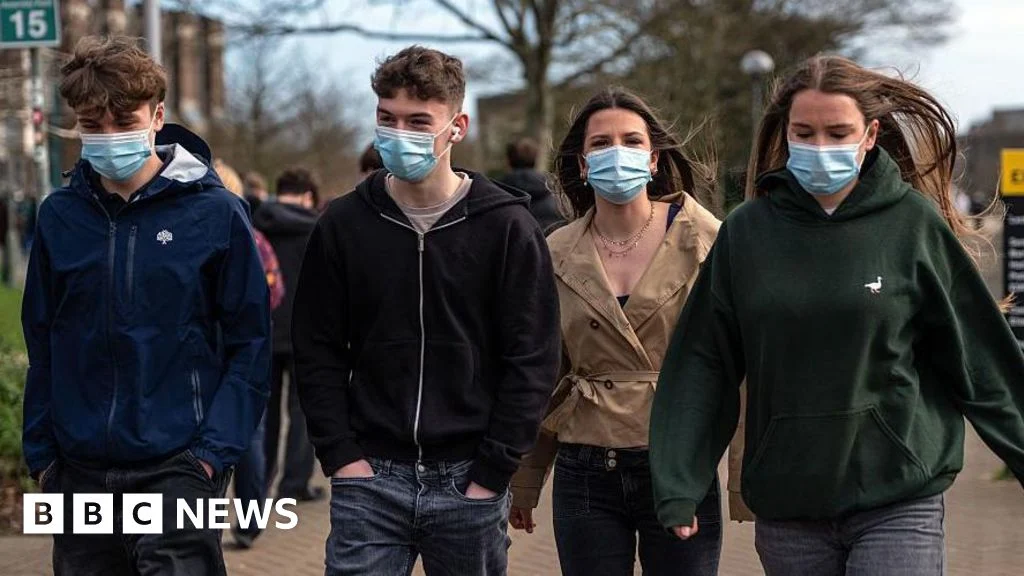
"This unprecedented and explosive meningitis outbreak in Kent defies easy explanation, raising critical questions about transmission dynamics, bacterial characteristics, and environmental factors that transformed a typically rare infection into a rapid public health crisis."
The sudden surge of 20 meningitis cases in a confined area of Kent within a mere week has stunned public health officials and medical experts, prompting an urgent investigation into what makes this outbreak profoundly different from typical patterns. Unlike the isolated incidents usually associated with meningitis, or even the small, contained clusters seen occasionally, this rapid proliferation demands a deeper understanding of the underlying causes, from the behavior of the bacteria itself to the social and environmental conditions facilitating its spread.
Meningitis, a severe infection causing inflammation of the membranes surrounding the brain and spinal cord, is generally rare in the United Kingdom. When cases do occur, they typically manifest as isolated events, or very occasionally, as small, localized clusters. For instance, in 2023, two infants at a nursery in northern England were affected, a scenario that, while concerning, remained limited in scope. Historical precedents exist for larger outbreaks, such as the 65 cases of MenB, including two fatalities, recorded in Gloucestershire during the 1980s. However, that particular outbreak unfolded over four and a half years, a stark contrast to the less-than-a-week timeline witnessed in Kent. This unprecedented rapidity in an infection that normally requires close and prolonged physical contact – spreading far slower than highly contagious airborne pathogens like measles, Covid-19, or influenza – is the central enigma confronting public health authorities.
The immediate challenge lies in identifying the unique confluence of factors that has propelled this outbreak. Despite initial connections to the Club Chemistry nightclub, where 11 out of the first 15 reported patients had partied, this link alone does not provide a complete picture. Activities such as sharing vapes and drinks in a crowded nightclub are common occurrences across the country, making it difficult to pinpoint this as the sole, distinguishing factor. The outbreak, therefore, appears to be an exceptional event unfolding within seemingly unexceptional circumstances, fueling the urgent scientific inquiry.
Neisseria meningitidis, the bacterium responsible for meningococcal disease, including meningitis B, is surprisingly common. Approximately 10% of the UK population carries these bacteria harmlessly in their nose and throat, with this carriage rate climbing to as high as 25% among teenagers and young adults. In the vast majority of cases, these bacteria coexist benignly with their human hosts. It is only in a tiny fraction of individuals that the bacteria manage to breach the protective barriers within the nasal passages, invading the bloodstream and central nervous system to trigger severe conditions like meningitis and sepsis.
Professor Andrew Preston, a microbiologist from the University of Bath, has outlined two primary hypotheses to explain the unusual number of severe illnesses and deaths observed in Kent. He suggests either an "astonishing rate of transmission," implying a significantly higher number of individuals are acquiring the bacteria, or that the infection itself is proving "more invasive" than typical strains. The root cause, he posits, could reside in the inherent characteristics of the bacteria, specific human behaviors, environmental conditions, or a complex interplay of all these elements.
Is This Bacterial Infection Different?
Initial laboratory analysis confirms that the Kent outbreak is caused by group B meningococcal bacteria. However, "group B" is a broad classification encompassing over a hundred distinct strains, each potentially exhibiting different behaviors and varying degrees of virulence within the human body. Some strains are inherently more dangerous, possessing a greater propensity to cause invasive disease and meningitis.
Scientists are meticulously analyzing samples collected from patients to characterize the specific strain responsible. Preliminary findings indicate it is a strain that has been circulating for approximately the past five years. Further, more detailed analysis of the bacterial genetic code is underway to determine if any significant mutations have occurred that might enhance its transmissibility or invasiveness. Concurrently, laboratory tests are investigating how this particular strain grows and behaves in controlled environments, seeking clues to its increased potency or spread.
Beyond the bacterial strain itself, external factors can significantly influence the ease with which meningococcal bacteria transition from harmless carriage to invasive disease. A well-documented example is the "Meningitis Belt" in sub-Saharan Africa, a region stretching across 26 countries from Senegal to Ethiopia. Here, during the dry season, environmental stressors such as dust, high temperatures, and low humidity are thought to damage the delicate mucous membranes at the back of the throat, creating entry points for the bacteria and leading to regular epidemics.
Closer to home, certain human behaviors have been shown to mimic these environmental effects. Smoking, for instance, is known to irritate and damage the respiratory tract, potentially facilitating bacterial invasion. In the context of the current Kent outbreak, there has been speculation regarding the role of vaping. Sharing vapes among groups of friends, a practice arguably more prevalent than sharing traditional cigarettes, could serve as an efficient conduit for the transmission of meningococcal bacteria through saliva. Furthermore, the act of vaping itself is known to cause irritation and inflammation in the airways, which some experts suggest could similarly compromise the body’s natural defenses, making it easier for the bacteria to penetrate and cause illness. Nevertheless, vaping is not a novel behavior nor is it exclusive to Kent, suggesting it is unlikely to be the sole explanation for the exceptional nature of this localized outbreak.
The Super-Spreading Event Hypothesis
The concentrated cluster of cases, with multiple individuals requiring hospital treatment simultaneously, strongly suggests a common infection window. This synchronicity points towards a "super-spreading event." Dr. Susan Hopkins, the head of the UK Health Security Agency (UKHSA), explicitly stated, "This looks like a super spreader event with ongoing spread within the halls of residence in the universities," directly linking the nightclub and university accommodations as potential epicenters.
Super-spreading events are instances where a single infected individual or a specific environment leads to a disproportionately high number of secondary infections, far exceeding the typical transmission rate. Meningococcal bacteria are not highly contagious; they usually require close and prolonged contact to spread, typically within household settings where individuals share living spaces for extended periods. While nightclubs and university halls of residence are indeed environments conducive to close social interaction and thus potential mixing pots for bacteria, they are not unique to this Kent outbreak.
The mechanism behind a super-spreading event in meningitis is still being explored. For other respiratory infections like Covid-19 or influenza, individuals who are often asymptomatic but harbor very high viral loads can unknowingly transmit the pathogen to a large number of people. Whether a similar phenomenon occurred within Club Chemistry, with one or more individuals acting as highly efficient carriers of the meningococcal bacteria, remains an open question.
Professor Andrew Lee from the University of Sheffield has proposed an intriguing hypothesis: that the co-circulation of other common viral respiratory infections, such as influenza, might have played a role. He suggests that these viral infections, by causing symptoms like coughing and sneezing, could have inadvertently made it easier for meningitis-causing bacteria to spread within the crowded environment of the club. "In the scientific literature there are some reported synergies between viral respiratory infections, for example, flu and meningococcal infections as the viral infections may potentiate the spread," he noted. This "potentiation" could involve increased shedding of bacteria or compromised host immunity due to the viral infection.
Another area of investigation concerns host susceptibility. Are some individuals inherently more vulnerable to severe meningococcal disease due to genetic predispositions or other underlying health factors? Furthermore, there is a theory that young people who spent their formative teenage years under Covid-19 lockdowns might have developed a reduced level of natural immunity to various pathogens, including Neisseria meningitidis, due to decreased exposure. This "immunity gap" could theoretically render them more susceptible to severe outcomes upon encountering the bacteria. However, as Professor Preston rightly points out, such a phenomenon would be expected to manifest nationwide, not just in Kent, suggesting it could be a contributing factor but is unlikely to be the sole explanation for the localized intensity of this outbreak.
As investigations continue, many crucial pieces of the puzzle remain missing. Public health officials are working tirelessly to piece together the sequence of events, analyze the bacterial strain, and understand the interplay of human behavior and environmental factors. As Dr. Hopkins concluded, "I can’t yet say where the initial infection came from, how it’s got into this cohort, and why it’s created such an explosive amount of infections." The answers to these questions are not only vital for controlling the current situation but also for informing future public health strategies against this rare but deadly disease.