
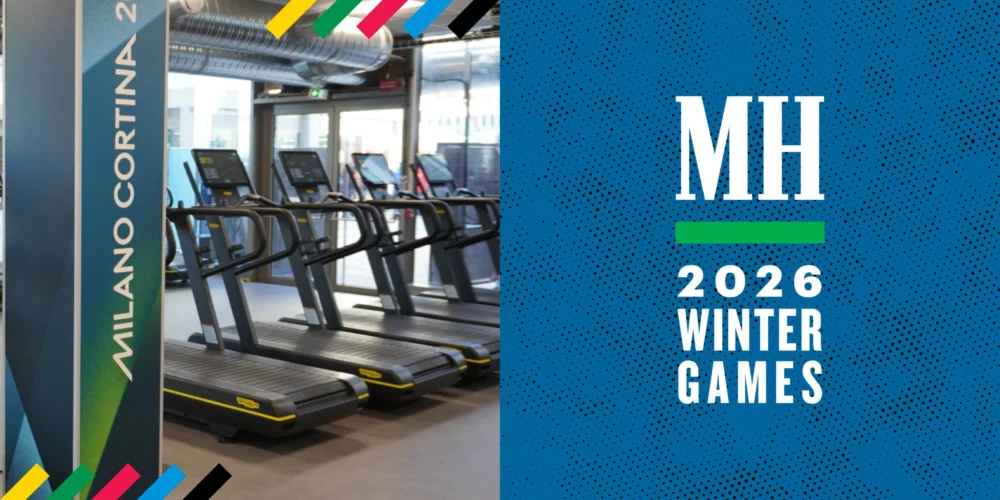
"Olympic preparation has evolved from simple grit to a data-driven science where precision machinery and stabilizing disciplines like Pilates are as vital as traditional power lifts for peak human performance."
As the world’s elite winter athletes descend upon the Italian regions of Milan, Cortina, Livigno, and Predazzo, their success hinges on more than just on-snow skill. The implementation of state-of-the-art training centers, outfitted with cutting-edge Italian technology, provides a standardized yet elite environment where the margin between silver and gold is narrowed through rigorous, sport-specific conditioning and advanced physiological monitoring.
The Architecture of Athletic Preparation
The Milano-Cortina 2026 Winter Games represent a logistical and athletic marvel, spreading competition across the heart of the Italian Alps and the urban sophistication of Milan. To ensure that athletes remain at their physical peak regardless of their specific event location, the organizing committee has established a network of high-performance training centers. These facilities serve as the "engine rooms" of the Games, providing a consistent environment for team members to maintain their strength, power, and cardiovascular endurance during the high-stakes period of competition.
While these centers share a visual DNA with high-end commercial gyms—featuring rows of treadmills, fluorescent lighting, and familiar machine layouts—the similarity is largely superficial. Beneath the surface, these facilities are curated ecosystems designed to facilitate "rate of force development" and injury prevention. Ebenezer Samuel, C.S.C.S., fitness director for Men’s Health, recently toured these facilities to decode the training philosophies that drive the world’s most disciplined competitors. His findings suggest a shift in the athletic paradigm: a move toward controlled, machine-based hypertrophy and stabilizing core work that challenges traditional "old school" notions of performance training.

The Machine Renaissance in Elite Sports
For decades, the prevailing wisdom in athletic circles was that "real" athletes only used free weights. The image of the Olympian was synonymous with the barbell: cleans, snatches, and heavy back squats performed on a platform. However, the Milano-Cortina training centers reveal a significant pivot toward advanced resistance machines.
The primary reason for this shift is safety and the ability to train to failure without the risk of technical breakdown. "Machines are a safe way to build and push muscle and strength because you can fail on them and get very close to fatigue, even if technique isn’t perfect," Samuel notes. For an athlete in the middle of a three-week competition window, a technical error during a heavy free-weight squat could result in a season-ending injury.
Among the standout pieces of equipment is the Technogym Belt Squat. This machine allows athletes to load their lower bodies with massive resistance without placing a barbell on their shoulders, thereby sparing the spine from axial loading—a critical consideration for downhill skiers and snowboarders who already subject their backs to immense G-forces on the slopes. By isolating the legs, athletes can maintain their explosive power without the systemic fatigue associated with heavy spinal loading.
AI and the Data-Driven Athlete
The integration of Artificial Intelligence (AI) has moved from the laboratory to the gym floor. The training centers are equipped with the "Technogym Checkup," an AI-powered station that serves as the gateway to an athlete’s daily routine. These machines perform rapid assessments of an athlete’s physical state, measuring everything from body composition and balance to cognitive reaction time and power output.
In the context of the Olympics, this data is invaluable. Coaches can monitor whether an athlete is overtraining or if their central nervous system is sufficiently recovered for an upcoming heat. This level of biometric feedback allows for "auto-regulation," where a workout is adjusted in real-time based on the athlete’s current physiological readiness. It removes the guesswork from training, ensuring that every repetition in the gym contributes to a podium finish rather than a burnout.

The Rise of Pilates: Stability Over Spectacle
Perhaps the most surprising inclusion for those outside the professional sports world is the presence of multiple Pilates Reformers. Once dismissed as a "boutique fad," Pilates has become a cornerstone of the modern athletic regimen. In the Milano-Cortina facilities, these machines are used to target the "micro-muscles"—the small stabilizers in the hips, core, and shoulders that free weights often overlook.
For winter athletes, stability is everything. A figure skater landing a quad jump or a luger navigating a turn at 90 mph requires an extraordinary degree of proprioception and core integration. The Reformer allows athletes to work through eccentric movements and isometric holds that build a "bulletproof" core. As Samuel observes, while Pilates may not be the "training entree," it is the essential seasoning that prevents the "engine" of the larger muscles from breaking the "chassis" of the skeletal system.
The Cardiovascular Engine of the Winter Games
It is a common misconception that winter sports are purely anaerobic. While a downhill ski run may only last two minutes, the cardiovascular demand is staggering. Furthermore, the ability to recover between heats or rounds is entirely dependent on an athlete’s aerobic base.
The training centers have seen a massive influx of demand for high-end treadmills and stationary bikes. These tools are used for more than just "burning calories." Athletes utilize them for zone-based heart rate training to flush lactic acid from their systems and maintain a high VO2 max. In sports like speed skating or cross-country skiing, the engine is the primary determinant of success. Technogym’s latest treadmills provide specialized surfaces that mimic the reactive forces of different terrains, allowing athletes to maintain their "running economy" even when they are miles away from a track.
Reevaluating the Kettlebell
Interestingly, one tool that has seen a relative decline in prominence at the Olympic level is the heavy kettlebell. While the Milano-Cortina centers do stock them, they are notably lighter and fewer in number than one might find in a dedicated CrossFit "box" or powerlifting gym.

The reasoning is tactical. Kettlebells are exceptional for teaching "bounciness" and rhythmic power, but for the sheer force production required by an Olympian, there are simply better tools. When an athlete needs to develop world-class strength, they turn to the barbell or the plate-loaded machine. When they need to develop explosive power, they turn to plyometrics or Olympic lifts. The kettlebell occupies a middle ground that, while useful for general fitness, is often superseded by more specialized equipment in a high-performance environment.
The Italian Legacy: Technogym and the Games
The choice of equipment provider is not merely a matter of convenience. Technogym, founded in Cesena, Italy, has been the official supplier to the Olympic Games for nine editions. Their presence in the Milano-Cortina centers represents a homecoming of sorts. The company’s philosophy of "Wellness" aligns with the Olympic ideal, but their "Pure Strength" and "Skill" lines are built specifically for the rigors of professional competition.
By providing a uniform fleet of equipment across Milan, Cortina, Livigno, and Predazzo, Technogym ensures that an athlete training in the urban center of Milan has the exact same experience as one training in the high-altitude peaks of Livigno. This consistency is vital for maintaining the "rhythm" of training during the Games.
Conclusion: Lessons for the Everyday Athlete
While the average gym-goer may never face a gold-medal heat, the philosophy of the Milano-Cortina training centers offers universal lessons. The move toward machine-based training for safety, the embrace of Pilates for stability, and the reliance on data for recovery are all strategies that can benefit any fitness enthusiast.
The Olympic training village is a testament to the fact that elite performance is not just about how much weight one can move, but how intelligently that weight is moved. As the athletes of the Milano-Cortina Games continue their pursuit of excellence, they do so supported by a technological infrastructure that is as sophisticated as the sports they play. In the quiet of these training centers, away from the cheering crowds and the cold mountain air, the real work of winning is done—one rep, one data point, and one heartbeat at a time.
