
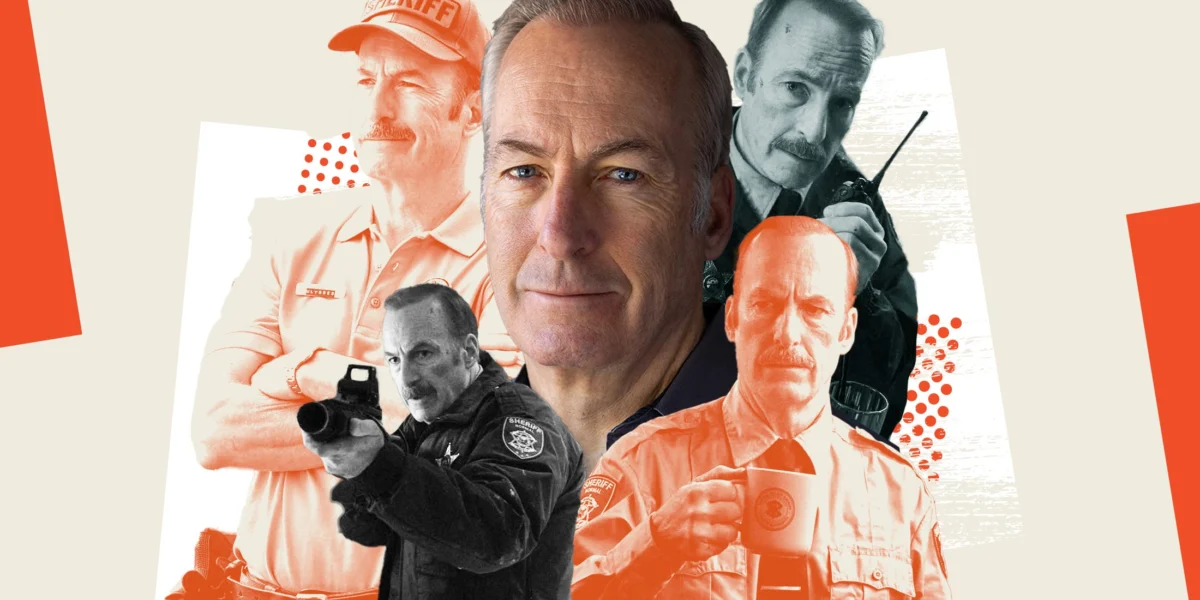
“A screen fight is like a comedy sketch; it has rules, a game playing out, and your job is to tease the tension of the moment until it turns inside out.”
This philosophy underscores Bob Odenkirk’s remarkable late-career transition from a cult comedy writer to a legitimate action powerhouse. By viewing high-octane choreography through the lens of structural timing and character vulnerability, Odenkirk has redefined the modern action hero as someone who is not only capable of violence but also susceptible to the clumsy, painful reality of physical confrontation.

The trajectory of Bob Odenkirk’s career is one of the most improbable and successful transformations in Hollywood history. For decades, Odenkirk was primarily known as a foundational architect of alternative comedy, most notably as the co-creator of the legendary Mr. Show with Bob and David. When he was cast as the "criminal" lawyer Saul Goodman in Breaking Bad, the industry saw a masterclass in supporting dramatic acting. When he carried that character into the six-season epic Better Call Saul, he proved he was a world-class lead. However, few could have predicted his next pivot: the 2021 film Nobody, which saw a then-58-year-old Odenkirk training for two years to become a believable, bone-breaking assassin.
Now, having solidified his status with the 2025 sequel Nobody 2, directed by Indonesian action visionary Timo Tjahjanto, Odenkirk is exploring a different facet of the genre. In his latest film, Normal, directed by the versatile and often subversive Ben Wheatley, Odenkirk steps away from the "retired super-assassin" trope. Instead, he portrays Ulysses, a regular man thrust into extraordinary circumstances. The film represents a synthesis of Odenkirk’s diverse skills—combining the suspense of a noir thriller, the timing of a comedian, and the physical commitment of a stunt performer.
Normal follows Ulysses as he takes on the role of interim sheriff in the sleepy town of Normal, Minnesota, following the mysterious death of his predecessor. The premise suggests a classic Western—the stranger riding into town to clean up the streets—but the execution is far more complex. Ulysses is a man who has lived enough life to be weary of his own instincts. When he realizes the town is harboring dark, potentially lethal secrets, his initial reaction isn’t heroic bravado; it is a hesitant, deeply human desire to look the other way.

This character complexity is partly due to Odenkirk’s increased involvement behind the scenes. For Normal, Odenkirk earned a "story by" credit, having collaborated extensively with screenwriter Derek Kolstad, the architect of the John Wick franchise. Odenkirk’s contributions focused on the first 40 minutes of the film, establishing a textural, character-driven atmosphere reminiscent of mid-century suspense films. By the time the movie veers into the visceral action and horror elements characteristic of director Ben Wheatley, the audience is fully invested in Ulysses not as a killing machine, but as a man who would rather be anywhere else.
One of the most distinctive elements of Odenkirk’s action style is his insistence on "sloppiness." In an era dominated by the hyper-stylized, "gun-fu" choreography of the John Wick clones, Odenkirk’s characters feel refreshingly mortal. In Normal, Ulysses misses punches. He slips on floors. He falls down—not as a choreographed stunt, but as a genuine physical failure. During the film’s production, Odenkirk famously embraced accidental falls in a hardware store and a kitchen, insisting they stay in the final cut.
This approach serves a dual purpose. First, it differentiates his work from the invulnerability of traditional action stars like Jason Statham or Dwayne Johnson. When Odenkirk’s character falls, the stakes immediately rise because the audience realizes he is in real danger. Second, it draws on Odenkirk’s deep roots in physical comedy. He notes that the structure of a fight scene—the setup, the escalation, the "game" of using props, and the eventual "turn" or punchline—is identical to the structure of a sketch. This realization has allowed him to approach stunts not as a feat of athleticism, but as a form of storytelling.

This commitment to physicality is even more poignant when considering Odenkirk’s personal history. In July 2021, while filming the final season of Better Call Saul, Odenkirk suffered a massive heart attack on set. It was a "widowmaker" incident that required three shocks from an automated external defibrillator (AED) and 15 minutes of CPR to restore a rhythm. As he approaches the five-year anniversary of the event, Odenkirk reflects on it with a sense of miraculous gratitude.
Medical professionals later informed him that the rigorous physical training he had undergone for Nobody likely saved his life. The intense cardiovascular workouts had enlarged the veins leading to his heart, allowing more oxygenated blood to reach his cardiac tissue during the 15 minutes he lacked a regular heartbeat. This increased circulation prevented the permanent scarring that typically follows such a severe cardiac event. Today, Odenkirk reports being in excellent health, maintaining a regimen of statins and daily aspirin while continuing to perform high-intensity stunts.
The collaboration on Normal also highlights the importance of the "stunt family" Odenkirk has built. Working again with Derek Kolstad and second-unit director/choreographer Greg Rementer—who worked on both Nobody films—Odenkirk has found a creative shorthand. This trust allows him to suggest narrative-driven changes to fights, such as the inclusion of a "Chekhov’s Gun" in a kitchen brawl to ensure the action serves the plot rather than just the spectacle.

Director Ben Wheatley brings an additional layer of genre-blending to the project. Known for films like Kill List and Free Fire, Wheatley excels at capturing the chaotic, often terrifying nature of violence. Under his direction, Normal transitions from a slow-burn mystery into a full-throttle descent into action-horror. For Odenkirk, this variety is the primary motivator of his current career phase. He has expressed interest in continuing to push the boundaries of the genre, even suggesting a desire to make a PG-rated, bloodless action film inspired by the clever, prop-heavy choreography of Jackie Chan’s early work, such as Police Story.
Despite the physical toll of these roles, Odenkirk remains driven by the same curiosity that led him to the writer’s room of Saturday Night Live and the stage of Chicago’s Second City. He continues to balance his action output with dramatic pursuits, including upcoming stage work on Broadway. His ability to navigate these disparate avenues—comedy, prestige drama, and gritty action—has made him one of the most compelling figures in contemporary entertainment.
Ultimately, Normal is more than just another entry in the "dad-core" action subgenre. It is a testament to the idea that a hero is most interesting when he is vulnerable, and that a career is most rewarding when it refuses to stay in one lane. As Odenkirk moves forward, his work continues to be defined by a profound appreciation for the "miraculous world" around him—a perspective sharpened by a near-death experience and fueled by a lifelong passion for the craft of performance. Whether he is playing a fast-talking lawyer, a suburban assassin, or a small-town sheriff who just wants to be left alone, Bob Odenkirk remains an actor who isn’t afraid to fall down, knowing that the most important part is how you get back up.
