
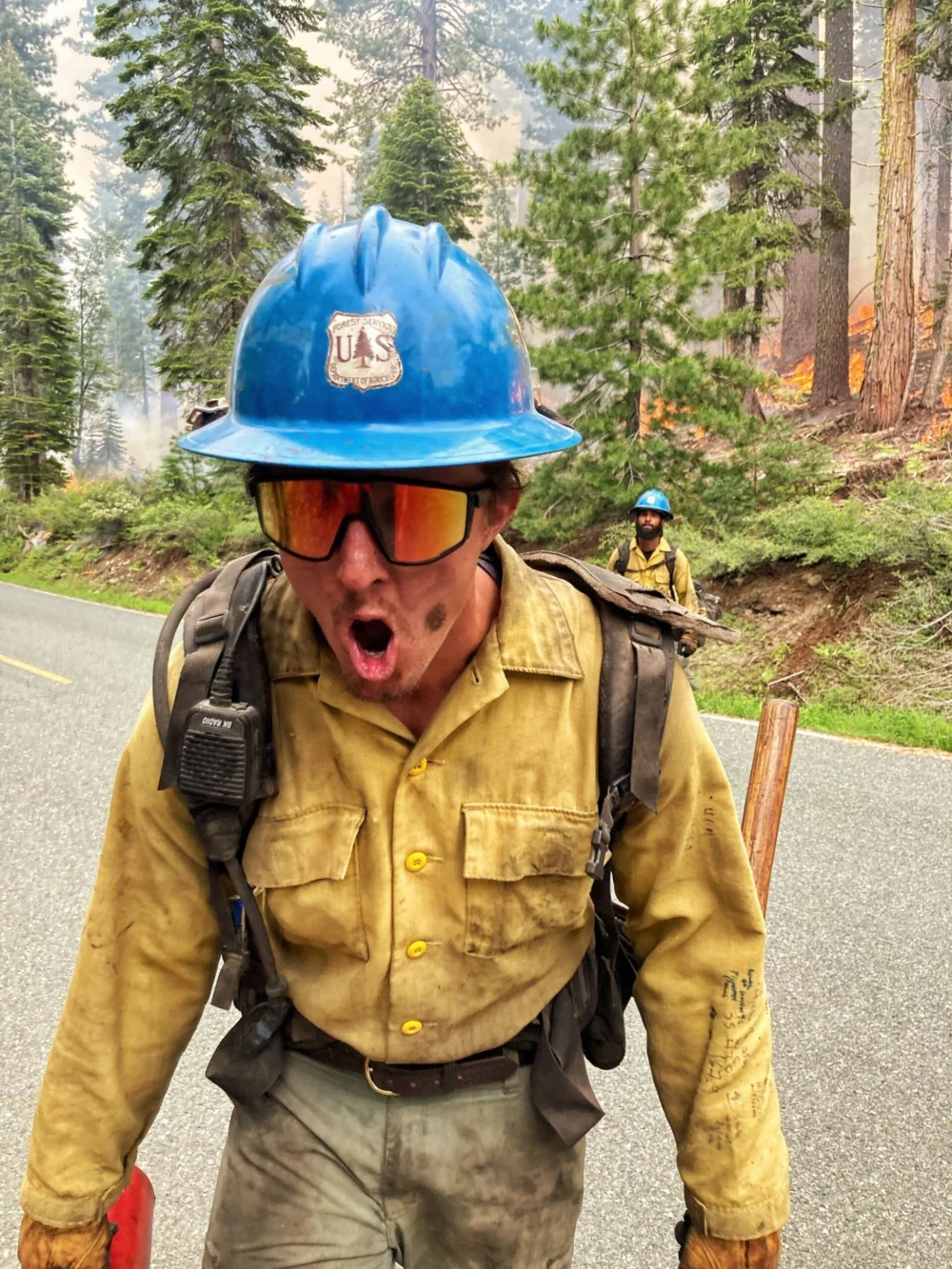
"The pursuit of excellence is not a fragmented path, but a singular mindset that bridges the intensity of wildland firefighting, the discipline of the infantry, and the precision of world-class alpine snowboarding."
The trajectory of Sgt. Robert Burns represents a rare convergence of elite athleticism and high-stakes public service. By integrating the rigorous demands of an Army infantryman with the technical precision of a national champion snowboarder, Burns exemplifies the "Total Soldier" concept championed by the U.S. Army’s World Class Athlete Program (WCAP). His journey—spanning from the scorched forests of the American West to the icy peaks of international competition—offers a profound look at how disparate disciplines can harmonize through a shared foundation of resilience, focus, and a commitment to a cause greater than oneself.
The genesis of Burns’ dual-track ambition can be traced back to a 7th-grade classroom in 2002. Tasked with analyzing a current event, the young Burns chose to write about Chris Klug, the American snowboarder who captured a bronze medal at the Salt Lake City Winter Olympics. Klug’s victory was particularly poignant, as he was the first organ transplant recipient to win an Olympic medal. For Burns, the story was more than a sports highlight; it was a blueprint. In his assignment, he articulated a dream that would remain his North Star for two decades: to represent the United States in giant slalom snowboarding. This specific discipline, characterized by high speeds and rhythmic, technical turns through a series of gates, requires a blend of explosive power and tactical foresight—traits that would later define his professional life in the military.

Growing up in Northern California, Burns was immersed in an environment that prioritized both outdoor mastery and civic duty. He began skiing at age two, eventually transitioning to snowboarding at age nine. However, his athletic development was mirrored by a deep-seated respect for the military. With a father who served nearly 40 years and grandfathers who were veterans of World War II, the culture of the U.S. Armed Forces was woven into his identity. This heritage ensured that his eventual enlistment was not a redirection of his goals, but a fulfillment of a parallel ambition.
Before donning the Army uniform, Burns sought out a role that demanded peak physical performance and a commitment to community safety: wildland firefighting. He served as a "Hotshot" firefighter with an Interagency Hotshot Crew (IHC). Within the hierarchy of wildland fire suppression, IHCs are considered the elite vanguard. These crews are composed of highly trained individuals who specialize in working in the most rugged, remote terrain with minimal support. The job involves constructing "fire lines"—strips of land cleared of all fuel to stop a fire’s advance—using chainsaws and hand tools. The work is grueling, often involving 16-hour shifts in extreme heat and thick smoke.
The transition from the heat of the fire line to the sub-zero temperatures of alpine competition might seem jarring, yet Burns identifies a profound psychological continuity between the two. Both environments require a "single-minded focus." In the path of a wildfire, a momentary lapse in attention can be fatal; on a giant slalom course, a fraction of a second’s hesitation can mean the difference between a podium finish and a disqualification. This capacity for intense, sustained concentration became the bridge that eventually led him to the U.S. Army.
In 2024, Burns found the ultimate vehicle for his multifaceted goals: the U.S. Army World Class Athlete Program (WCAP). Established in 1997 and headquartered at Fort Carson, Colorado, WCAP is a unique military unit that allows top-tier soldier-athletes to train for the Olympics and Paralympics while maintaining their military careers. The program is not a departure from military service but an extension of it. Since its inception, nearly 600 soldiers have competed under the WCAP banner, collectively earning over 120 medals in international competition. These athletes serve as ambassadors for the Army, demonstrating that military service and elite sport are not mutually exclusive.

For Burns, WCAP provided a support structure that few civilian athletes can access. As a Sergeant and an infantryman, he receives a steady salary and comprehensive health benefits, which provides a level of financial stability that is often elusive in the world of professional snowboarding. More importantly, the program provides access to world-class coaching, specialized physical therapy, and nutritional experts who understand the specific physiological demands of his sport. "Through WCAP, there are people that are willing, ready, and able to support me, and that’s incredibly comforting," Burns notes. This ecosystem allows him to focus entirely on performance, knowing that his logistical and medical needs are managed by a team committed to his success.
The integration of his athletic and military lives also has a personal dimension. His fiancée, Staff Sgt. Deedra Irwin, is herself a prominent WCAP athlete. A biathlete who competed in the 2022 Winter Olympics, Irwin was instrumental in encouraging Burns to enlist. Their relationship underscores the unique community within WCAP, where partners understand the grueling travel schedules, the physical toll of training, and the dual responsibility of being both a world-class competitor and a non-commissioned officer.
As an infantryman (MOS 11B), Burns’ military role is the backbone of the Army’s combat force. His training involves reconnaissance, ground-based defense, and the mobilization of equipment in high-pressure environments. The parallels between the infantry and the slopes are, to Burns, self-evident. He points to the Army’s "take a knee" philosophy as a vital lesson for his athletic career. In the infantry, "taking a knee" is a tactical pause—a moment to hydrate, reassess the situation, and recover from exhaustion before pushing toward the next objective. "Until you’ve been in that moment where you really need that knee and that drink of water, you can’t really understand how beneficial it can be," he explains. He applies this to his training: acknowledging when the body and mind are at their limit, resting briefly, and then returning to the task with renewed vigor.
This "soldier’s mindset" is what keeps Burns grounded during the relentless international competition circuit. The life of a professional snowboarder involves constant travel, fluctuating time zones, and the inherent unpredictability of mountain weather. When performance dips or fatigue sets in, Burns relies on his "why"—the underlying purpose that connects his 7th-grade dreams to his current service. He views his journey not as a series of disparate jobs, but as a continuous climb. Whether he is navigating a tactical mission on the ground or navigating a series of gates on a steep icy slope, the objective remains the same: getting from Point A to Point B with excellence and integrity.

Looking toward the 2026 Winter Olympics in Milan-Cortina, Burns is currently in what he describes as the best physical and mental shape of his life. He credits this peak readiness to the discipline instilled by the Army and the specialized resources of WCAP. His story is a testament to the idea that the skills required for military service—discipline, adaptability, and resilience—are the same skills required to reach the pinnacle of global sport.
As he prepares for the next chapter of his career, Sgt. Robert Burns remains focused on the "mountains" he has yet to climb. His path serves as an inspiration for those seeking to balance personal passion with national service. In the world of Sgt. Burns, the fire line, the infantry line, and the finish line are all parts of the same horizon. By embracing the challenges of each, he has forged a unique legacy that honors his family’s history while carving out a future on the world stage. For Burns, the dream that began in a 7th-grade essay is no longer just a goal—it is a daily reality lived through the uniform he wears and the board he rides.
