
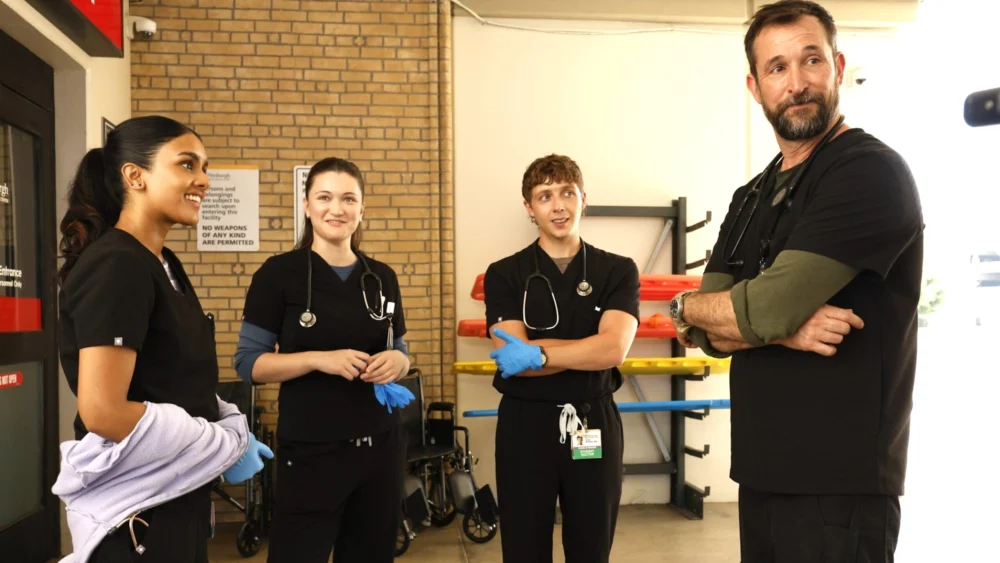
"By synthesizing the urgency of real-time narration with the intricate ethics of modern medicine, The Pitt captures the frantic pulse of a healthcare system under pressure, demanding an unbroken level of audience engagement rarely seen in contemporary television."
The success of HBO Max’s The Pitt marks a significant pivot in the evolution of the medical drama, a genre that has long balanced between episodic comfort and soap-operatic melodrama. By adopting a "real-time" narrative structure—where every minute on screen corresponds to a minute in the lives of the characters—the series eliminates the narrative safety net of time jumps and off-screen resolutions. This approach not only heightens the tension of the clinical environment but also forces a deeper exploration of character psychology under duress. As the series enters its second season following a sweep of major Emmy Awards, it solidifies its place as a cultural touchstone that reflects the overstimulated, high-velocity nature of modern life while honoring the grueling reality of frontline healthcare.
The Evolution of the Medical Narrative
For decades, medical dramas have been a staple of the television landscape. From the paternalistic tone of Marcus Welby, M.D. to the kinetic energy of ER and the character-driven longevity of Grey’s Anatomy, the genre has mirrored the shifting societal views on healthcare. However, in an era defined by fractured attention spans and a surplus of content, the traditional procedural format has often struggled to maintain the "appointment viewing" status it once enjoyed.
The Pitt has successfully disrupted this trend. By positioning itself as a "million-miles-an-hour" drama, the show demands a level of focus that few of its contemporaries require. It treats attention as a currency, rewarding the viewer for every second they remain locked into the screen. This intensity is not merely a stylistic choice; it is a reflection of the modern Emergency Room, where decisions made in seconds have consequences that last a lifetime. The show’s first season was a masterclass in building momentum, a slow-burn success that eventually exploded into a dominant force at the Emmy Awards, securing Best Actor for Noah Wyle, Best Supporting Actress for Katherine LaNasa, and the coveted Best Drama trophy.
The Real-Time Gimmick: A High-Wire Act
The defining characteristic of The Pitt is its real-time format, a structural choice famously pioneered by the action-thriller 24. In The Pitt, this gimmick is repurposed to serve the stakes of the hospital. Every episode represents one hour of a single day, creating a chronological fidelity that grounds the drama in a visceral reality.
In Season 2, this format is pushed to its limits. The season takes place over the course of a single, chaotic July 4th in Pittsburgh. The choice of Independence Day is no accident; it is one of the busiest and most dangerous days for any urban Level 1 trauma center, characterized by fireworks accidents, heatstroke, and the fallout of public celebrations. By stripping away the ability to skip over the "boring" parts of a shift, the show forces the audience to experience the cumulative fatigue of the staff. We see the paperwork, the waiting, and the administrative hurdles alongside the life-saving surgeries, creating a holistic view of the medical profession that is both exhausting and exhilarating.
Season 2: New Stakes and Shifting Dynamics
The second season of The Pitt picks up nearly a year after the events of the Season 1 finale, yet the real-time clock begins anew at 7:00 AM. The characters we have grown to know are in vastly different positions than when we last saw them, providing a rich field for conflict and growth.
Dr. Robby, portrayed with a weary brilliance by Noah Wyle, finds himself at a crossroads. As he prepares for a three-month sabbatical, he is forced to reckon with his legacy at the hospital and the philosophy he has instilled in his team. Wyle, a veteran of the medical genre, brings a "Dr. Jack Bauer" energy to the role—a man who is often the only thing standing between order and total systemic collapse.

The return of Dr. Langdon (Patrick Ball) introduces a heavy layer of moral complexity. Having been caught stealing patient prescription drugs in the first season, Langdon’s first day back is a study in professional redemption and the lingering stigma of addiction within the medical community. His presence acts as a constant reminder of the human frailties that exist even among those tasked with healing others.
Parallel to this is the return of Nurse Dana, played by Katherine LaNasa. Her comeback after a hiatus provides the emotional anchor the department needs, yet the environment she returns to is more volatile than the one she left. The ensemble is further rounded out by returning characters like Whitaker, Jevadi, Dr. Mohan, and Dr. McKay, each facing their own unique professional and personal pressures as the clock ticks forward.
The Ideological Clash: Robby vs. Al-Hashimi
Perhaps the most compelling addition to the second season is Dr. Baran Al-Hashimi, played by Sepideh Moafi. Brought in to fill the void left by Dr. Collins (Tracy Ifeachor) and to cover Dr. Robby’s upcoming sabbatical, Al-Hashimi represents a new school of thought.
The friction between Robby and Al-Hashimi is immediate and palpable. While Robby is a product of experience and intuition—often willing to bend the rules to save a life—Al-Hashimi brings a rigorous, perhaps more modern, perspective to the ER. Their interactions are not merely professional disagreements; they are philosophical debates about the nature of care, the ethics of resource allocation, and the future of medicine. As they spend much of the July 4th shift working side-by-side, the sparks that fly between them provide a narrative engine that keeps the show’s "real-time" pace from ever feeling stagnant.
The Pittsburgh Backdrop
The setting of Pittsburgh plays a crucial role in the show’s identity. Known for its world-class medical facilities and its gritty, industrial history, the city provides a backdrop that is both prestigious and grounded. The Pitt captures the specific texture of a "Steel City" emergency room—the intersection of cutting-edge technology and the raw reality of an urban population. By anchoring the show in a specific geography, the creators have given the drama a sense of place that makes the stakes feel local and personal, even as the medical issues remain universal.
Looking Ahead: The Season 2 Schedule
As the season progresses, the real-time format will continue to track the staff of The Pitt hour by hour. With 15 episodes in total, the season is structured to cover a full 15-hour period of the July 4th holiday, culminating in the 9:00 PM hour—typically the peak of holiday chaos.
Following the initial release of the first five episodes, the schedule for the remainder of the season is as follows:
- Episode 6, "12:00 PM": Streaming on February 12. This episode marks the transition into the heat of the afternoon, often where the first wave of holiday-related trauma begins to surge.
- Episode 7, "1:00 PM": Streaming on February 19.
- Episode 8, "2:00 PM": Streaming on February 26.
- Episode 9, "3:00 PM": Streaming on March 5.
- Episode 10, "4:00 PM": Streaming on March 12.
- Episode 11, "5:00 PM": Streaming on March 19.
- Episode 12, "6:00 PM": Streaming on March 26.
- Episode 13, "7:00 PM": Streaming on April 2.
- Episode 14, "8:00 PM": Streaming on April 9.
- Episode 15, "9:00 PM": Streaming on April 16 (Season Finale).
Conclusion: Why The Pitt Rules
In a landscape crowded with "background noise" television, The Pitt stands out by being unapologetically demanding. It is a show that understands the value of time—both the time of its characters and the time of its audience. By combining the technical precision of a medical procedural with the heart-pounding structure of a real-time thriller, it has created a new template for the genre.
As Season 2 unfolds, the tension between the ticking clock and the human heart remains the show’s greatest strength. Whether it is the redemption arc of Dr. Langdon, the ideological battle between Robby and Al-Hashimi, or the sheer adrenaline of a July 4th trauma surge, The Pitt proves that when it comes to life-and-death drama, every second truly counts. For those looking for a show that refuses to let you look away, the doors to this Pittsburgh ER remain wide open.
