
"Beyond mere physical exertion, the world’s premier hiking trails offer a profound intersection of geological wonder, cultural heritage, and personal resilience. These routes represent more than just paths through nature; they are immersive journeys that challenge the body while providing unparalleled access to the planet’s most secluded and awe-inspiring landscapes."
As global interest in adventure tourism and "slow travel" continues to rise, hiking has evolved from a niche hobby into a primary motivator for international exploration. This shift is driven by a collective desire to disconnect from digital saturation and reconnect with the raw, elemental beauty of the natural world. From the ancient pilgrimage routes of Japan to the vertiginous cliffs of Zion National Park, the following selection of trails highlights the diversity of the human experience in the great outdoors, offering insights into why these specific locations have become "bucket list" destinations for trekkers across the globe.
The British Wilderness: Simonside and Dove Crag Loop
Located in the eastern reaches of Northumberland National Park, the Simonside and Dove Crag Loop serves as a quintessential introduction to the rugged beauty of Northern England. While the United Kingdom is often characterized by its rolling green hills, this specific loop offers a more complex topographical profile. The trail is a moderately challenging circuit that leads hikers across two distinct summits, providing a masterclass in varied terrain.
The ascent begins through managed coniferous forests before transitioning into a more primitive landscape defined by jagged sandstone outcrops. Geologically, the Simonside Hills are composed of Fell Sandstone, which has weathered over millennia into the striking shapes seen today. For the modern hiker, the appeal lies in the 360-degree panoramic views of the Coquet Valley and the distant Cheviot Hills. This trail is also a gateway to the region’s "Dark Skies" status, making it a prime location for those who appreciate the intersection of terrestrial trekking and celestial observation.
Southern Alps Majesty: Ben Lomond Track, New Zealand
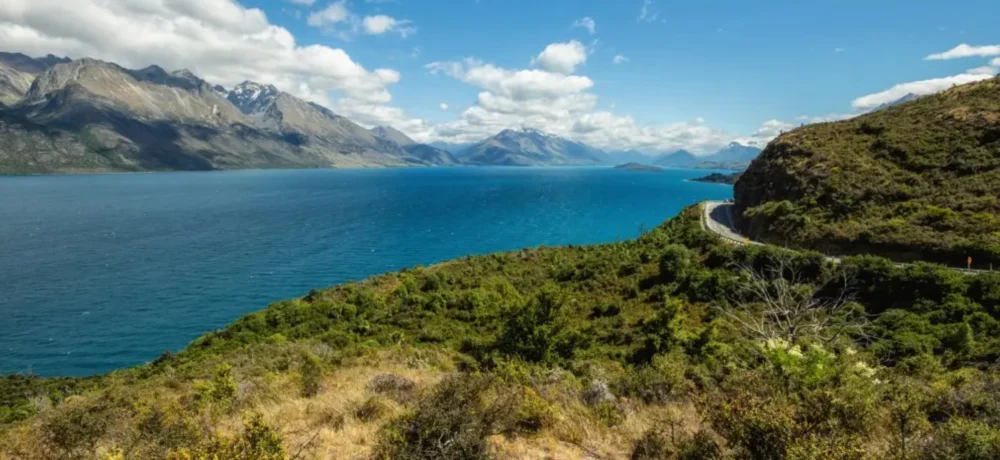
Queenstown is widely recognized as the "Adventure Capital of the World," but while many visitors focus on bungee jumping or jet boating, the Ben Lomond Track offers a more contemplative—yet equally grueling—way to experience the Southern Alps. The journey typically begins with a ride on the Skyline Gondola, which whisks hikers 450 meters above the city to the trailhead.
The trek is a classic ridge-to-summit challenge. As hikers ascend toward the 1,748-meter peak, the vegetation thins, replaced by alpine tussock and eventually barren rock. The environmental reward is immense: a full view of Lake Wakatipu’s glacial blue waters and the jagged Remarkables mountain range. A unique biological highlight of this trek is the potential encounter with the Kea, the world’s only alpine parrot. Known for their high intelligence and mischievous nature, these birds are a symbol of the rugged New Zealand wilderness, though hikers are cautioned to protect their gear from these inquisitive "clowns of the mountains."
European Limestone and Vertigo: The Corniches of Méjan and Tarn
In the heart of France’s Cévennes National Park lies a trail that defines "vertigo-inspiring." The Corniches of Méjan and Tarn trace the edge of the Causse Méjan, a vast limestone plateau. This hike is not merely a walk but a geological tour through a landscape shaped by the erosive forces of the Jonte and Tarn rivers.
The trail follows the rim of steep cliffs, where the drop-offs are sudden and dramatic. Hikers are treated to views of the "vases"—enormous rock formations resembling ancient pottery, created by the uneven weathering of the limestone. Beyond the geology, the area is a success story for wildlife conservation; the thermal updrafts from the gorges are frequently used by reintroduced Griffon and Monk vultures. Observing these massive raptors circling at eye level while standing on a cliff edge provides a sense of scale that few other European trails can match.
Sacred Paths: The Kumano Kodō Pilgrimage, Japan
The Kumano Kodō is less a single trail and more a network of ancient routes across the Kii Peninsula. As a UNESCO World Heritage site, it shares a rare "Twin Pilgrimage" status with the Camino de Santiago in Spain. For over a millennium, these paths have been trodden by emperors, samurai, and commoners alike, all seeking spiritual purification.
Unlike many western trails that focus on the "summit," the Kumano Kodō is about the journey through history. The path is lined with Oji shrines—sub-shrines of the Kumano deities—and passes through towering forests of Japanese cedar and cypress. The experience is deeply rooted in the syncretic tradition of Shintoism and Buddhism, where nature itself is considered divine. For the modern traveler, the Kumano Kodō offers a rare opportunity to experience "Omotenashi" (Japanese hospitality) in remote mountain villages, blending physical challenge with cultural immersion.

High-Stakes Scrambles: Angels Landing, Utah
In the United States, few day hikes carry as much prestige—or notoriety—as Angels Landing in Zion National Park. The trail is a marvel of early 20th-century engineering, featuring "Walter’s Wiggles," a series of 21 steep switchbacks that lead to Scout Lookout. However, the final half-mile is what makes the trail legendary.
This last section requires hikers to navigate a narrow sandstone fin with thousand-foot drop-offs on either side. Heavy iron chains are bolted into the rock to provide handholds. This technical scramble is a psychological test as much as a physical one. Due to its extreme popularity and the inherent risks of overcrowding on a narrow ridge, the National Park Service recently implemented a permit lottery system. Reaching the "landing" at 5,790 feet provides a literal bird’s-eye view of the Zion Canyon, a perspective that makes the harrowing ascent worth the effort.
The Patagonian Odyssey: The W Trek, Chile
Torres del Paine National Park in Chilean Patagonia is home to the "W Trek," so named for the shape of the route as it dips into three glacial valleys. Spanning approximately 50 miles, this multi-day trek is a pilgrimage for those seeking the world’s most dramatic granite architecture.
The trek’s highlights include the Grey Glacier, a massive wall of blue ice that is part of the Southern Patagonian Ice Field, and the French Valley, a natural amphitheater of hanging glaciers and granite peaks. The journey concludes—or begins—at the Base de las Torres, where three monolithic granite towers rise above a glacial lake. The W Trek is famous for its "four seasons in one day" weather, where hikers must contend with fierce Patagonian winds and sudden snowfalls, making the completion of the circuit a true badge of honor.
Rugged American Northeast: Franconia Ridge Loop, New Hampshire
While the mountains of the American West are taller, the White Mountains of New Hampshire offer some of the most unforgiving terrain and volatile weather in the country. The Franconia Ridge Loop is the crown jewel of this region. This loop "bags" three major peaks: Mount Lafayette, Mount Lincoln, and Little Haystack.
The defining feature of this hike is the walk along the narrow ridge above the treeline. For several miles, hikers are exposed to the elements with unobstructed views of the Pemigewasset Wilderness. The 4,000-foot vertical gain is condensed into a relatively short distance, making the ascent grueling. This trail is a segment of the Appalachian Trail and serves as a reminder that the Eastern U.S. possesses wilderness areas every bit as challenging as their Western counterparts.
The Italian Spire: Three Peaks of Lavaredo
The Sexten Dolomites in Northern Italy offer a landscape that looks almost extraterrestrial. The Tre Cime di Lavaredo (Three Peaks of Lavaredo) are three distinct, battlement-like peaks that have become the symbol of the Dolomites. Unlike the technical climbs required to reach the summits, the loop around the base is accessible to most fit hikers.
The trail is a study in "payoff-to-effort" ratio. Within a few miles of relatively flat walking, hikers are surrounded by UNESCO-recognized beauty. The rock here is dolomite—a carbonate mineral that turns various shades of pink and orange at sunset, a phenomenon known as "Enrosadira." The area is also steeped in history, with tunnels and fortifications from World War I still visible, serving as a somber reminder of the high-altitude conflict that once took place in these beautiful mountains.
The Ultimate Descent: Grand Canyon Rim-to-Rim, Arizona
To hike the Grand Canyon Rim-to-Rim is to travel through time. The 24-mile journey takes hikers through nearly two billion years of the Earth’s geological history. The descent from the North Rim to the canyon floor involves a 6,000-foot drop in elevation, transitioning through multiple life zones—from subalpine forest to Mojave desert scrub.
The physical toll of a Rim-to-Rim hike cannot be overstated. Unlike traditional mountain climbing, the hardest part of this trek comes at the end, when hikers must climb 4,500 feet out of the canyon after their legs have already been fatigued by the descent. The "inverted mountain" experience creates a unique physiological challenge where heat management becomes a matter of survival. Yet, standing at the bottom of the canyon, beside the Colorado River, provides a sense of solitude and geological scale that is found nowhere else on the planet.
Conclusion
Whether it is the spiritual silence of a Japanese forest or the wind-swept ridges of New Hampshire, these trails represent the pinnacle of the hiking experience. They remind us that while the destination is often a summit or a viewpoint, the true value of the trek lies in the endurance required to get there and the perspective gained along the way. As these landscapes face the pressures of climate change and increased tourism, the responsibility of the modern hiker is to walk these paths with respect, ensuring they remain for future generations of explorers.
