
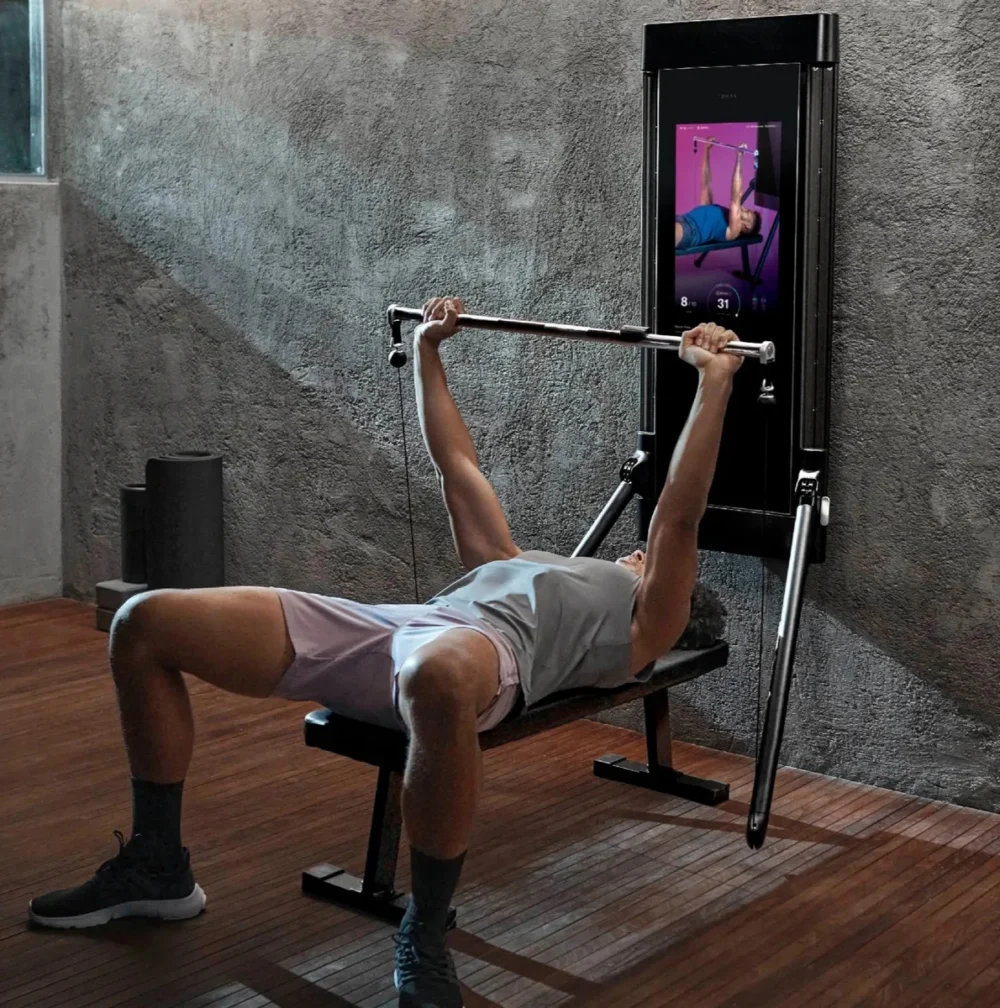
"The modern home gym has evolved from a collection of iron plates into a sophisticated AI ecosystem capable of real-time form correction and adaptive resistance, effectively placing a personal trainer within the walls of a residential living space."

This shift toward integrated, data-driven fitness represents a fundamental change in how individuals approach physical longevity and strength conditioning. No longer limited by the static nature of traditional weights, the current generation of smart equipment utilizes magnetic resistance, computer vision, and machine learning to optimize every repetition, ensuring that the home workout is as biologically effective as it is convenient.
The landscape of home fitness has undergone a radical transformation over the last decade. What began as simple connected stationary bikes has blossomed into a diverse market of high-tech machinery designed to solve the two greatest hurdles of home training: space constraints and lack of professional guidance. Today’s premier devices, such as the Tonal 2 and the Beyond Power Voltra I, demonstrate that high-performance strength training no longer requires a garage full of racks and plates. Instead, it requires a stable Wi-Fi connection and a few square feet of floor space.

At the pinnacle of the all-in-one strength category is the Tonal 2. Retailing at approximately $4,295, it represents a significant financial investment, yet it serves as a complete replacement for a commercial cable crossover machine. Fitness experts, including Men’s Health Fitness Director Ebenezer Samuel, C.S.C.S., identify this as the benchmark for workout mirrors. The Tonal 2 utilizes a sophisticated magnetic resistance system that provides up to 200 pounds of "digital weight." Unlike traditional iron, this weight is adaptive; if the machine’s sensors detect that a user is struggling or that the weight is too light to trigger muscle hypertrophy, it adjusts the load mid-set. This level of biometric responsiveness is a hallmark of the 2026 fitness era, where the machine acts as an active participant in the training session rather than a passive tool.
However, the Tonal 2 also highlights the logistical complexities of modern smart gyms. While the device itself is compact and wall-mounted, it demands specific environmental conditions, including a dedicated 15A circuit and professional installation. This "white glove" requirement is becoming standard for high-end equipment, ensuring that the tension of the cables and the stability of the mount can handle the high-torque demands of an advanced lifter.

For those whose fitness goals lean toward cardiovascular endurance and metabolic conditioning, the Hydrow Arc Rower and the Peloton Cross Training Bike+ offer immersive experiences that go beyond simple aerobic exercise. The Hydrow Arc Rower, priced at $2,295, distinguishes itself through a 24-inch HD screen and a whisper-quiet magnetic resistance system. Its most significant advancement is the technique assessment function, which provides real-time feedback on rowing form—a crucial feature given the technical complexity of the rowing stroke. By allowing users to compete against the Hydrow community, the device taps into the psychological benefits of social competition, a key driver in workout consistency.
Peloton, meanwhile, has expanded its reach with the Cross Training Bike+. At $2,695, this iteration addresses previous user feedback by incorporating a 360-degree swivel screen, enabling a seamless transition from cycling to floor-based strength work. The integration of Peloton IQ provides rep tracking and form feedback, bridging the gap between cardio and resistance training. A notable feature of the Bike+ is the auto-follow resistance, where the machine automatically adjusts its tension based on the instructor’s cues, allowing the athlete to focus entirely on performance rather than manual adjustments.
.jpg?crop=1xw:1.00xh;center,top&resize=980:*)
The boxing niche has also seen a technological surge with systems like FightCamp Core. Boxing is notoriously difficult to track without a coach, but FightCamp’s use of motion-tracking sensors—which slide into the user’s hand wraps—allows for the logging of every punch thrown. This data is then translated into a leaderboard, providing a gamified experience that mirrors the intensity of a live boxing gym. While FightCamp requires a larger physical footprint than a wall-mounted mirror, its freestanding bag design is often cited as the gold standard for stability, preventing the bag from migrating across the floor during high-intensity intervals.
Innovation in the 2026 market is also defined by those seeking to minimize the "tech tax"—the recurring monthly fees that have become synonymous with smart equipment. The Speediance Gym Monster 2, for example, offers a compelling alternative by providing access to its core workout functions and custom routines without a mandatory subscription. Priced at $2,249, it is a versatile "all-in-one" that simulates a cable machine, a ski erg, and a rower. While its maximum resistance of 220 pounds may not satisfy elite powerlifters, its AI-driven imbalance correction and post-training data summaries make it an ideal tool for the general population looking to improve functional strength.

Space-saving aesthetics have also reached a new peak with the AMP Smart Strength system. In an era where many professionals work and exercise in the same environment, the AMP system is designed to look like an art installation, extending only 12 inches from the wall. Unlike its competitors, it lacks a built-in screen, opting instead to use the user’s smartphone as the primary interface. This reduces the startup cost to $1,795 and lowers the subscription fee to $23 per month. While its 100-pound resistance limit targets those interested in toning and general wellness rather than maximum strength, its "band mode" offers a unique feel that mimics the progressive resistance of elastic bands, providing a different stimulus for muscle fiber recruitment.
Perhaps the most radical departure from traditional home gym design is the Beyond Power Voltra I. This device challenges the notion that a cable machine must be a permanent fixture. At just under 13 inches long and weighing roughly 12 pounds, the Voltra I is a battery-powered motor capable of generating 200 pounds of resistance. It can be mounted to squat racks, trees, or travel platforms, effectively turning any environment into a high-performance training zone. This portability represents the ultimate evolution of the "gym in a bag" concept, utilizing high-torque motors to replace hundreds of pounds of physical mass.

As these technologies continue to converge, the consumer must weigh the benefits of AI-driven coaching against the long-term costs of hardware and subscriptions. A Tonal 2 or a Peloton Bike+ often carries a monthly fee ranging from $40 to $60, which, when added to the initial purchase price, can exceed the cost of a decade-long membership at a premium health club. However, the value proposition lies in the data. The ability to track every pound lifted, every calorie burned, and every form deviation allows for a level of precision that was previously unattainable for the average person.
The implications of this data-centric approach extend into the realm of preventative health. By monitoring strength gains and cardiovascular health over time, these machines provide a quantitative look at an individual’s aging process. In the future, it is likely that the data generated by a Hydrow or a Tonal could be integrated with healthcare providers to provide a more holistic view of a patient’s physical resilience.

In conclusion, the smart home gym market of 2026 is no longer a niche luxury; it is a mature industry offering solutions for every type of athlete. Whether it is the ultra-portable Voltra I for the frequent traveler, the aesthetic AMP for the apartment dweller, or the comprehensive Tonal 2 for the serious lifter, the goal remains the same: removing the friction between the individual and their health. As AI continues to refine its ability to coach and motivate, the home gym will likely become the primary site of physical transformation, making the traditional "iron gym" an increasingly nostalgic relic of the past.
