
"While the spectacle of competitive eating often serves as lighthearted holiday entertainment, the physiological reality involves extreme risks ranging from acute gastric rupture to severe cardiovascular stress."
In the sixth episode of The Pitt’s second season, titled "12:00 P.M.," the series reaches a creative high point by blending high-stakes emotional drama with the peculiar medical realities of a quintessential American holiday. Directed by series lead Noah Wyle, the episode utilizes the frantic backdrop of July 4th to examine the physical consequences of extreme behavior, specifically focusing on the dangers of competitive speed-eating. By contrasting a celebratory hot dog eating contest with the clinical precision of an emergency room, the show provides a platform for medical experts to weigh in on the often-overlooked hazards of "gluttony as sport."
The Creative Evolution of The Pitt
Since its debut, The Pitt has positioned itself as a spiritual successor to the legendary medical dramas of the 1990s and early 2000s, most notably ER. This connection is more than thematic; it is personified by Noah Wyle, who serves as the show’s star, executive producer, and writer. In Season 2, Episode 6, Wyle steps behind the camera for the first time in the series, bringing a seasoned perspective to the director’s chair. His history playing Dr. John Carter on ER for over a decade provided him with a unique shorthand for the rhythm of a busy hospital, a skill that is on full display in "12:00 P.M."
Season 2 of The Pitt employs a unique narrative structure, with the entire season taking place over the course of a single day: July 4th. This "real-time" approach heightens the tension, as the staff of the fictional Pittsburgh hospital navigates the influx of injuries typically associated with Independence Day—firework accidents, heatstroke, and alcohol-related trauma. However, the standout subplot of the episode involves a more modern American tradition: the hot dog eating contest.
The Case of Rocky: When Celebration Becomes a Crisis
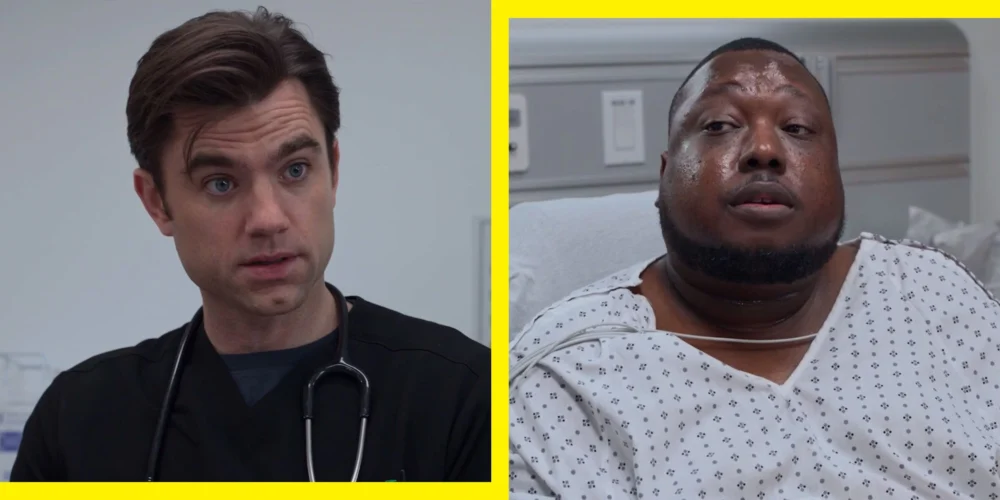
The episode introduces a character named Rocky, played with a mix of triumph and physical agony, who arrives at the hospital after winning a local eating competition. Having consumed 36 hot dogs in a matter of minutes, Rocky represents the "amateur champion"—a person who has pushed their body to the absolute limit for a fleeting moment of glory.
Dr. Langdon (Patrick Ball) is tasked with treating Rocky, providing the audience with a window into the immediate aftermath of such a feat. While the show treats the scenario with a degree of levity to balance out the heavier, more tragic storylines occurring simultaneously, the underlying medical implications are far from humorous. The subplot serves as a catalyst for a broader discussion on how the human body reacts to sudden, extreme caloric and physical volume.

The Expert Perspective: The Physiology of Overconsumption
To understand the realism of Rocky’s predicament, medical professionals like Dr. Robert Glatter, an Assistant Professor of Emergency Medicine at Lenox Hill Hospital, emphasize that the human stomach is not naturally designed for the rapid expansion required by competitive eating. A typical stomach holds about one to two liters of content; during a speed-eating event, that volume can quintuple.
Dr. Glatter notes that professional eaters undergo years of "training" to stretch the stomach and suppress the body’s natural "satiety reflex"—the signal from the brain that tells a person they are full. However, even with training, the risks are immense. The sheer weight of 36 hot dogs, combined with the buns and the water used to soften them, creates massive pressure on the gastric walls. This can lead to gastroparesis, a condition where the stomach muscles become paralyzed, or more severely, a gastric perforation where the stomach wall literally tears open, leaking digestive enzymes and food into the abdominal cavity.
Furthermore, the cardiovascular impact is staggering. A single hot dog contains high levels of sodium and saturated fat. Consuming 36 of them in one sitting introduces a "sodium shock" to the system, causing the body to retain water rapidly, which spikes blood pressure and puts immense strain on the heart and kidneys. For an amateur participant, this sudden metabolic load can be enough to trigger a cardiac event or acute renal distress.
Amateur vs. Professional: A Dangerous Distinction
One of the critical points raised by the episode—and echoed by medical experts—is the distinction between trained professionals and amateur participants. In the world of professional eating, competitors like Joey Chestnut or Miki Sudo spend months "water loading" to expand their stomach capacity and practicing jaw-strengthening exercises to handle the mechanical stress of rapid chewing.
Amateurs, like the character Rocky, lack these physiological adaptations. Without the gradual stretching of the stomach lining, an amateur is at a much higher risk of "Boerhaave syndrome"—a spontaneous perforation of the esophagus caused by the pressure of vomiting or the sheer volume of food. There is also the risk of aspiration, where stomach contents are accidentally inhaled into the lungs, leading to life-threatening pneumonia or immediate airway obstruction.
The Reality of the Emergency Room
In The Pitt, Rocky is seen entering and leaving the ER within a relatively short timeframe—roughly an hour. While this serves the pacing of a television episode, Dr. Glatter points out that in a real-world clinical setting, such a discharge would be highly unlikely and potentially negligent.
A patient presenting after a massive overconsumption event would require a battery of tests. Doctors would need to perform an abdominal CT scan to check for signs of free air (indicating a perforation) or bowel obstruction. Blood tests would be necessary to monitor electrolyte levels and kidney function, particularly given the massive sodium intake. Furthermore, the patient would likely be kept for observation to ensure that "refeeding syndrome" or delayed gastric emptying does not lead to further complications. The "one-hour turnaround" is a classic television trope that simplifies the often grueling and slow process of medical diagnostics.

The July 4th Context: A "Perfect Storm" for ERs
The setting of July 4th is particularly relevant to the narrative of The Pitt. Statistically, Independence Day is one of the busiest days of the year for emergency rooms across the United States. The combination of high temperatures, increased alcohol consumption, and the use of explosives creates a "perfect storm" for trauma centers.
By focusing on a hot dog eating contest, the show highlights a specific type of "preventable" medical emergency. While firework accidents are often the result of equipment failure or misfortune, the injuries sustained in eating contests are the result of a deliberate push against biological boundaries. This allows the show to explore themes of American excess and the cultural obsession with "more," even when "more" leads to physical collapse.
Noah Wyle’s Directorial Influence
Noah Wyle’s direction in this episode is characterized by a balance of kinetic energy and quiet, observational moments. By weaving Rocky’s story through the episode as a recurring "check-in," Wyle maintains a sense of the hospital’s chaotic flow. He understands that in an ER, the "bizarre" often sits right next to the "tragic."
The episode concludes with a "sweeping emotional catharsis," as described by critics, which is made more effective by the contrast provided by subplots like Rocky’s. The ability to pivot from the absurdity of a man who ate too many hot dogs to the life-and-death stakes of a trauma surgery is what has defined Wyle’s career in the genre. It reflects the reality of medical work: the ability to compartmentalize the strange and the sad simultaneously.
Conclusion: The Message Behind the Drama
Ultimately, The Pitt Season 2, Episode 6 serves as both a high-water mark for the series and a cautionary tale. While the hot dog eating subplot provides a moment of relief from the show’s more harrowing storylines, the medical reality behind it is a sobering reminder of the body’s fragility.
As Dr. Glatter and other medical experts suggest, the safest way to enjoy a holiday feast is in moderation. Competitive eating may make for compelling television, but in the sterile light of an emergency room, the consequences are anything but entertaining. Through Wyle’s veteran lens, The Pitt continues to challenge its audience to look past the spectacle and recognize the human—and biological—cost of our traditions.
