
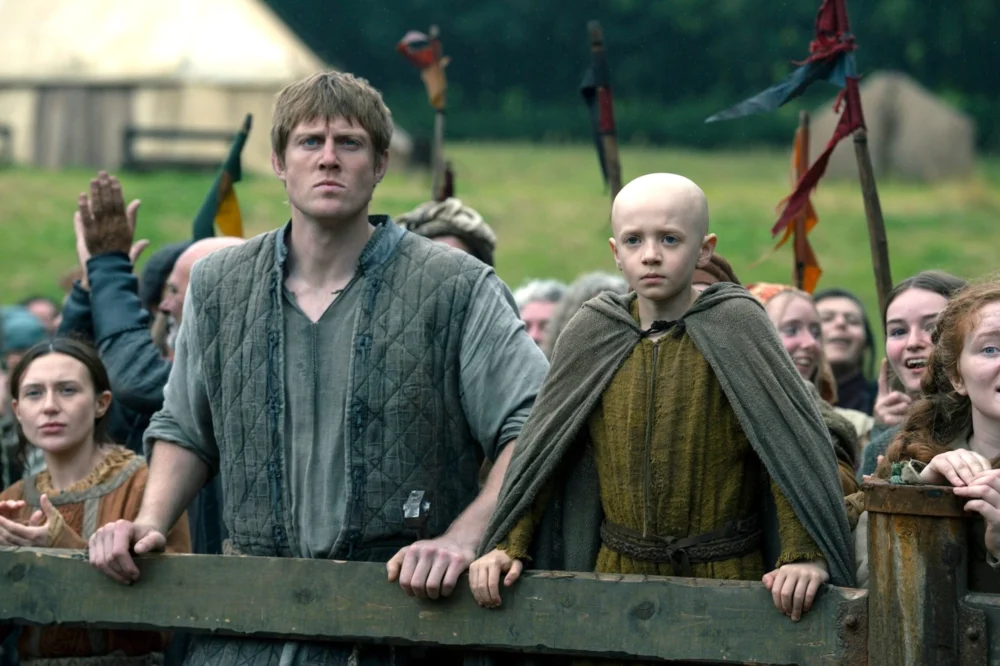
"The most enduring stories are often those found in the margins of history, proving that intimate, human-scale character arcs can be far more resonant than the spectacle of world-ending stakes."
In an era defined by the "mega-franchise," entertainment giants are beginning to recognize a fundamental shift in audience appetite: the realization that bigger is not always better. While the cinematic landscape was previously dominated by the escalating stakes of "event" storytelling—typified by the multi-film buildup to Avengers: Endgame—a new trend is emerging among the most successful intellectual properties. From the gritty political realism of Andor to the grounded superheroics of Wonder Man, and now the chivalric simplicity of A Knight of the Seven Kingdoms, the focus is shifting away from operatic struggles for cosmic power and toward the compelling, relatable conflicts of the individual.
The Spectacle Fatigue and the Rise of the Grounded Narrative
For over a decade, the primary metric of success for major franchises was the magnitude of the threat. In the Marvel Cinematic Universe (MCU) and the Star Wars galaxy, "stakes" were synonymous with the survival of the planet, the galaxy, or the multiverse itself. However, this constant escalation led to what many critics and fans describe as "spectacle fatigue." When every story concerns the end of existence, the individual human experience often becomes lost in the digital noise of fire-breathing dragons and celestial explosions.
The correction to this trend began in earnest with Andor. Breaking away from the Jedi-centric mysticism that had defined Star Wars for decades, Andor focused on the bureaucracy of oppression and the granular, often messy reality of revolution. It succeeded not because it was a "good Star Wars story," but because it was a masterful piece of drama that reflected societal struggles seen in both contemporary and historical contexts. It taught a vital lesson: a story about a single person struggling to survive under a regime can be more "epic" than a battle involving a thousand starships.
Similarly, Marvel’s Wonder Man signaled a departure from the "Multiverse Saga" bloat. By eschewing the typical sinister supervillain trope and the looming threat of planetary destruction, the series focused on the execution of character and the relatability of its protagonist. These successes paved the way for HBO to rethink its approach to the world of Westeros.

Westeros in the Margins: A Knight of the Seven Kingdoms
Following the massive, multi-generational power struggles of Game of Thrones and the dragon-heavy dynastic civil war of House of the Dragon, A Knight of the Seven Kingdoms represents a deliberate narrowing of scope. Based on George R.R. Martin’s Tales of Dunk and Egg novellas, the series purposefully avoids the throne rooms of King’s Landing to tell a story that takes place within the margins of the Seven Kingdoms.
The central narrative follows Ser Duncan the Tall—played by Peter Claffey—a man who lacks the high-born status or political machinations of a Ned Stark or a Daemon Targaryen. Dunk is a "hedge knight," a wanderer with no master, whose primary goal is not to rule, but to embody the virtues of true knighthood. This shift in perspective allows the audience to engage with the world of Westeros through a more intimate lens. While familiar names like the Targaryens and Baratheons appear, they serve as the backdrop to a deeply personal quest for self-improvement and honor.
The DNA of this series is rooted in the "serial" tradition. Unlike its predecessors, which featured sprawling casts and hour-long episodes packed with complex lore, A Knight of the Seven Kingdoms opts for a breezier pace. With episodes ranging between 30 and 40 minutes, the show feels like a classic adventure series—lighter in tone, yet no less significant in its emotional impact.
The "Dunk and Egg" Legacy: Translating the Novellas
The source material for the series consists of three novellas: The Hedge Knight, The Sworn Sword, and The Mystery Knight. Published between 1998 and 2010, these stories were always intended as a "lighter" companion to the main A Song of Ice and Fire series. By focusing on the bond between Dunk and his diminutive squire, Egg, Martin explored the themes of class, chivalry, and the reality of life for the common people in a way the main novels rarely could.
The television adaptation honors this by maintaining a "slighter" feel by design. In the original Game of Thrones, the presence of dragons was a symbol of world-altering power and terror. In A Knight of the Seven Kingdoms, the focus remains on the "human heart in conflict with itself," a phrase Martin famously uses to describe the core of all good storytelling. If a dragon appears, it is the "cherry on top" rather than the engine of the plot. This approach makes the moments of action feel more earned and the character interactions more vital.
A New Model for Franchise Longevity
The success of these smaller-scale projects suggests a sustainable path forward for franchises that have struggled with the weight of their own continuity. By focusing on standalone or "marginal" stories, creators can explore different genres—noir, romance, or classic serial adventure—within the established framework of a popular world.

This model also benefits the production cycle. Shorter episodes and focused narratives allow for quicker turnarounds and more distinct creative visions. A Knight of the Seven Kingdoms has already been renewed for a second season, signaling HBO’s confidence in this "human-first" approach. As audiences continue to seek out stories that reflect their own struggles and aspirations, the industry’s pivot toward the intimate over the infinite appears to be more than just a trend—it is a necessary evolution.
Viewing Guide and Season 1 Schedule
For viewers looking to keep up with the journey of Ser Duncan and Egg, the series follows a consistent release pattern, with one notable exception due to major cultural events. New episodes generally air on Sunday nights at 10:00 P.M. EST. The episodes are available simultaneously on the linear HBO channel and the Max streaming platform.
The fourth episode of the season, titled "Seven," saw a unique scheduling shift. To avoid a conflict with Super Bowl LX on Sunday, February 8th, the episode was released early on Friday, February 6th. Following that special occasion, the series returned to its standard Sunday night slot for the remainder of its six-episode run.
Season 1 Complete Release Schedule:
- Episode 1, "The Hedge Knight": Premiered January 18. This episode introduced Dunk’s humble beginnings and his fateful meeting with the boy who would become his squire.
- Episode 2, "Hard Salt Beef": Premiered January 25. A deeper look into the daily grind of a hedge knight’s life and the burgeoning bond between the two leads.
- Episode 3, "The Squire": Premiered February 1. Focused on the training and the moral lessons Dunk imparts to Egg.
- Episode 4, "Seven": Premiered February 6 (Streaming) / February 8 (Linear). A pivotal episode dealing with the religious and social structures of the Seven Kingdoms.
- Episode 5, "In the Name of the Mother": Premiered February 15. The penultimate chapter building toward the season’s climax.
- Episode 6, "The Morrow": Premiered February 22. The season finale that sets the stage for the already-confirmed second season.
As the first season concludes, the impact of A Knight of the Seven Kingdoms is clear. It has proven that the world of Westeros does not need a "War of the Five Kings" to be captivating. Sometimes, all it takes is a man, his squire, and a simple quest to be the best version of oneself. In the landscape of modern entertainment, that might be the most "epic" story of all.
