
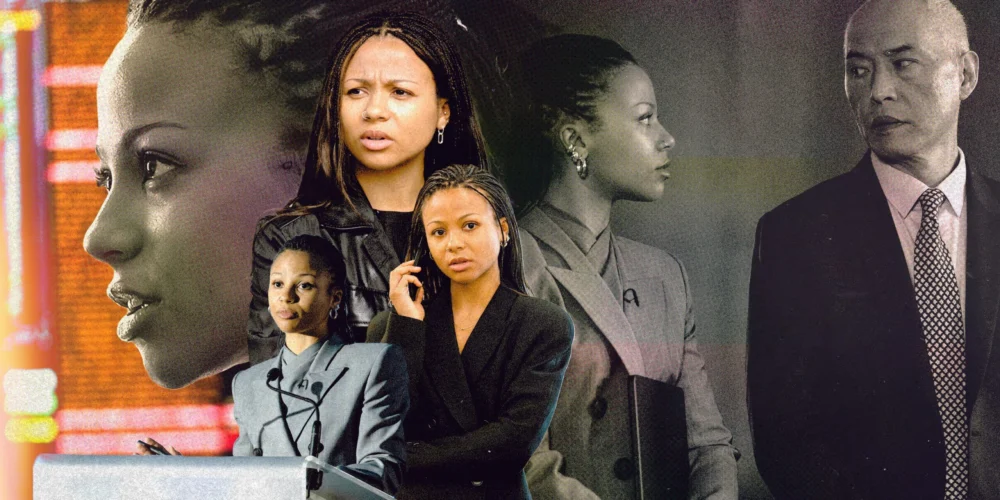
"As Harper Stern reaches the pinnacle of financial success, the Season 4 finale of Industry reveals that the true cost of power is a profound, isolating vulnerability that even the most calculated short position cannot hedge against."
The Season 4 finale of Industry, titled "Both, and," serves as a definitive turning point for the series, transitioning from the frantic energy of the trading floor to the chilling, sterile corridors of global political and social influence. By examining Harper Stern’s bittersweet victory against the fintech giant Tender and her subsequent descent into the moral vacuum of the European elite, the episode underscores a central theme of the HBO drama: in the pursuit of absolute autonomy, the characters often find themselves standing entirely alone, stripped of the very mentors and friends who once defined their world.

The opening sequence of the finale finds Harper Stern, portrayed with clinical precision by Myha’la, in a rare moment of professional triumph. Having successfully shorted the fintech banking application Tender, she has not only secured a massive financial windfall but has also effectively dismantled the reputation of Whitney Halberstram (Max Minghella), exposing him as a criminal fraud. In the world of high finance, this is the "shot called"—a moment of total validation for a character whose career began with a forged transcript and a desperate need to prove her worth. However, the victory is hollowed out by the absence of Eric Tao (Ken Leung). Eric, Harper’s long-term mentor and the primary architect of her professional DNA, abruptly exited her life in the preceding episodes. Without his witness, Harper’s success lacks its traditional resonance, illustrating the "bittersweet" nature of a win that occurs in a vacuum.
Following a six-week time jump, the narrative shifts to Paris, where the show’s focus expands from the technicalities of market manipulation to the darker nuances of political fundraising. Harper travels to meet her closest friend and confidante, Yasmin Kara-Hanani (Marisa Abela), who is now working for a rising British politician. The setting—a fundraising dinner where Harper finds herself seated next to individuals harboring neo-Nazi ideologies—serves as a visceral metaphor for the company these characters now keep. It suggests that the higher one climbs in the hierarchy of global power, the more frequently one encounters the truly depraved.
The emotional climax of the episode occurs in the aftermath of the dinner, where a horrifying revelation unfolds regarding Yasmin’s new life. The show suggests that Yasmin has transitioned into a role effectively functioning as a "madame," facilitating encounters between young women and the powerful men in her orbit. This revelation is a stark subversion of Yasmin’s previous arc, which often focused on her own victimization at the hands of her father and the patriarchal structures of Pierpoint. By assuming this role, Yasmin has not only embraced the system that once oppressed her but has become its administrator. When Harper attempts to intervene, Yasmin retaliates with a devastating piece of information: that Eric Tao had engaged in a sexual encounter with one of the girls, believing her to be underage. While the audience possesses the context of the situation, the impact on Harper is transformative. It destroys her last remaining tether to the idea of a "noble" mentor, leaving her emotionally decimated.

This narrative choice highlights the "breaking point" of Harper Stern. Throughout four seasons, Harper has been characterized by her resilience and her ability to build "walls" or "masks" to survive the cutthroat environment of Canary Wharf. However, the cumulative weight of her mother’s death, Eric’s abandonment, and now the perceived moral collapse of her two closest allies forces a rare moment of vulnerability. This vulnerability is channeled toward Kwabena (Toheeb Jimoh), a character who provides a unique form of sanctuary. Unlike the finance titans who view Harper as a "monster" or a "tool," Kwabena offers a relationship that, while complicated, is rooted in an acceptance of her humanity. Myha’la notes that Harper does not actively choose vulnerability; rather, she is "overexhausted" by the performance of strength, leaving her with no other option but to let someone in.
The absence of Harper’s mother throughout the series remains a poignant narrative gap that the finale addresses through her death. The decision to keep the character of the mother off-screen, despite attempts in earlier seasons to include her via FaceTime or flashbacks, serves a specific purpose. It emphasizes Harper’s isolation in London and the cultural disconnect she faces as a Black American woman in the British financial sector. The news of her mother’s passing serves as a "real-world" intrusion into the high-stakes bubble of finance, reminding the audience—and Harper herself—that she is a human being with a life and history outside of the market. This grounding moment makes her eventual collapse in the finale more earned and impactful.
The relationship between Harper and Yasmin remains the central axis of the series. Despite the disturbing developments in Paris, the bond between the two women is described by the creators and actors as fundamentally unbreakable, precisely because they are both "fucked up." They recognize the trauma in each other, even as they respond to it in diametrically opposed ways. While Yasmin leans into the system as a means of protection, Harper appears to be attempting a pivot, or at least questioning the cost of her trajectory. The finale leaves their relationship in a state of profound uncertainty, reflecting the brilliance of creators Mickey Down and Konrad Kay, who refuse to offer easy resolutions or moralistic judgments.

Looking forward, the renewal of Industry for a fifth and final season on HBO provides an opportunity to conclude Harper Stern’s journey on her own terms. The finality of the upcoming season allows the actors and writers to "relish every moment" and provide a definitive send-off for a character who has become a modern icon of the "anti-heroine" archetype. Myha’la’s commitment to "defending" Harper suggests that the final season will continue to challenge the audience’s perception of her as a "monster," instead focusing on her struggle to be seen and heard in a world that rewards selfishness and punishes authenticity.
In conclusion, the Season 4 finale of Industry is a masterclass in narrative tension and character evolution. It dismantles the traditional "victory" trope of the financial thriller, replacing it with a sobering look at the personal cost of success. By stripping Harper Stern of her mentors, her family, and her illusions about her friends, the show sets the stage for a final act that promises to be as uncompromising as the markets it depicts. As Harper stands "triumphant" but alone, the series poses a haunting question for its final season: once you have everything you ever wanted, what is left of the person who wanted it?
