
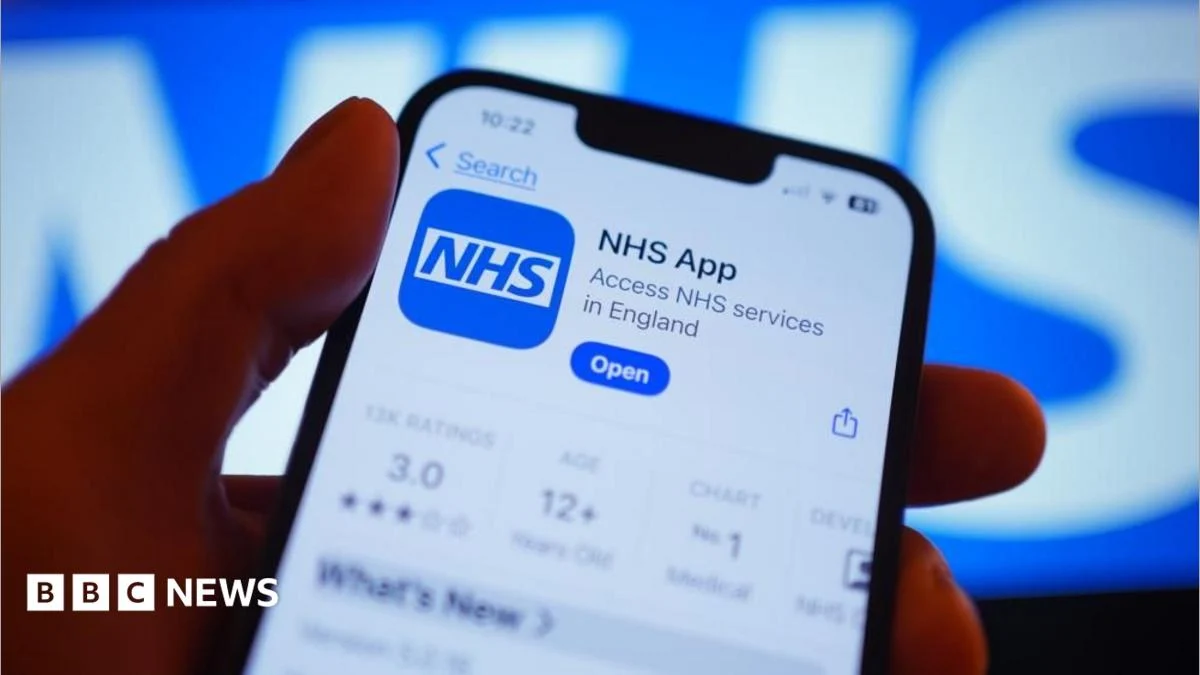
"The integration of artificial intelligence into the NHS app marks a pivotal moment, promising to direct patients to the right care sooner while simultaneously freeing up clinicians to focus on direct patient interaction, signifying a major leap in modernizing healthcare delivery."
The National Health Service (NHS) in England is embarking on a transformative journey, leveraging artificial intelligence (AI) to fundamentally reshape how patients access care and how healthcare professionals manage their workload. This ambitious initiative, centered around a new AI-powered triage tool within the ubiquitous NHS app, is designed to guide individuals to the most appropriate service – from self-care advice to urgent emergency care – thereby alleviating pressures on traditional access points like GP surgeries. Beyond patient navigation, the NHS is also rolling out AI-driven notetaking solutions to reduce administrative burdens on staff, allowing them to dedicate more time to direct patient care. This comprehensive digital overhaul represents a significant investment in technology, aimed at creating a more efficient, responsive, and patient-centric health service for the future.
The announcement by NHS England signals a significant stride towards a digitally-first approach to healthcare. At the heart of this transformation is an innovative AI triage tool, set to be integrated into the NHS app. This sophisticated software will engage patients in a series of targeted questions, utilizing their responses to accurately assess their needs and subsequently direct them to the most suitable point of care. Options will range from scheduling a GP appointment, recommending a visit to a local pharmacy, advising on attendance at Accident & Emergency (A&E) departments, suggesting community services, or offering valuable self-care guidance.
This strategic deployment aims to tackle long-standing challenges within the health service, particularly the persistent issue of phone queues at GP surgeries, which often peak dramatically when lines open at 08:00. By providing an immediate digital alternative, the NHS anticipates a substantial reduction in this burden. Initial trials have already demonstrated promising results; a pilot at Wealden Ridge Medical Partnership in Sussex recorded an impressive 29% decrease in the number of individuals queuing on the phone for appointments. Dr. Ragu Rajan, a practitioner at the partnership, lauded the tool, stating that its integration means "our patients can tell us what they need, when they need it, and be directed to the right care first time." He further emphasized the profound impact on clinical practice, noting, "It hasn’t replaced our judgement – it’s given us back the time to use it." This highlights a crucial benefit: AI augmenting, rather than supplanting, human expertise, thereby optimizing valuable clinical time.
The rollout of this triage tool is planned in phases, with an initial reach of over 200,000 patients within the next 12 months. The ambitious goal is to make the tool accessible to all NHS app users across England by April 2028, underscoring its pivotal role in a "major overhaul" of the health service’s technological infrastructure. This initiative forms a key component of a broader £10 billion investment, allocated by the government in 2025, specifically earmarked for modernizing the NHS’s technology, digital, and data systems.
Health Secretary James Murray has provided crucial clarification regarding the scope of AI’s involvement, reassuring the public that the program will not grant AI the ultimate authority to decide if a patient sees a doctor. Speaking on the BBC’s Sunday with Laura Kuenssberg show, Murray articulated that the investment is dedicated to "modernizing" the NHS and ensuring that the benefits of technological advancement are distributed equitably "around the country." This commitment reflects a broader governmental strategy to harness digital innovation for improved public services. Sir Jim Mackey, chief executive of NHS England, echoed this sentiment, asserting that the tool would "help get patients to the best service for their needs first time… so that clinicians can make sure those most in need of a GP appointment can get one sooner." This objective aligns with the overarching goal of enhancing access and ensuring that resources are allocated where they are most critically needed.
While the adoption of AI in the NHS has been largely met with enthusiasm for its potential to streamline operations and improve patient pathways, health bodies and experts have also voiced critical considerations. The primary concerns revolve around patient safety, the inviolability of confidentiality, and the imperative of inclusion as the NHS increasingly relies on AI-driven solutions. These concerns highlight the ethical and practical challenges inherent in integrating advanced technology into a sensitive and complex public service.
Patient safety, in particular, remains paramount. Critics and advocates alike stress the need for robust oversight mechanisms to ensure that the AI triage tool accurately assesses symptoms and directs patients appropriately, especially in cases where misdirection could have serious consequences. This necessitates rigorous testing, continuous monitoring, and clear protocols for human intervention and override. Confidentiality, another critical aspect, requires stringent data protection measures to safeguard sensitive patient information processed by AI systems, adhering to strict regulatory frameworks such as GDPR.
Furthermore, the issue of digital exclusion has been prominently raised. Pritesh Mistry, a fellow at the King’s Fund think-tank, acknowledged that the announcement "could help turbo-charge improvements in how [the] NHS uses modern technology to deliver better care for patients," making it "easier to have support at the right time and in a way that best suits them, digitally or physically." However, Mistry also cautioned that "the NHS will need to keep a strong focus on ensuring that people are not digitally excluded as clinical services become increasingly reliant on technology." This underscores the need for alternative access routes and support for individuals who may lack digital literacy, access to smartphones, or reliable internet connections, ensuring that technological advancement does not inadvertently create barriers to care for vulnerable populations.
Professor Lynn Woolsey, chief nursing officer at the Royal College of Nursing, while welcoming the rollout as "an important step in upgrading technology in the NHS" and potentially easing the "administrative burden on nursing staff," strongly emphasized that patient safety and confidentiality must remain at the "heart of any AI triage system, with a guarantee that a health professional will be the one making decisions at key points in that process." Her statement reinforces the indispensable role of human clinical judgment and the necessity of transparent decision-making processes within AI-augmented healthcare.
Beyond patient triage, the NHS’s digital transformation extends to administrative efficiency within clinical settings. An England-wide rollout of AI tools designed to record conversations between patients and NHS staff is also underway. These innovative systems will generate real-time transcriptions and concise clinical summaries, aiming to free up staff from tedious notetaking. The initial phase of this deployment will target hospital appointments that do not require an overnight stay, beginning at four NHS trusts in and around London: St George’s, Epsom and St Helier, Croydon, and Kingston and Richmond. Additionally, Alder Hey Children’s NHS Foundation Trust in Liverpool and Manchester University NHS Foundation Trust are expanding their existing AI notetaking programs, demonstrating a growing confidence in the technology’s utility.
The benefits of AI notetaking have been substantiated by trials. A study led by Great Ormond Street Hospital for Children, conducted across nine NHS sites in London, revealed a significant improvement in patient-clinician interaction. NHS staff utilizing the notetaking technology spent almost 25% more of their time directly engaging with patients, rather than being engrossed in administrative tasks. This increase in face-to-face interaction has profound implications for the quality of care, fostering stronger patient relationships and allowing for more comprehensive discussions about health concerns. Professor Woolsey’s observation that this could "ease the administrative burden on nursing staff" further highlights the potential for AI to enhance job satisfaction and reduce burnout among healthcare professionals, ultimately contributing to a more sustainable workforce.
The political landscape also reflects a broad consensus on the need for such innovation. Stuart Andrew, the Conservative shadow health secretary, expressed support, stating, "Any innovation that improves patient care and helps the NHS work more effectively should be welcomed." However, he appended a crucial condition: "But new technology must be introduced with a fully-funded plan that delivers value for taxpayers." This perspective underscores the importance of not just technological adoption, but also strategic planning and fiscal responsibility in its implementation.
In conclusion, the NHS’s strategic embrace of AI, from intelligent patient triage to automated clinical notetaking, marks a defining moment in its ongoing evolution. This ambitious digital transformation is poised to fundamentally alter how patients interact with the health service and how healthcare professionals manage their demanding roles. While the potential benefits – reduced wait times, improved access, enhanced efficiency, and more patient-centered care – are considerable, the success of this initiative will ultimately hinge on the NHS’s ability to meticulously address critical concerns regarding patient safety, data confidentiality, and digital inclusion. By carefully navigating these challenges, the NHS stands to leverage AI as a powerful catalyst for a more modern, effective, and resilient healthcare system for all of England.
