
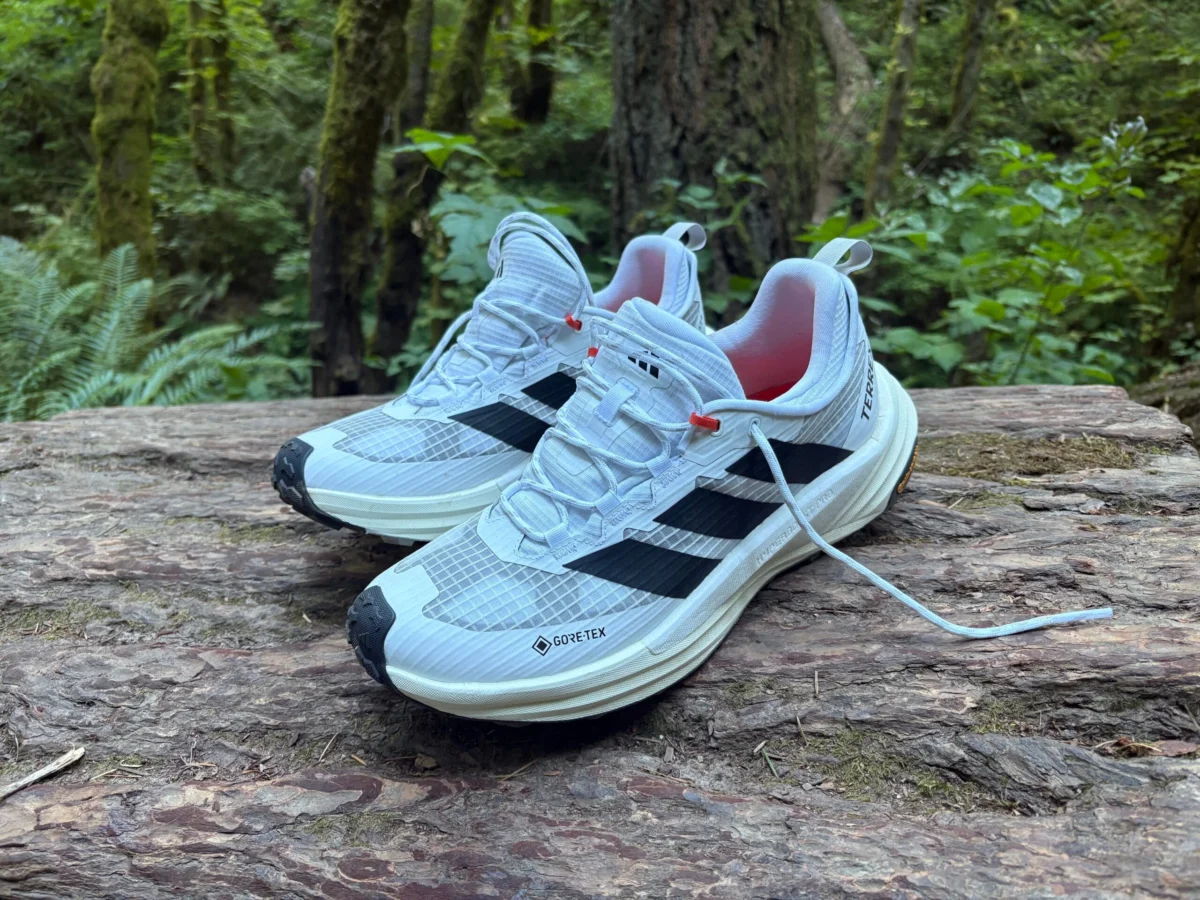
"The Terrex Free Hiker 3 Low proves that Adidas is no longer just a titan of the pitch or the track, but a formidable leader in technical outdoor footwear that balances springy responsiveness with rugged durability."

While Adidas is a household name in soccer, basketball, and streetwear, its Terrex division has quietly evolved into a high-performance powerhouse for serious outdoor enthusiasts. The Free Hiker 3 Low represents the pinnacle of this evolution, merging the brand’s proprietary cushioning technologies with high-performance materials to create a shoe that handles diverse terrain as effectively as it manages city streets, offering a "fast-and-light" alternative to traditional hiking boots.
The Evolution of the Three Stripes in the Wild
To understand the significance of the Terrex Free Hiker 3, one must look back at the historical DNA of Adidas. While the brand is synonymous with the FIFA World Cup and Olympic tracks, its foray into the mountains began in the 1970s. This era saw a collaboration with Reinhold Messner, the legendary mountaineer who famously achieved the first solo ascent of Mount Everest without supplemental oxygen. Messner required a shoe that broke away from the heavy, stiff leather traditions of the time—something lightweight, nimble, and grippy.

That early partnership laid the groundwork for what would become the official Outdoor category in 2007, eventually rebranding into the Terrex line in 2011. Today, the outdoor footwear market is more competitive than ever. Brands like Hoka and Salomon have revolutionized the space with maximalist cushioning and trail-running-inspired designs. Adidas has responded not by following trends, but by leveraging its deep archives of athletic technology to create a hybrid category: the technical hiker that feels like a sneaker but performs like a tank.
Technical Specifications: The Architecture of Comfort
The core of the Free Hiker 3 Low’s performance lies in its dual-foam midsole architecture. For over a decade, Adidas’s Boost technology—made of expanded thermoplastic polyurethane (eTPU) capsules—has defined the brand’s energy return capabilities. In the Free Hiker 3, Boost provides the "spring" that reduces foot fatigue during long-distance treks.

However, energy return alone can be a liability on uneven trails where stability is paramount. To counter the inherent squishiness of Boost, Adidas integrated Dreamstrike+ foam. This newer compound is designed for targeted support, ensuring that the foot remains centered and protected against sharp rocks and roots. This combination places the shoe in a "Goldilocks" zone: it is softer than a rigid hiking boot but more supportive than a standard trail runner.
The outsole continues the brand’s long-standing partnership with Continental, the German tire manufacturer. Utilizing Continental’s proprietary rubber compound, the lugs are designed to provide a high coefficient of friction. This is particularly noticeable on "mixed" terrain—transitioning from wet, mossy riverbanks to dry, dusty inclines. The grip is often described as "mountain goat-esque," a testament to the rubber’s ability to bite into slick surfaces.

Performance in the Field: Versatility Across Terrains
Testing the Free Hiker 3 Low reveals a shoe built for the modern hiker who refuses to be pigeonholed into one pace or one environment. On casual strolls through wooded paths, the shoe’s breathability is a standout feature. Even during high-heat summer excursions, the mesh upper and Gore-Tex membrane work in tandem to manage internal moisture. While Gore-Tex is primarily known for its waterproofing, the "GTX" version used here is engineered to allow water vapor to escape, preventing the "swamp foot" effect often found in cheaper waterproof footwear.
On more technical terrain, such as jagged rock scrambles or steep inclines, the shoe’s weight becomes its greatest asset. At approximately 2 ounces heavier than some ultra-light competitors like the Danner N45 Low, the Free Hiker 3 justifies its mass through superior protection. It offers a "broken-in" feel immediately upon unboxing, which is a rare luxury in a category where "stiff" is often equated with "durable." This makes it an ideal choice for backpackers who need to cover 15 to 20 miles a day and cannot afford the blisters associated with a lengthy break-in period.

The Low-Profile Trade-off: Protection vs. Mobility
The choice between a "Low" silhouette and a traditional "Mid" or "High" boot is often a matter of terrain and personal preference. The Free Hiker 3 Low is designed for mobility. By freeing the ankle, it allows for a more natural gait and faster lateral movements. This makes it an exceptional tool for "speed hiking"—a discipline that sits between traditional hiking and trail running.
However, the low-cut design does introduce certain limitations. While the Gore-Tex membrane is highly effective at repelling splashes and rain, the lower ankle collar means that deep puddles or stream crossings are more likely to result in water entering from the top. For hikers who anticipate heavy mud or deep water, the standard mid-cut Terrex Free Hiker 3, which features a more substantial waterproof sleeve around the ankle, remains the superior choice.

Sizing, Fit, and Minor Drawbacks
No technical product is without its idiosyncrasies. The Free Hiker 3 Low tends to run slightly large, a common trait in the Adidas Terrex line. Potential buyers are often advised to consider a half-size down if they prefer a snug, "locked-in" feel, particularly if they plan on wearing thinner, moisture-wicking socks.
Another point of contention during testing was the integrated sockliner. While designed to prevent debris from entering the shoe, the liner has a tendency to bunch up during the initial lace-up process. For hikers with wider feet or those who utilize ankle braces, this can require a bit of manual adjustment to ensure a smooth fit. However, once the laces are tightened and the foot is set, the internal friction disappears, leaving a comfortable, secure wrap that supports the arch and heel.

Market Comparison: Where the Free Hiker 3 Stands
To truly gauge the value of the Free Hiker 3 Low, one must compare it to its primary rivals in the $150–$220 price bracket:
- Danner N45 Low: Retailing for roughly $40 more, the Danner offers a more "heritage" aesthetic and slightly less weight. However, it lacks the propulsive energy return of the Boost midsole, making it feel more like a traditional shoe and less like a performance athlete.
- Merrell Moab Speed 2 Leather Waterproof: A stalwart in the industry, the Merrell is more affordable and offers a classic leather-and-mesh build. While it is a reliable "workhorse," it lacks the technical "edge" and city-to-trail aesthetic versatility of the Adidas.
- Salomon X5 Ultra Low: Often described as "armor for the foot," the Salomon is more rigid and arguably better for extremely technical, rocky scrambles. However, for long-distance comfort on well-maintained trails, the Adidas cushioning is significantly more forgiving on the joints.
The Verdict: A Modern Hybrid for the Active Explorer
The Adidas Terrex Free Hiker 3 Low is a masterclass in hybrid design. It successfully fills the gap for the adventurer who needs more than a sneaker but less than a mountaineering boot. It is "toothy" enough for the backcountry yet sleek enough for an afternoon in an outdoorsy city like Denver or Portland.

While the $180 price point places it in the premium tier of the market, the investment is justified by the shoe’s versatility. It functions as a cross-country sneaker, a day hiker, and a lightweight backpacking tool all in one. For the hiker who values pace, comfort, and the ability to transition seamlessly from a jagged ridge to a paved trailhead, the Free Hiker 3 Low is a frontrunner in the next generation of outdoor footwear. It is a testament to the fact that when Adidas applies its athletic expertise to the wilderness, the results are nothing short of peak performance.
