
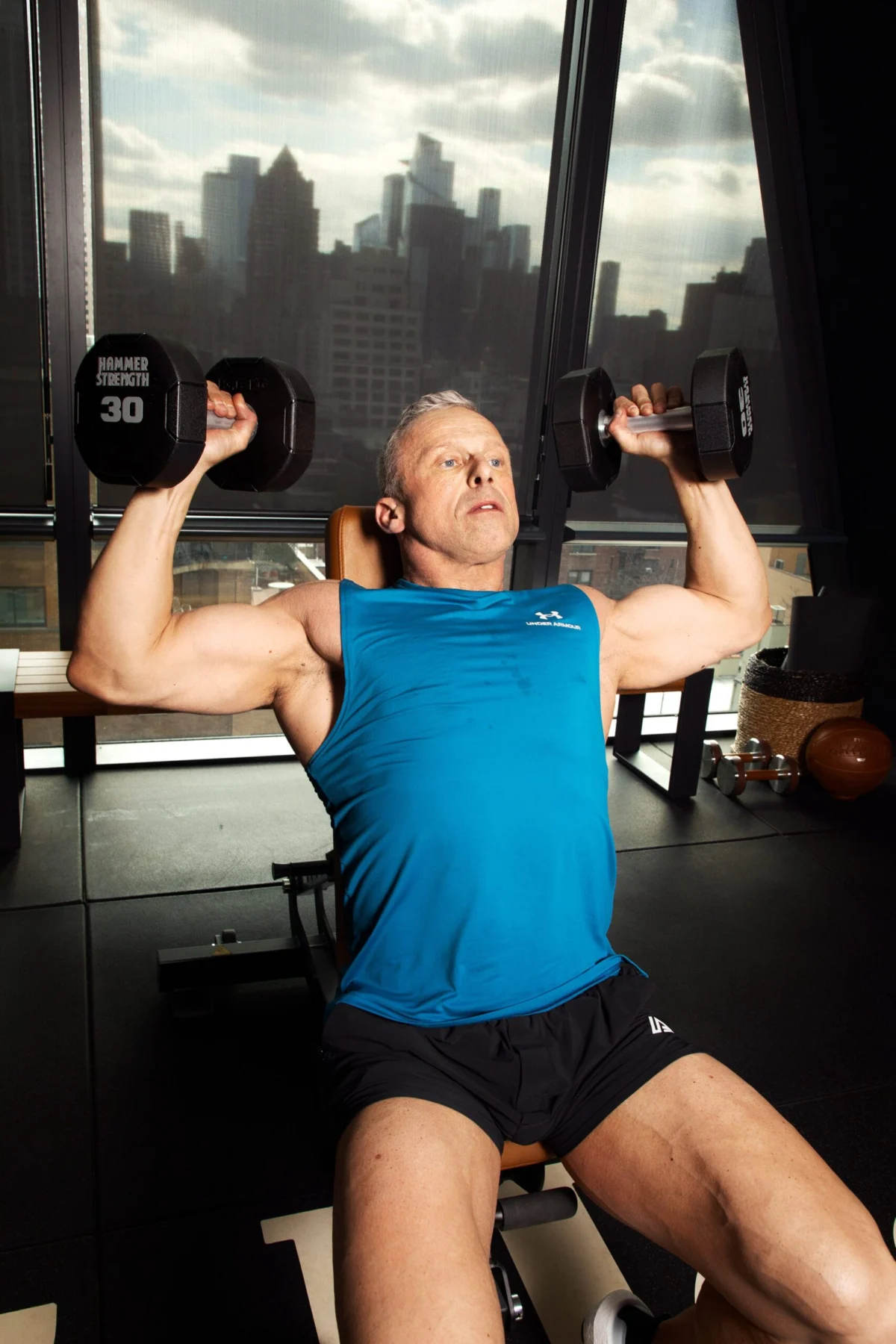
"To thrive in your fifties, you must begin training for them in your forties; proactive shifts in recovery and intensity are the difference between sustained vitality and a forced total body rebuild."
The transition into middle age often brings a false sense of security for the seasoned athlete; if the joints do not yet ache and the strength remains, the temptation is to maintain the high-intensity, "meathead" habits of youth. However, fitness experts like Bryan Krahn argue that the fourth decade of life is actually the critical window for preemptive adaptation, where shifting from ego-driven lifting to structured, recovery-focused programming ensures that the body remains functional and muscular well into the fifties and beyond.
The Myth of the Invincible Forties
In the world of strength and conditioning, there is a common phenomenon where men in their early forties continue to train as if they are still in their early twenties. This "odometer" of life, as Bryan Krahn describes it, is often ignored until it is too late. For many, the forties are a period of peak career stress and increased family responsibilities, yet the gym remains a sanctuary where they attempt to prove their youth through one-rep maxes and high-impact "stunt" lifts.
The danger of this approach lies in its invisibility. Unlike an acute injury that happens in a moment, the wear and tear of middle-age training is cumulative. It is a slow erosion of joint integrity and a steady tax on the central nervous system (CNS). By the time a trainee reaches 47 or 48, the bill often comes due in the form of chronic tendonitis, lower back issues, or systemic burnout. Krahn’s own experience serves as a stark warning: despite his expertise, he hit a wall in his late forties that required a complete "rebuilding" of his physical foundation. His message to the modern lifter is clear: do not wait for the breakdown to occur before you fix the engine.

The Physiology of Aging and Muscle Maintenance
To understand why the forties require a change in strategy, one must look at the biological shifts occurring beneath the surface. Sarcopenia, the age-related loss of muscle mass, begins to accelerate if not actively countered by resistance training. However, the way one counters it must change. In youth, the body’s hormonal profile—characterized by higher levels of testosterone and growth hormone—allows for rapid recovery from "idiotic" training sessions. As men age, these hormonal buffers thin out.
Furthermore, the collagen in tendons and ligaments becomes less elastic. The synovial fluid that cushions the joints may decrease, making heavy, explosive movements like the snatch or the max-effort deadlift increasingly risky. The "Max Muscle at 50" philosophy recognizes that while the goal remains hypertrophy (muscle growth), the methods must pivot toward "mechanical tension" and "metabolic stress" rather than pure "max effort" strength. This means prioritizing higher rep ranges (8–12 or even 12–15) where the muscle can be exhausted without the joints being crushed under extreme loads.
Moving Beyond "Meathead" Metrics
A significant hurdle for many men in their forties is the psychological attachment to the "Big Three" lifts: the squat, bench press, and deadlift. While these remain the gold standard for building power, they are not the only—or even the best—tools for a 50-year-old looking to maintain a physique. Krahn advocates for a shift away from "trendy" programs or random workout "stunts" in favor of controlled, focused training.
This shift involves several key tactical changes:
- Exercise Selection: Replacing a traditional barbell bench press with a neutral-grip dumbbell press or a floor press can save the shoulders from unnecessary strain. Similarly, substituting back squats with goblet squats or Bulgarian split squats provides the necessary stimulus for the legs with a fraction of the spinal compression.
- Tempo and Control: Instead of "bouncing" weights, the aging athlete should focus on the eccentric (lowering) phase of the lift. This increases time under tension, which is a primary driver of muscle growth, while reducing the need for excessively heavy weights that risk injury.
- The End of the One-Rep Max: For the non-competitive lifter over 40, the one-rep max is a metric of diminishing returns. The risk of a catastrophic tear or joint injury far outweighs the ego satisfaction of a personal record. Krahn suggests that "smart fitness programming" involves finding progress through improved form, shorter rest periods, or increased volume rather than just adding more plates to the bar.
The Recovery Revolution
Perhaps the most overlooked aspect of fitness in the forties is the necessity of a sophisticated recovery protocol. In one’s twenties, "recovery" might have been a few hours of sleep and a protein shake. In the forties and fifties, recovery is a discipline in itself.

As the body ages, the inflammatory response to exercise lasts longer. This means that the frequency of high-intensity sessions may need to decrease. If a trainee used to hit a heavy "legs day" twice a week, they might find that once a week, supplemented by lower-impact mobility work, yields better muscle growth because the body actually has time to repair the tissue.
Furthermore, the role of sleep cannot be overstated. Sleep is the primary window for tissue repair and hormonal regulation. A man in his forties who prioritizes a structured training program like "Max Muscle After 50" but neglects his eight hours of rest is essentially "rowing with one oar," as the metabolic cost of his workouts will eventually lead to overtraining syndrome.
The "Max Muscle After 50" Blueprint
The program developed by Krahn is designed as a proactive blueprint. It is not merely a "light" version of a young man’s workout; it is a sophisticated recalibration. It focuses on the "sweet spot" of hypertrophy—building enough muscle to maintain a high metabolic rate and a youthful appearance, while preserving the joints for the decades to come.
The transition to this style of training should ideally begin on one’s 40th birthday. By spending the forties mastering controlled movements and prioritizing longevity, the fifties become "cake." The alternative is the "mess" Krahn describes—a period of forced inactivity where one must heal from years of "training like an idiot" before they can even begin to build muscle again.
This approach also accounts for the "responsibilities" of the middle-aged man. Training must be efficient. When a program is focused and structured, there is no wasted energy on "junk volume." Every set has a purpose, and every exercise is chosen for its high stimulus-to-fatigue ratio. This allows the trainee to stay in the gym for the long haul, rather than burning out in a blaze of glory at 45.

Redefining Success
The ultimate goal of shifting one’s fitness perspective in the forties is to redefine what "success" looks like in the weight room. In youth, success is often measured by the amount of weight on the bar. In the second half of life, success is measured by consistency, the absence of pain, and the maintenance of a lean, muscular frame that allows for an active lifestyle outside the gym.
Proactive change is not a sign of weakness; it is a sign of intelligence. By listening to experts like Bryan Krahn and adopting a more mature approach to physical culture, men can ensure that their fifties are not a decade of decline, but a decade of peak performance. The "Max Muscle" approach proves that you can still be the strongest version of yourself at 53, provided you were smart enough to start preparing for it at 40. The odometer will keep turning, but with the right programming, the engine can remain as powerful as ever.
