
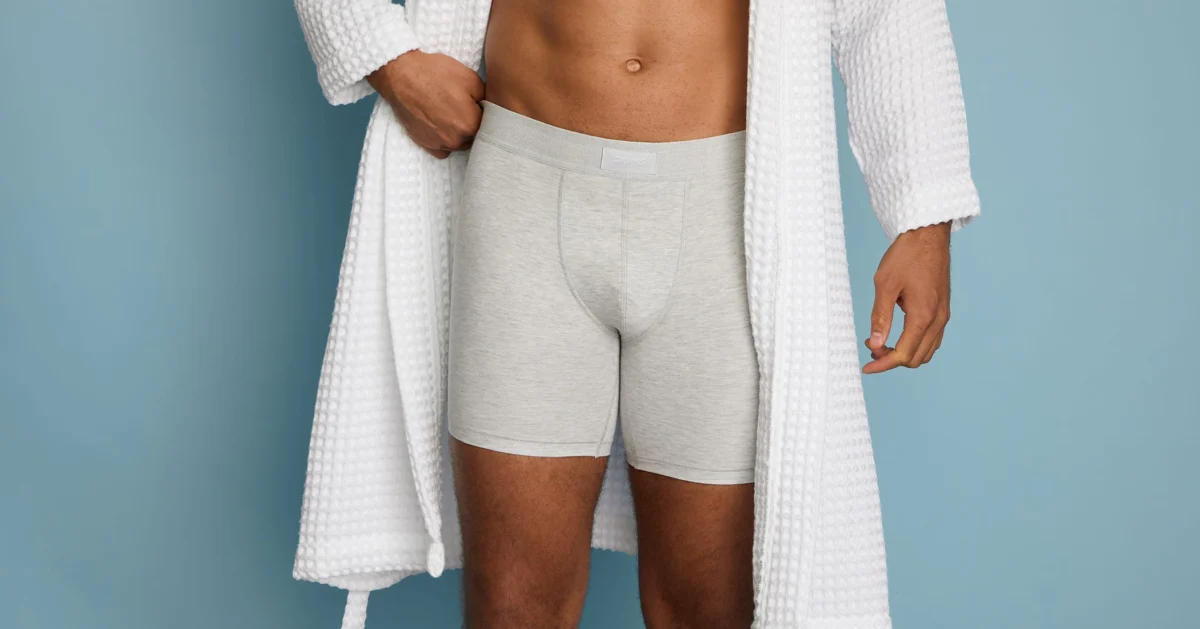
“Modern men’s underwear has transitioned from a simple daily commodity to a sophisticated intersection of textile engineering and ergonomic design, where fabric choice determines everything from thermal regulation to long-term physical health.”

The evolution of men’s basics reflects a broader shift in the garment industry toward specialized performance and sustainable luxury. No longer restricted to the binary choice of the baggy boxer or the restrictive brief, the contemporary market offers a spectrum of silhouettes—boxer briefs, trunks, and hybrid boxers—constructed from materials ranging from long-staple cotton and beechwood-derived modal to high-tech polyamide meshes. Understanding the specific mechanics of these fabrics and the ergonomic innovations in pouch construction is essential for navigating a marketplace that prioritizes both aesthetic appeal and functional longevity.
The Foundation of the Modern Wardrobe
The most significant advancement in men’s underwear over the last decade is the refinement of the boxer brief. As the most popular silhouette for the modern man, it serves as the baseline for testing comfort and support. Leading the category is the Mack Weldon Airknitx Boxer Brief, a garment that exemplifies the move toward high-performance synthetics for everyday use. Constructed from a polyamide-elastane blend, the Airknitx utilizes a mesh-like texture to facilitate airflow. Unlike traditional cotton, which retains moisture, these synthetic fibers are designed to move sweat away from the skin, a process known as moisture-wicking.

In rigorous testing environments—ranging from professional office settings to four-mile treadmill runs—the Airknitx consistently maintains its structural integrity. Key design features, such as the supportive flyless pouch and grippy leg bands, prevent the common issues of "swamp crotch" and fabric bunching. By incorporating "mesh cool zones" in the rear, the design addresses the specific areas of the male anatomy prone to overheating, proving that modern underwear is as much about thermal management as it is about coverage.
The Rise of Modal and Natural Fiber Hybrids
While synthetics dominate the athletic sphere, the "second skin" movement has popularized the use of micro-modal. Derived from the cellulose of beech trees, modal is prized for its extreme softness and its ability to remain supple after repeated wash cycles. The Tommy John Second Skin Trunk is a primary example of this luxury-tier comfort. By blending 90% modal with 10% spandex, the fabric achieves a four-way stretch that mimics the natural movement of the body.

A similar philosophy is found in the Lululemon Always in Motion collection. Though Lululemon is traditionally associated with athleisure, their foray into underwear focuses on an ergonomic, roomy pouch and a fabric that feels "freeing" like a traditional boxer while providing the security of a brief. This is particularly beneficial for movements involving high degrees of hip flexion, such as deep squats or deadlifts, where restrictive fabrics often fail.
The celebrity-led market, spearheaded by brands like Skims, has also embraced this modal-elastane-cotton trifecta. The Skims Stretch collection emphasizes "recovery"—the fabric’s ability to snap back to its original shape without sagging. This prevents the "pancaking" effect often seen in lower-quality garments, ensuring the silhouette remains sharp under slim-cut denim or tailored trousers.

Heritage and the Luxury of Long-Staple Cotton
Despite the influx of high-tech blends, traditional cotton remains a staple, though its quality varies wildly across the industry. Luxury heritage brands like Sunspel, a U.K.-based manufacturer with over a century of history, focus on the quality of the fiber itself. By using long-staple cotton, Sunspel produces boxers that are significantly softer and more durable than those made from standard short-staple fibers.
Sunspel’s design philosophy also addresses common points of irritation. For instance, their Classic Boxer Shorts feature a single smooth back panel, eliminating the central seam that can cause chafing during long periods of sitting. This commitment to "lounging in luxury" represents the high end of the market, where the focus is on breathability and timeless tailoring rather than compression or athletic performance.

Similarly, the Swedish brand CDLP has redefined the "luxury splurge" by utilizing Tencel Lyocell. This fiber is not only more sustainable than traditional cotton—requiring less water and fewer chemicals to produce—but it also offers a silky, cooling sensation that outperforms cotton in high temperatures. For the consumer looking to upgrade from basic department store packs, Tencel represents the pinnacle of modern textile sustainability and skin-contact comfort.
Performance Engineering for the Active Lifestyle
For the athlete, underwear is a piece of equipment. Brands like Under Armour and SAXX have focused their research on preventing friction and providing maximum stabilization. The Under Armour Tech 6-inch Boxerjock utilizes a polyester-spandex blend that prioritize anti-chafing. The inclusion of an articulated mesh fly panel and gusset ensures that "the goods" are kept in place during high-intensity interval training (HIIT) or distance running.

SAXX has taken this a step further with their "hammock-style" pouch, often referred to as the BallPark Pouch. This internal construction uses mesh panels to create a physical barrier between the scrotum and the thighs, virtually eliminating skin-on-skin friction. Their Multi-Sport Mesh Boxer Brief is designed with an open, dotted texture that allows heat to escape instantly, making it an ideal choice for heavy cardio days or outdoor activities in humid climates.
Balancing Value and Quality
The democratization of high-quality textiles is perhaps best seen in the offerings from Japanese retailer Uniqlo. Their AIRism Ultra Seamless Boxer Briefs utilize proprietary moisture-wicking technology and a "cutoff" waist design that feels nearly invisible. At a price point significantly lower than luxury competitors, the AIRism line provides the benefits of high-tech synthetics—breathability, quick-drying properties, and seamless construction—to a wider audience.

Even in the budget-friendly category, cotton has seen an upgrade. Abercrombie & Fitch’s Signature Icon Boxer Briefs return to an old-school aesthetic—solid colors with a crisp white waistband—but incorporate enough elastane to ensure the waistband does not roll or lose elasticity. This "affordable refresh" model allows men to maintain a high-quality rotation of basics without the prohibitive costs of boutique brands.
Maintenance and Longevity: The Science of Care
The longevity of high-performance underwear is largely dependent on proper maintenance. While most modern blends are machine washable, heat is the primary enemy of elastic fibers. Polyamide, elastane, and modal can lose their "snap" if subjected to high-heat drying cycles. Experts recommend washing in cold water with similar colors and utilizing low-tumble or air-drying methods. For luxury items like Polo Ralph Lauren’s 4D Flex or CDLP’s Tencel briefs, air-drying is essential to prevent pilling and to ensure the waistband maintains its original tension.

Conclusion: Selecting the Right Foundation
The diversity of the current market allows men to curate their underwear drawer based on specific daily requirements. A well-rounded collection might include Mack Weldon’s Airknitx for the gym, Calvin Klein’s classic cotton stretch for daily office wear, and Sunspel or CDLP for weekend lounging.
When selecting a pair, the consumer should prioritize three factors: the activity level (which dictates the need for synthetics vs. natural fibers), the desired level of support (pouch construction), and the outer clothing (ensuring the inseam length and fabric thickness do not create visible lines). By treating underwear as a foundational element of health and style rather than an afterthought, the modern man can significantly improve his daily comfort and confidence.
