
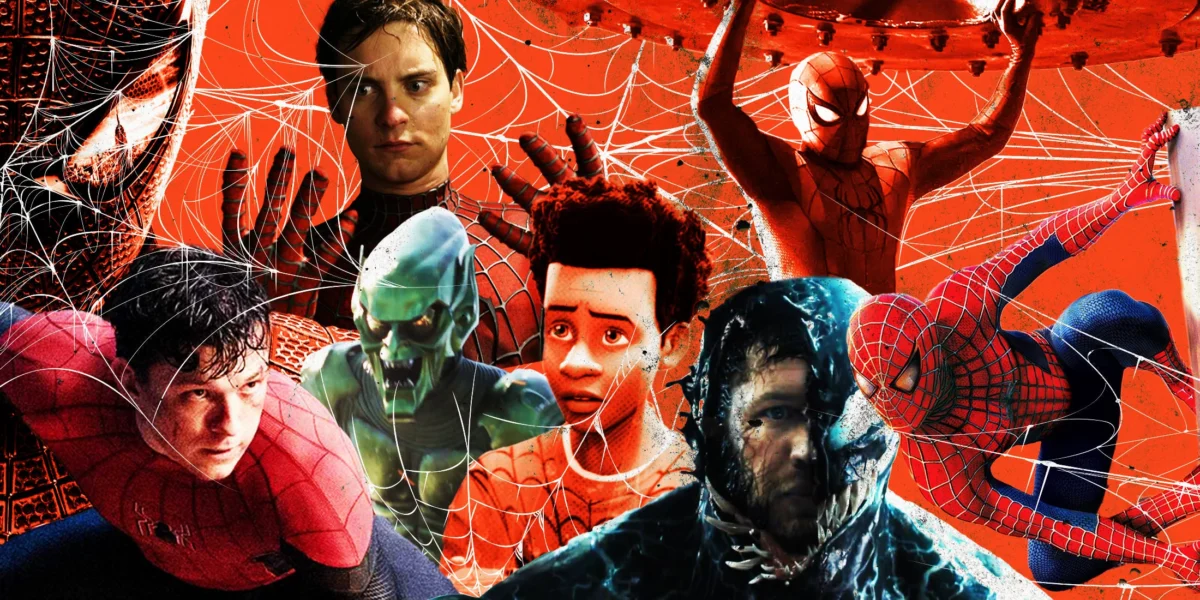
"The enduring legacy of Spider-Man on film is defined not just by its blockbuster successes, but by its willingness to reinvent the superhero archetype through varied lenses of high camp, teen drama, and groundbreaking animation."

The cinematic journey of Peter Parker and his associated gallery of allies and antagonists represents one of the most complex webs in Hollywood history. Spanning over two decades and multiple studios, the franchise has transitioned from the earnest, character-driven roots of the early 2000s to the sprawling, interconnected multiverse of the modern era. While the "Spider-Man" brand remains a gold standard for box office performance, the quality of these entries varies wildly, reflecting the industry’s shifting priorities between standalone storytelling and the construction of expansive shared universes.

The Struggles of the Sony Spider-Man Universe
At the lower end of the spectrum lie the recent attempts by Sony Pictures to establish a "Spider-Man Universe" without the actual presence of the titular hero. The most glaring example is Morbius (2022). Starring Jared Leto as the "Living Vampire," the film was widely panned for its derivative plot, which many critics noted felt like a hollow echo of early 2000s origin stories like Batman Begins. Despite Leto’s typically transformative approach to acting, his performance in Morbius was uncharacteristically restrained, leaving the film feeling dry and tonally inconsistent. The wasted potential of seasoned actors like Jared Harris and a nonsensical post-credits scene—desperately trying to tether itself to the Marvel Cinematic Universe (MCU)—cemented its status as a creative low point for the brand.

Similarly, Kraven the Hunter (2024) represents a missed opportunity to adapt one of Spider-Man’s most formidable comic book foes. While Sergei Kravinoff is a character of immense depth in the source material, particularly in storylines like "Kraven’s Last Hunt," his solo cinematic outing failed to justify its existence as a standalone narrative. Without the wall-crawler to serve as his foil, the hunt felt aimless, reinforcing the sentiment that these villains function best when in direct conflict with their heroic counterpart.

The Venom trilogy, while commercially successful, remains a polarizing pillar of this spin-off universe. Venom: The Last Dance (2024) and Venom: Let There Be Carnage (2021) rely almost entirely on the Herculean efforts of Tom Hardy. His dual performance as Eddie Brock and the alien symbiote is a masterclass in high camp and physical comedy. While the scripts are often criticized for being thin or forgettable, the "buddy-cop" dynamic between the two leads provides a level of entertainment that transcends the films’ technical shortcomings.

The Mixed Legacy of the "Amazing" Era
The 2012 reboot, The Amazing Spider-Man, and its 2014 sequel, The Amazing Spider-Man 2, were born out of a necessity to maintain film rights rather than a clear creative mandate. Andrew Garfield’s portrayal of Peter Parker brought a manic, witty energy to the suit that many fans felt was closer to the comic book iteration of the character. However, the films struggled with an identity crisis. The first entry attempted a "gritty" tone that felt redundant following the Sam Raimi trilogy, while the sequel became notoriously overstuffed with subplots involving Electro (Jamie Foxx), Harry Osborn (Dane DeHaan), and a convoluted conspiracy involving Peter’s parents.

Despite these flaws, the chemistry between Garfield and Emma Stone’s Gwen Stacy remains perhaps the strongest romantic pairing in superhero cinema. Their relationship provided the emotional core that allowed The Amazing Spider-Man 2 to set up one of the most poignant character arcs in the later Spider-Man: No Way Home, proving that even the franchise’s failures contained seeds of greatness.

The "So Bad It’s Good" Phenomenon
A unique entry in the ranking is Madame Web (2024). A colossal critical failure, the film has paradoxically found a second life as a "joy of a terrible movie." Featuring Dakota Johnson in a performance that can best be described as detached, the film is riddled with clunky dialogue and nonsensical story beats. Yet, its sheer absurdity and lack of adherence to modern superhero tropes have given it a cult-like status among viewers who enjoy cinematic train wrecks. It stands as a testament to the fact that in a world of polished, corporate-mandated blockbusters, a truly bizarre mess can sometimes be more memorable than a mediocre success.

The Marvel Cinematic Universe and the Power of Nostalgia
When Spider-Man finally joined the MCU in Spider-Man: Homecoming (2017), the franchise shifted toward a John Hughes-inspired coming-of-age vibe. Tom Holland’s Peter Parker was younger, more vulnerable, and deeply integrated into the world of the Avengers. Homecoming and Far From Home (2019) excelled by skipping the origin story and focusing on Peter’s struggle to balance high school life with the weight of Tony Stark’s legacy.

This era culminated in Spider-Man: No Way Home (2021), a cinematic "moment" that utilized the concept of the multiverse to bring back Tobey Maguire and Andrew Garfield. While the film is a triumph of fan service and emotional payoff, some critics argue it leans too heavily on nostalgia, functioning more as a "greatest hits" compilation than a standalone work of art.

Looking toward the future, the anticipated Spider-Man: Brand New Day (2026), directed by Destin Daniel Cretton, promises a return to a more grounded, Manhattan-based existence for Holland’s Parker. With rumors of appearances by Jon Bernthal’s Punisher and Mark Ruffalo’s Hulk, the film seeks to balance the hero’s solitary life with the broader interconnectedness that fans expect from the MCU.

The Gold Standards: Animation and the Raimi Peak
The true pinnacle of the franchise is found in the Spider-Verse animated films and the peak of the Sam Raimi era. Spider-Man: Into the Spider-Verse (2018) was a cultural earthquake, introducing Miles Morales (voiced by Shameik Moore) to a global audience. Its revolutionary "moving comic book" aesthetic and its deeply human story about family and mentorship—highlighted by Mahershala Ali’s performance as Uncle Aaron—changed the landscape of mainstream animation. Its sequel, Across the Spider-Verse (2023), managed the impossible by expanding the scope and visual ambition while maintaining the emotional intimacy of the first film, even if its "Part One" structure left audiences clamoring for a resolution.

However, for many, the ultimate Spider-Man film remains 2004’s Spider-Man 2. Directed by Sam Raimi, the film is a perfect distillation of what makes the character enduring. It is a tragic, character-driven drama disguised as a superhero spectacle. Alfred Molina’s Otto Octavius remains the franchise’s most compelling villain—a man of science undone by his own ambition. The film explores the cost of heroism, famously depicted in the "Spider-Man No More" arc, and features the legendary train sequence, which remains the benchmark for action choreography in the genre.

From the campy heights of Venom to the visual mastery of the Spider-Verse, the Spider-Man cinematic legacy is a reflection of Hollywood’s evolving relationship with its most popular icons. Whether through a "brand new day" or a look back at the classics, the web-slinger continues to prove that with great power—and a great character—comes an infinite number of stories worth telling.
