
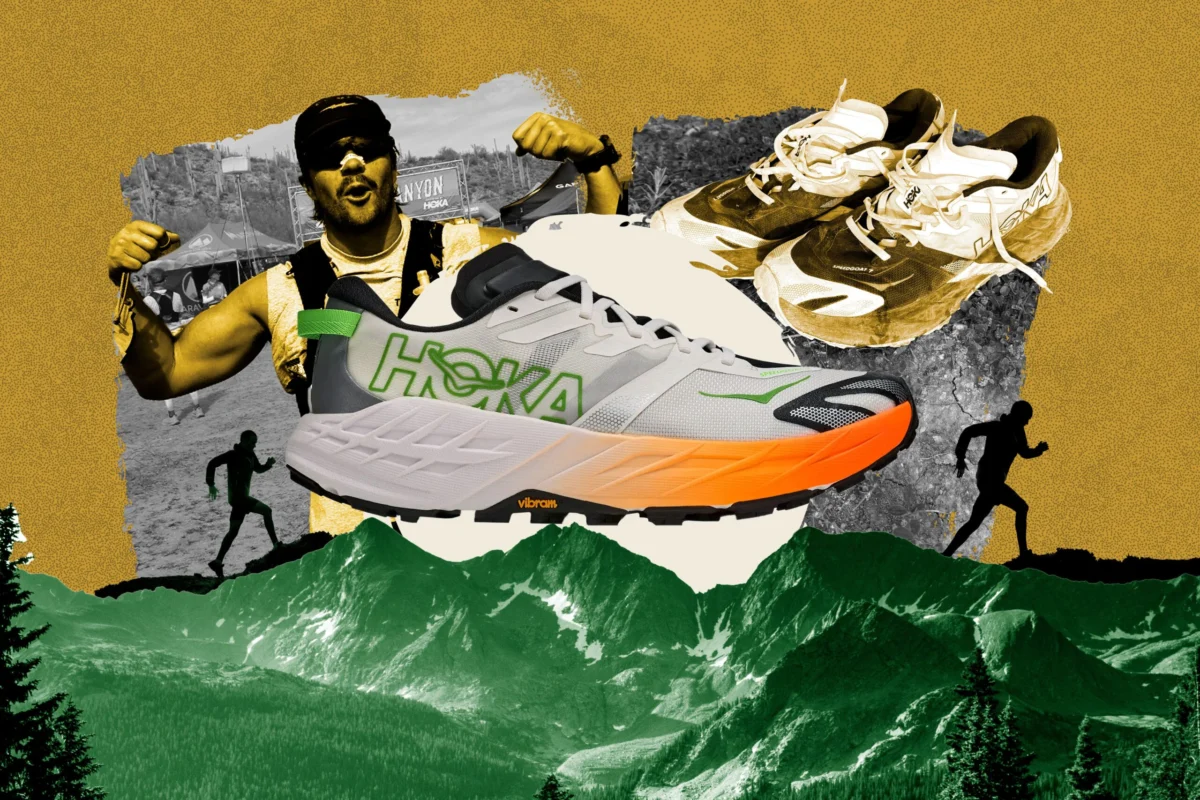
"In the grueling environment of a 100-mile ultramarathon, the priority shifts from raw speed to sustainable resilience, making footwear that balances protection with technical agility the ultimate competitive advantage. For athletes facing the thin air and rugged terrain of the Rockies, the right shoe is not merely gear, but a critical tool for managing the physiological toll of extreme endurance."
This article examines the rigorous training demands and equipment requirements for the Leadville 100 Trail Run, one of the most prestigious and difficult ultramarathons in the world. Through the lens of athlete Jack Espy’s "Trail Tested" journey, we explore the transition from high-volume road training to technical mountain preparation, specifically focusing on the performance of the Hoka Speedgoat 7. Amidst the added complexity of potential course changes due to regional wildfires, the analysis highlights why stability, moisture management, and reliable traction are the non-negotiable pillars of a successful race-day kit.

The Crucible of the "Race Across the Sky"
The Leadville Trail 100 Run, often referred to as the "Race Across the Sky," is a legendary ultramarathon held annually in the heart of the Colorado Rockies. Founded in 1983, the race is defined by its extreme elevation; the course never drops below 10,150 feet and reaches a staggering peak of 12,600 feet at Hope Pass. For athletes like entrepreneur and athlete Jack Espy, the journey to the starting line is a multi-month odyssey of physiological adaptation and gear optimization.
As the calendar turns toward August, the training cycle reaches its "peak" phase. For Espy, this translates to a weekly volume of 70 to 90 miles. However, in the world of ultramarathons, mileage is only one metric. The true challenge lies in the "vertical"—the thousands of feet of climbing and descending that stress the musculoskeletal system in ways flat road running cannot replicate. Moving training operations from the sea-level humidity of Florida and the urban sprawl of New York to the rugged wilderness of Montana is a strategic necessity. High-altitude training triggers the production of erythropoietin (EPO), increasing red blood cell mass and oxygen-carrying capacity, while the technical trails of Montana provide the necessary stimulus for proprioception and stability.
The Shift to Technical Footwear
During the early stages of training, road shoes like the New Balance FuelCell SuperComp Elite v5 suffice for building aerobic capacity and speed. But as the terrain shifts to loose scree, jagged granite, and steep singletrack, the requirements for footwear undergo a radical transformation. The transition to a dedicated trail shoe is a pivotal moment in an athlete’s preparation.

After extensive field testing across various brands and models, the Hoka Speedgoat 7 has emerged as the primary contender for Espy’s race-day kit. The Speedgoat lineage, named after legendary ultrarunner Karl "Speedgoat" Meltzer, has long been a staple in the trail community. Known for its "maximalist" cushioning and aggressive outsole, the seventh iteration aims to refine the formula of its predecessors, addressing previous criticisms regarding fit and weight while doubling down on the series’ reputation for rugged reliability.
Performance Analysis: The Speedgoat 7
The evaluation of a trail shoe for a 100-mile effort rests on four primary pillars: immediate comfort, technical traction, impact protection, and environmental adaptability.
1. Out-of-the-Box Ergonomics
One of the most significant risks in ultramarathon preparation is the "break-in" period. A shoe that requires hundreds of miles to soften can lead to hot spots or blisters during the critical peak training weeks. The Speedgoat 7 distinguishes itself with a remarkably natural feel from the first wear. Espy notes that the fit is secure without being restrictive—a common complaint with the Speedgoat 6. In a 100-mile race, the feet naturally undergo peripheral edema (swelling). A shoe must be snug enough to prevent "toenail bang" on descents but voluminous enough in the toe box to accommodate this inevitable expansion.

2. Traction and the Vibram Factor
Technical confidence is a psychological asset. When a runner is 80 miles into a race and suffering from mental fatigue, they cannot afford to second-guess their footing. The Speedgoat 7 utilizes a Vibram Megagrip outsole with an aggressive lug pattern. This compound is engineered to provide high friction on both wet and dry surfaces. Whether navigating the loose gravel of a Montana ridge or the rocky technicality of a Colorado descent, the "bite" of the outsole ensures that energy is translated into forward momentum rather than wasted in micro-slips.
3. Attenuating the Toll of Impact
The repetitive stress of 100 miles is staggering. Each step sends a shockwave through the ankles, knees, and hips. The Speedgoat 7’s midsole is designed to absorb this kinetic energy without feeling "mushy." There is a fine balance between a shoe that is too soft—which can lead to instability and premature leg fatigue—and a shoe that is too firm. The Speedgoat 7 occupies a middle ground that allows athletes to feel "fresh" even after five-hour training blocks, a factor that is essential for the rapid recovery required during 90-mile training weeks.
4. Hydrodynamics and Drainage
The Leadville course is famous for its creek crossings. While these water features are rarely deep, they are frequent enough to ensure that a runner’s feet will be wet for a significant portion of the race. Traditional shoes can act like sponges, becoming heavy and increasing the risk of maceration (skin softening that leads to blisters). The Speedgoat 7 features an engineered mesh upper that prioritizes drainage. By shedding water quickly and drying during the subsequent miles, the shoe maintains its lightweight profile and protects the integrity of the skin.

Navigating Uncertainty: The Wildfire Factor
The 2024 Leadville 100 faces a unique challenge: regional wildfires. Race organizers have alerted participants that the course may be subject to last-minute changes to ensure athlete safety. For runners, this introduces a layer of "tactical fog." A course change could mean more elevation gain, steeper grades, or entirely different soil compositions.
This uncertainty reinforces the need for a versatile shoe. If a course is diverted from groomed fire roads to "off-piste" technical sections, a lightweight racing flat would be a liability. The Speedgoat 7’s "all-rounder" DNA makes it an insurance policy against the unknown. It is as capable on a smooth forest path as it is on a boulder-strewn bypass.
The Competitive Landscape: Comparative Analysis
To validate the Speedgoat’s position, it is necessary to compare it against other industry leaders:

- Adidas Terrex Agravic Speed Ultra 2: This is a "super shoe" for the trails, featuring high-energy return foams and a rocker geometry designed for speed. While it is an exceptional choice for a 50K or a fast 50-miler, it lacks the protective "cradle" of the Speedgoat. For most 100-mile participants, the trade-off of a few ounces of weight for significantly more stability is a logical choice.
- Saucony Ride TR2: Positioned as a "road-to-trail" hybrid, the Saucony is a solid entry-level option. However, for a race as punishing as Leadville, it lacks the technical depth—specifically the outsole grip and rock-plate-like protection—required for high-alpine environments.
- Arc’teryx Sylan 2: A highly technical shoe designed for vertical gain and mountain running. While it offers superb craftsmanship, it often caters to a narrower foot profile and a more minimalist feel that might not provide enough "cushion for the push" during the final 30 miles of a centennial race.
The Verdict: Reliability Over Speed
As Jack Espy enters the final weeks of his Leadville 100 preparation, the choice of the Hoka Speedgoat 7 represents a commitment to reliability. In the context of an ultramarathon, "speed" is a relative term; the winner is often the person who slows down the least.
The Speedgoat 7 is not the lightest shoe on the market, nor is it the most aggressive. Instead, it is a masterclass in balanced engineering. It provides the traction of a mountain goat, the drainage of a water shoe, and the cushioning of a road trainer. For the athlete standing at the start line in Leadville at 4:00 AM, knowing that their footwear can handle whatever the mountains—or the wildfires—throw at them is the ultimate psychological edge. When the goal is to see what the body is capable of and what the mind can endure, the Speedgoat 7 ensures that the feet are the last thing the runner has to worry about.
