
"The kettlebell is the ultimate tool for minimalist strength; choosing the right weight is not about lifting the heaviest iron, but about matching the load to your weakest movement to unlock total-body power."

Selecting the correct kettlebell weight is a pivotal decision that bridges the gap between a frustrating workout and a transformative physical evolution. Unlike traditional dumbbells, the kettlebell’s offset center of gravity demands higher levels of stability, coordination, and grip strength, making the selection process more nuanced than simply matching your current gym numbers. By understanding the intersection of biomechanics, training experience, and specific physiological goals—ranging from explosive power to hypertrophy—individuals can invest in a tool that serves as a portable, all-in-one gym for years to come.
The Versatility of the Iron Orb
No free weight in the modern fitness landscape offers the sheer versatility of the kettlebell. While barbells are the kings of absolute load and dumbbells excel at isolation, the kettlebell occupies a unique functional middle ground. Its design—a cast-iron ball with a handle positioned on top—allows for a fluid transition between traditional grinds, such as presses and squats, and ballistic movements like swings, cleans, and snatches.

The compact footprint of the kettlebell makes it the premier choice for the home trainee. Whether in a cramped apartment, a garage gym, or an outdoor park, the kettlebell requires only a few square feet of space. Its "grab and go" nature eliminates the setup time associated with loading plates or adjusting benches, fostering a training environment where consistency is easily maintained. However, the barrier to entry for many is the initial choice of poundage. To navigate this, one must look toward expert guidance and a clear understanding of one’s own physical capabilities.
Understanding the Kettlebell’s Unique Biomechanics
Before diving into specific weight recommendations, it is essential to understand why a 35-pound kettlebell feels significantly different from a 35-pound dumbbell. In a dumbbell, the weight is distributed evenly on both sides of the hand. In a kettlebell, the mass is suspended below or outside the handle. This creates a "moment arm" that shifts during movement.

As David Otey, C.S.C.S. and Men’s Health Advisory Board member, notes, the design allows the base of the bell to flip around the lifter’s hand. This dynamic nature means your stabilizing muscles—specifically the rotator cuff and the core—must work harder to manage the weight. Consequently, a general rule of thumb is to subtract five to ten pounds from your standard dumbbell weight when transitioning to a kettlebell for overhead or lateral movements.
Kettlebell Weights for the Beginner
For those entering the world of kettlebell training, the priority is skill acquisition over maximal loading. Ebenezer Samuel, C.S.C.S., Fitness Director at Men’s Health, suggests that most men should begin with a 12-kilogram (approximately 26-pound) kettlebell. Otey expands this range slightly, suggesting that 12 to 20 kilograms (26 to 44 pounds) is the "sweet spot" for beginners.

At this weight, the bell provides enough resistance to provide feedback during a row or a press without compromising form. While this weight may feel light for lower-body "hinge" movements like the swing, Samuel advises beginners to compensate by increasing the aggression and speed of the movement. This builds the foundational explosive power necessary for heavier loads later on. The goal at this stage is to master the "hip hinge" and the "rack position" before moving into heavier iron.
Programming for Hypertrophy: Building Muscle Mass
When the goal shifts to muscle growth, or hypertrophy, the selection process becomes a balancing act. Muscle building typically requires a rep range of six to twelve repetitions. However, a weight that is perfect for a 12-rep set of goblet squats will likely be far too heavy for a 12-rep set of strict overhead presses.

To solve this dilemma with a single purchase, Samuel recommends selecting a weight based on your "weakest compound lift." For most people, this is the overhead press. If you can press a 16-kilogram (35-pound) bell for eight to twelve reps, that is the bell you should buy. While this weight will be relatively light for squats and rows, you can still achieve hypertrophy by increasing the volume—performing higher rep counts (15 to 20) and taking sets close to muscular failure.
For those with a larger budget, adjustable kettlebells, such as those from REP Fitness, offer a solution by allowing the user to toggle between weights (e.g., 16kg to 24kg) within a single unit. This ensures that every muscle group is challenged at its specific threshold.

Training for Absolute Strength
Strength training operates in a lower rep range, typically three to six reps, focusing on neurological efficiency and force production. For a general strength recommendation, Samuel suggests a kettlebell that weighs approximately one-quarter of your total body weight. For a 200-pound man, this would mean a 24-kilogram (53-pound) kettlebell.
A bell of this magnitude will push the limits of upper-body pressing and rowing while providing a significant challenge for lunges, deadlifts, and goblet squats. Training at this intensity requires a deep understanding of bracing and tension. At this weight, the kettlebell is no longer just a conditioning tool; it becomes a primary driver of systemic strength.
Developing Explosive Power
Power is the ability to exert force quickly. It is often the missing link in traditional hypertrophy programs. To train for power, one must perform explosive movements like the snatch or the clean with maximum velocity.
For power development, Otey and Samuel suggest a weight between 12 and 32 kilograms, depending on the user’s base strength. The key here is not the heaviness of the bell, but the speed of the movement. You should use approximately 50 percent of the weight you would normally use for a three-rep max. This allows for four to six sets of two to three highly explosive reps, ensuring that the central nervous system is stimulated without the fatigue that comes from grinding out heavy reps.

The Case for the Double Kettlebell Setup
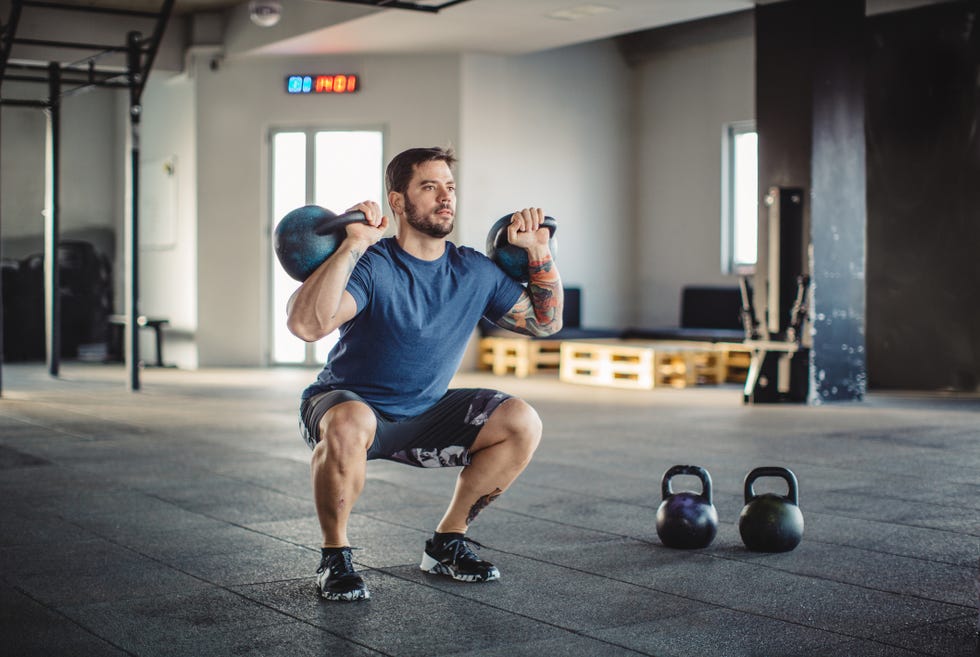
While a single kettlebell is a formidable tool, owning a pair of matched weights is a force multiplier for your training. "Anything you can do with one kettlebell, you can do with two," the experts agree. By holding a kettlebell in each hand, you effectively double the load on your legs and core without needing a single, massive 100-pound bell that might be impossible to press.
A pair of 26-pound bells allows for a 52-pound squat, providing a significant stimulus for the quads and glutes while keeping the individual weights manageable for upper-body work. This setup also allows for "offset" or "asymmetrical" training, which is elite for core stability.

Key Considerations Before You Buy
When shopping for a kettlebell, the material and finish are just as important as the weight.
- Handle Thickness: A handle that is too thick will tax your grip before your primary muscles fatigue; one that is too thin can feel unstable.
- Coating: Powder-coated cast iron (like the Yes4All or Rogue models) offers the best balance of grip and durability. Vinyl-coated bells are budget-friendly and protect floors, but the handles can become slippery with sweat.
- Competition vs. Standard: Competition kettlebells remain the same size regardless of weight, which is excellent for maintaining consistent technique as you get stronger. Standard cast-iron bells grow in size as they get heavier.
Implementing the Work: Sample Circuits
To put your new kettlebell to use, consider structured circuits that maximize time under tension.
The 8-Minute Swing-to-Squat Circuit:
This involves two four-minute rounds. Perform one swing and one squat, then rest. In the next minute, perform two of each. Continue adding a rep each minute until you hit four. This "ladder" format builds both cardiovascular endurance and muscular stamina.
Kettlebell Hell:
This high-intensity format uses 2:20 work intervals. Start with one rep of a movement (like a clean or snatch) per arm, then immediately do two, then three, climbing as high as possible before time expires. This teaches the body to maintain explosive power even under significant metabolic stress.
Final Thoughts
The kettlebell is more than a weight; it is a discipline. By starting with a manageable load—typically 12kg to 16kg for most men—and focusing on the mechanics of the swing and the press, you lay the groundwork for a lifetime of fitness. Whether your goal is to lean out in your living room or build rugged strength in your garage, the right kettlebell is the only partner you truly need. Choose based on your weakest lift, prioritize handle quality, and when in doubt, focus on the speed of the movement rather than the number on the side of the bell.
