
“Spider-Man: Brand New Day represents a pivotal shift for the Marvel Cinematic Universe, stripping Peter Parker of his established support systems to explore the raw, isolated core of his heroism and the heavy cost of a secret identity.”

By revisiting the fundamental "Parker Luck" that has defined the character for over six decades, this latest cinematic entry serves as both a reset and a maturation for the web-slinger. Following the reality-altering events of his previous adventure, Peter Parker must navigate the complexities of adulthood, college life at Empire State University, and a burgeoning mutant crisis, all while remaining a ghost to those he loves most.

The Marvel Cinematic Universe has often been criticized for tethering Peter Parker too closely to the legacy of Tony Stark or the broader infrastructure of the Avengers. With the release of Spider-Man: Brand New Day, that dynamic has been irrevocably shattered. The film finds Tom Holland’s Peter Parker in a state of total social erasure. Following the spell cast by Doctor Strange at the end of Spider-Man: No Way Home, the world has forgotten that Peter Parker exists. This narrative choice forces the character back into the "friendly neighborhood" role that defined his early comic book appearances, but with the added weight of an adult’s burdens. Peter is no longer the wide-eyed protégé; he is a solitary figure finishing his final year at Empire State University, living in a cramped apartment, and struggling to make ends meet while his former best friend Ned (Jacob Batalon) and the love of his life MJ (Zendaya) move on with their lives, entirely unaware of their shared history.

The title Brand New Day is a deliberate nod to one of the most controversial yet transformative eras in Marvel Comics history. To understand the film’s thematic resonance, one must look at the 2008 comic book relaunch of the same name. That era followed the widely panned One More Day storyline, in which Peter Parker made a literal deal with the devil—Mephisto—to save Aunt May’s life at the cost of his marriage to Mary Jane Watson. While the comic book version was a result of editorial desire to return Peter to a single, "relatable" status, the MCU’s version of this reset feels more organic to Peter’s journey of self-sacrifice. In the film, Peter’s isolation isn’t a result of a supernatural bargain gone wrong, but a conscious choice to protect his friends from the dangers inherent in his life.

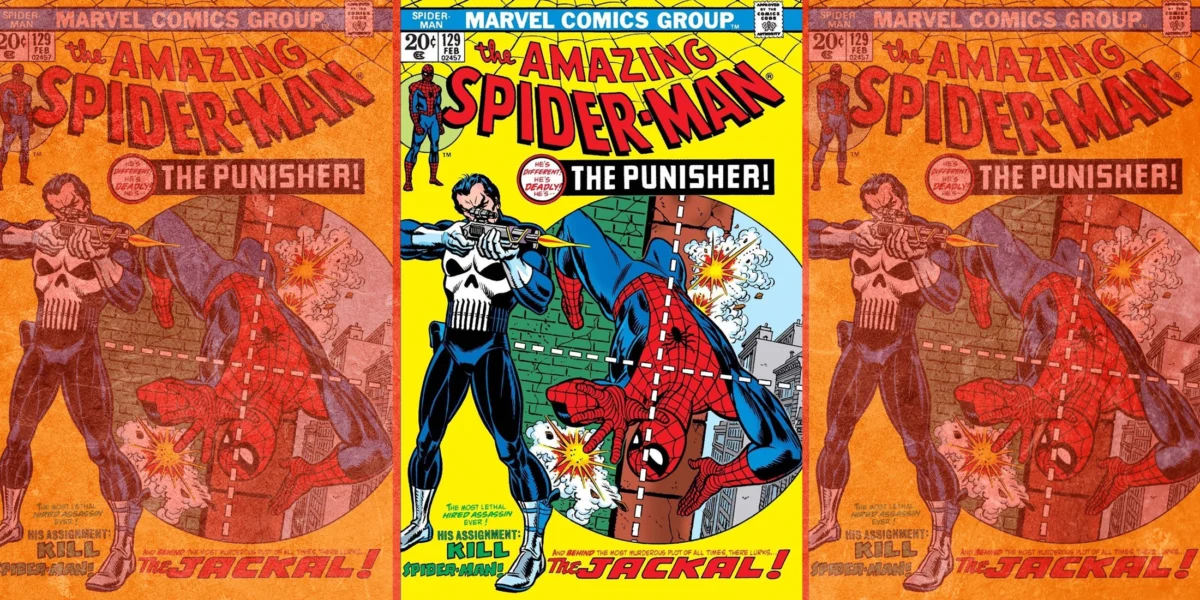
However, the "Brand New Day" Peter faces is far from a clean slate. The film introduces a high-stakes conflict involving a mysterious stranger played by Stranger Things star Sadie Sink. While Marvel initially kept her role shrouded in secrecy, it has been revealed that Sink is portraying Jean Grey, a cornerstone member of the X-Men. This marks a significant milestone for the MCU, as it integrates the mutant narrative through the lens of Spider-Man. Jean Grey is depicted as a fugitive sought by the government, placing her under the unlikely protection of Frank Castle, also known as the Punisher. Jon Bernthal returns to the role of Castle, bringing a gritty, hard-edged contrast to Peter’s moral optimism. The inclusion of the Punisher is a homecoming of sorts; the character famously made his first appearance in the pages of The Amazing Spider-Man #129 in 1974. By pairing the world’s most famous wall-crawler with a lethal vigilante and a powerful mutant, the film creates a volatile triad that tests Peter’s "no-kill" rule and his commitment to helping those in need, regardless of the personal risk.

The physical toll on Peter in Brand New Day is equally significant. The film explores a strange mutation Peter is undergoing, a plot point that echoes the "body horror" elements found in the mid-2000s comic storyline The Other. In that narrative, Peter’s powers evolved in ways that were both terrifying and profound, including the emergence of organic web-shooters and a literal "rebirth" from a cocoon. While the film leans more into the psychological exhaustion of Peter’s full-time crime-fighting, the visual cues of his mutation serve as a metaphor for the messy, often painful transition into adulthood. Peter is burning himself out, trying to be a hero 24/7 because he has nothing else left to return home to.

The rogue’s gallery in this installment is a mix of high-power threats and street-level brawlers. Peter finds himself caught in the crosshairs of Tombstone, played by Marvin Jones III, and a legion of Hand Ninjas, the shadowy organization often associated with Daredevil. Most surprisingly, the film features a confrontation with the Incredible Hulk (Mark Ruffalo). While the Hulk and Spider-Man are both pillars of the Marvel Age, their cinematic interactions have been limited. The film draws inspiration from Amazing Spider-Man #14 (1964), an early Stan Lee and Steve Ditko classic where Spidey accidentally stumbles upon the Hulk while tracking the Green Goblin. In Brand New Day, the clash serves as a testament to Peter’s resilience; he is clearly outmatched in strength, but his agility and scientific mind allow him to survive an encounter with the "strongest one there is."

Beyond the spectacle of superhero battles, the film tackles the emotional agony of the "Parker Luck." The most devastating subplot involves MJ and her new boyfriend, a character confirmed to be named Paul. For readers of the current Amazing Spider-Man run by Zeb Wells and John Romita Jr., the name "Paul" has become a lightning rod for fan frustration. In the comics, Paul is the man Mary Jane builds a life with during a period of separation from Peter. By introducing this element into the MCU, the filmmakers tap into a universal feeling of loss—the pain of seeing someone you love thrive in a life that no longer has room for you. It reinforces the film’s central theme: growing up often means letting go of the things you thought would last forever.

The film’s structure also pays homage to the "B-list" villains who have recently enjoyed a resurgence in popularity. Characters like Boomerang, Scorpion, and Tarantula make appearances, reminiscent of the cult-favorite comic series The Superior Foes of Spider-Man. This adds a layer of levity and world-building, showing that while Peter is dealing with world-ending threats like Jean Grey’s cosmic potential, he still has to deal with the colorful, often incompetent criminals that make New York City unique. The return of Michael Mando’s Scorpion, a thread left dangling since Spider-Man: Homecoming, finally provides a sense of closure to Peter’s high school era while propelling him into this darker, more complex chapter.

Ultimately, Spider-Man: Brand New Day is a study in perseverance. It draws a straight line back to Amazing Spider-Man #33, the legendary issue where a trapped Spider-Man must lift a massive piece of machinery through sheer force of will. Just as he did in 1965, the MCU’s Peter Parker finds the strength to continue not because he is invulnerable, but because he acknowledges his obligations to others. Whether he is teaching young mutants at a makeshift school or trying to reconcile his feelings for an MJ who doesn’t know his name, Peter remains the quintessential hero of the common man.

As the MCU moves toward a new era of storytelling involving the X-Men and Fantastic Four, Brand New Day ensures that Spider-Man remains its emotional anchor. It is a film that respects the character’s sixty-year history while pushing him into uncharted territory. By the time the credits roll, Peter Parker has matured beyond the "Iron Boy Jr." labels of his youth. He is a man alone, a hero burdened, and a scientist struggling—but above all, he is still our friendly neighborhood Spider-Man, proving that even when the day is new, the heart of the hero remains the same.
