
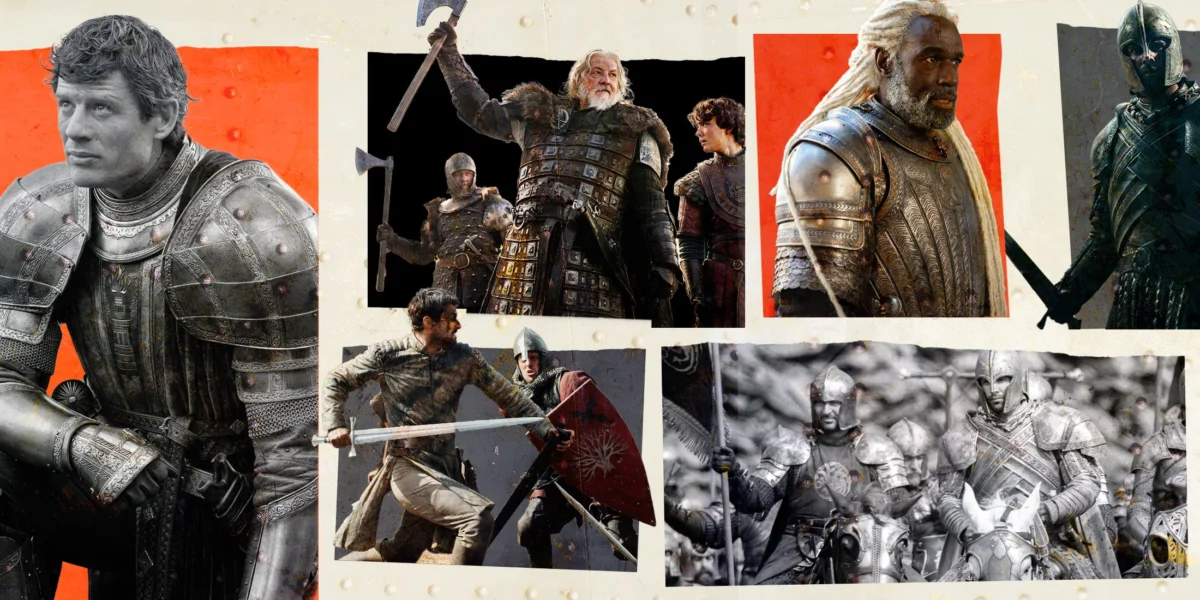
"We are not trying to create a fantasy series; we are trying to create a reality that also just happens to have dragons in it, rooting every piece of plate and chain mail in the authentic technology of the 14th and 15th centuries."
This philosophy of "grounded fantasy" serves as the foundation for the visual language of HBO’s House of the Dragon. By prioritizing historical accuracy and the physical reality of medieval warfare, the production team ensures that the political stakes of Westeros feel visceral and tangible, bridging the gap between high-concept myth and the gritty, sweat-stained reality of a continent at war.

From the moment the first dragon took flight in the Game of Thrones universe, the franchise established a standard for television spectacle that few have dared to rival. While the original series became a global phenomenon through its brutal narrative twists and sweeping vistas, its prequel, House of the Dragon, has doubled down on the granular details of its world-building. Nowhere is this more evident than in the work of the show’s costume and armor departments, led by costume designer Caroline McCall and armor designer Simon Brindle.
As the series enters its third season, the scale of production has reached a fever pitch. The conflict known as the Dance of the Dragons—a catastrophic civil war within the Targaryen dynasty—requires more than just CGI fire; it requires thousands of individual components of steel, leather, and silk to clothe the armies of the Greens and the Blacks. To understand the sheer magnitude of this undertaking, one need only look at the raw numbers. For the current season alone, Brindle’s team has utilized over 400,000 individual chain mail links and 100,000 solid dome rivets. These are not merely decorative elements; they are the building blocks of a visual identity that defines the most powerful houses in Westeros.
The Anatomy of a Villain: Ormund Hightower
One of the standout additions to the third season is the character of Ormund Hightower, portrayed by James Norton. As a pivotal figure in the Hightower military machine, Ormund represents the wealth and religious fervor of Oldtown. Designing his armor was a process that began not in a forge, but in the halls of the Victoria and Albert Museum in London.

Caroline McCall’s inspiration for Ormund stemmed from a 15th-century Italian bust of a commander, styled as a throwback to the Roman era. This "Roman Renaissance" aesthetic was chosen to reflect the Hightowers’ status as one of the oldest and wealthiest families in the Seven Kingdoms—often surpassing the Targaryens in liquid assets, if not in dragonfire. The resulting armor is a masterpiece of visual storytelling, featuring 25,000 custom laser-cut metal pieces.
The suit is designed to be imposing yet refined, mirroring Ormund’s character as a sophisticated but menacing defender of the Faith of the Seven. To emphasize his piety, McCall and her concept artists integrated iconography of the Seven-Pointed Star directly into the metalwork. This creates a "second skin" that broadcasts the character’s allegiances and status before a single line of dialogue is spoken.
Historical Anchors in a Fantasy World
While House of the Dragon is set approximately 200 years before the events of Game of Thrones, the technological level of the world remains largely stagnant—a deliberate choice by the creators. McCall and Brindle root their designs in the technology of the 1300s and 1400s. In our own history, this period marked the transition from mail-dominated protection to the "Age of Plate," a shift that allowed for the iconic knightly silhouettes associated with medieval legend.

By adhering to these historical constraints, the designers avoid the "over-designed" pitfalls of many modern fantasy productions. There are no unnecessary spikes or impossible geometries; every buckle, strap, and articulation point serves a functional purpose. This dedication to reality helps the actors inhabit their roles. When a character like Ser Criston Cole or Daemon Targaryen moves, the armor responds with the correct weight and momentum because the team often uses real metal chains and high-density materials that mimic the physics of steel.
Engineering the Impossible: Modern Materials and Ancient Designs
Despite the desire for authenticity, the practicalities of a modern film set—where actors must perform stunts for 12 hours a day—require a degree of innovation. To balance the need for visual weight with the necessity of physical comfort, Brindle’s team utilizes cutting-edge engineering materials.
Many of the larger components, such as breastplates and helmets, are sculpted and cast using resins and polymers borrowed from the orthopedic industry. These materials, often used in the creation of prosthetic limbs, allow the team to cast armor pieces as thin as two millimeters. The result is a suit that is nearly as strong as steel but weighs a fraction of the amount.

The production timeline for a single suit of principal armor is staggering, often taking up to 20 weeks from the initial measurement of the actor to the final delivery on set. This process involves:
- Initial Patterning: Creating cardboard mockups on custom-sized mannequins.
- Sculpting and Molding: Fabricating the 3D shapes in clay or wax before casting.
- Metalization: A specialized finishing process that gives synthetic materials the luster and texture of aged iron or polished steel.
- Detailing: Hand-applying rivets, laser-cut filigree, and house sigils.
Character-Driven Articulation: Aemond Targaryen
The design philosophy shifts when dealing with the Targaryens, particularly the dragon riders. For a character like Aemond Targaryen, played by Ewan Mitchell, the armor must accommodate the unique physicality of dragon riding while reflecting his intense, predatory nature.
Mitchell, described by McCall as having a "true medieval physique"—long, lean, and wiry—provided a unique canvas for the designers. Aemond’s armor was designed to "morph" the human into the dragon. The suit features handcrafted scales and an angular, aggressive silhouette inspired by the legend of St. George. The articulation of the plate is so fine-tuned that it moves seamlessly with Mitchell’s body, allowing him to maintain the fluid, lethal grace of a trained warrior.

This bespoke approach extends to how the armor interacts with the dragons themselves. For dragon riders, the armor often includes specialized articulation at the waist and shoulders to allow for the range of motion needed to mount a beast as large as Vhagar.
The Scale of an Empire
The sheer volume of work produced by the armor department is perhaps the most convincing evidence of the show’s ambition. Over the course of three seasons, the team has produced approximately 600 sets of principal armor. When background extras, army groups, and even armored animals are factored in, the number rises into the thousands.
This massive output is managed through a hybrid of bespoke craftsmanship and high-efficiency production. While principal characters receive 20-week custom builds, the "rank and file" armors for the various house levies are often mass-produced in lighter materials and then hand-weathered by the costume department to ensure they look "lived-in."

The goal is a cohesive world where every soldier, from the lowliest Gold Cloak to the King himself, feels like a part of the same historical continuum. By investing thousands of hours into 400,000 chain mail links and 25,000 laser-cut plates, Brindle and McCall have done more than just clothe a cast; they have forged the iron skeletal structure of Westeros.
As House of the Dragon continues its march toward the bloodiest chapters of the Targaryen history, the weight of that steel will be felt by the actors and the audience alike. In a world defined by the fire of dragons, it is the cold, hard reality of the armor that keeps the story grounded in the human cost of power.
