
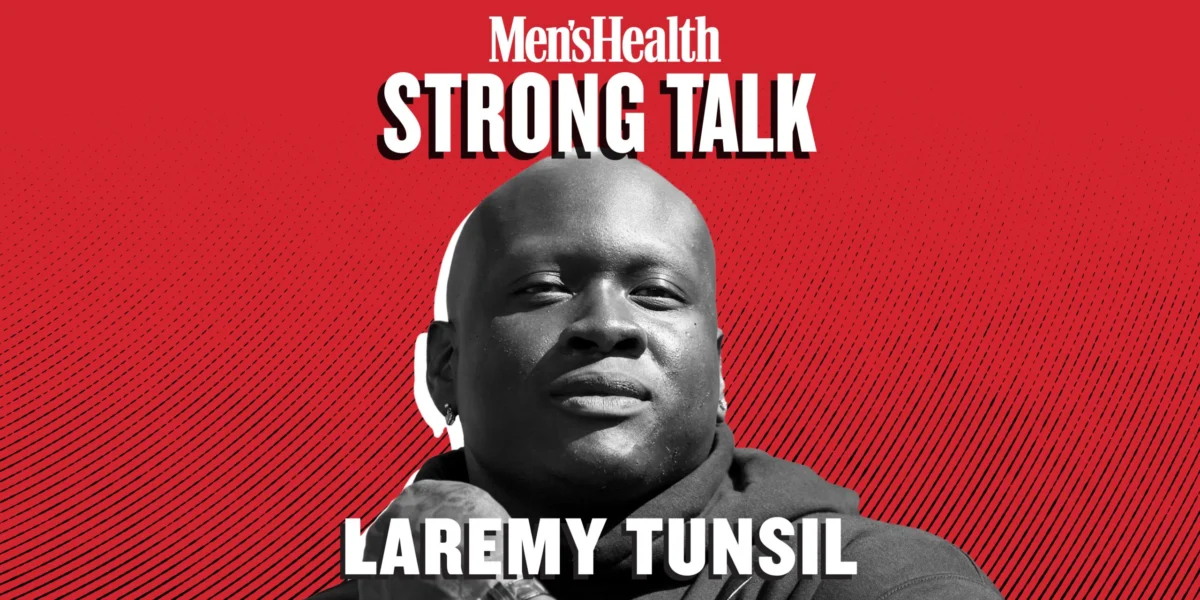
“True durability in professional football is a calculated balance between the high-impact demands of the trenches and a sophisticated commitment to functional recovery and movement efficiency.”

While the average NFL career lasts fewer than four years, elite offensive tackle Laremy Tunsil is preparing for his 12th season, challenging the biological and physical limits of a position defined by constant, high-velocity collisions. By pivoting away from traditional, year-round heavy lifting in favor of a regimen rooted in Pilates, functional mobility, and periodized strength training, Tunsil exemplifies a new era of professional athleticism where longevity is engineered through recovery as much as intensity.
The National Football League is often described as a league of attrition. Statistics from the NFL Players Association and various actuarial studies suggest that the average player’s tenure is approximately 3.3 years. For those playing on the offensive line, the toll is even more significant. Every snap involves a high-force engagement with defensive linemen who are often among the most explosive athletes on the planet. For Laremy Tunsil, a five-time Pro Bowler currently navigating the twilight of his first decade in the league, the secret to remaining at the top of his game is not found in simply doing more, but in doing things differently.

In a recent deep-dive discussion on the Men’s Health "Strong Talk" series, Tunsil joined exercise physiologist Dr. Pat Davidson and fitness director Ebenezer Samuel, C.S.C.S., to dismantle the myths of "old school" football training. The conversation highlighted a critical shift in the philosophy of professional sports: the transition from building a body that can dish out punishment to maintaining a body that can absorb and recover from it.
Dr. Pat Davidson provides a sobering perspective on the reality of the professional season, likening the 17-week schedule to a series of "car crashes." Each game represents a cycle of physical trauma and neurological fatigue. According to Davidson, the sheer volume of "wear and tear" makes traditional, high-volume weightlifting counterproductive during certain phases of the year. When an athlete is already dealing with systemic inflammation and joint stress from the field, "pounding" in the weight room can actually accelerate the breakdown of tissue rather than fortifying it.

Tunsil’s approach to combatting this inevitable decay is rooted in functional movement. This isn’t merely a buzzword; it refers to exercises that mimic the multi-planar demands of his position. An offensive tackle must be able to kick-slide with lateral explosiveness, maintain a low center of gravity, and generate massive force from a staggered stance. If the joints are locked or the stabilizer muscles are dormant, that force is transferred into the spine, knees, and shoulders, leading to the "physical trauma" Davidson describes.
One of the more surprising pillars of Tunsil’s longevity strategy is his dedication to Pilates. Often misunderstood as a low-intensity workout for general fitness enthusiasts, Pilates offers specific, high-level benefits for a man of Tunsil’s stature. For a 300-plus-pound lineman, core strength is not about aesthetics; it is about spinal integrity. Pilates emphasizes the "powerhouse"—the deep muscles of the abdomen, lower back, and hips. By strengthening these stabilizers, Tunsil ensures that his larger muscle groups can function without placing undue stress on his skeletal structure. Furthermore, the focus on controlled, eccentric movements in Pilates aids in muscle lengthening and flexibility, which is essential for preventing the muscle tears and tendonitis common in veteran players.

The transition from the offseason to the preseason requires a delicate "on-ramp" strategy. Tunsil and his team utilize a periodized approach. In the early weeks of the offseason, the focus is almost entirely on recovery and "re-tuning" the body. This involves addressing the imbalances created during the season—where one side of the body might be overcompensated due to injury or the specific mechanics of his stance. As the season draws closer, the training shifts. The functional movements remain the foundation, but the load increases. Tunsil eventually transitions into heavier lifting to build the "armor" necessary for the regular season, but this heavy work is done only after the functional movement patterns have been solidified.
This methodology is what Tunsil believes will allow him to play for another four to five years. If he achieves this goal, he will have nearly quadrupled the average lifespan of an NFL player. His ambition is a testament to the evolution of sports science. In previous decades, players were often encouraged to "play through the pain" and stick to basic compound lifts. Today, the elite athlete is treated more like a high-performance vehicle that requires constant calibration and specialized maintenance.

Ebenezer Samuel, C.S.C.S., notes that Tunsil’s commitment to this level of detail is what separates "stars" from "legends." The mental discipline required to prioritize a Pilates session or a mobility flow over a heavy bench press session is significant. It requires a long-term vision that many younger players, focused on immediate gains and highlights, often lack. Tunsil’s success suggests that the next generation of athletes will need to be just as literate in exercise physiology as they are in their team’s playbook.
The implications of Tunsil’s training extend beyond the football field. His focus on "pre-habilitation"—training to prevent injury before it happens—is a model for anyone looking to maintain physical health into their later years. The principles of core stability, joint mobility, and understanding the difference between productive fatigue and destructive trauma are universal.

As Tunsil prepares for his 12th year, the focus remains on the "car crash" analogy. If every game is a collision, then every day of the week must be a repair session. By integrating high-level recovery modalities with a sophisticated understanding of how his body moves in space, Laremy Tunsil is not just surviving the NFL; he is mastering it. His journey provides a roadmap for how elite performers in any high-impact field can extend their "prime" by respecting the biological limits of the human frame and using science to push those limits further than ever before.
Ultimately, Tunsil’s career serves as a living case study for the "Strong Talk" philosophy. Strength is not merely the ability to move a heavy object; it is the ability to remain resilient in the face of constant pressure. For the man guarding the quarterback’s blind side, that resilience is the difference between a four-year career and a fifteen-year legacy. As the sports world watches Tunsil continue to perform at an All-Pro level, it becomes increasingly clear that the future of the NFL belongs to those who train smarter, not just harder.
