
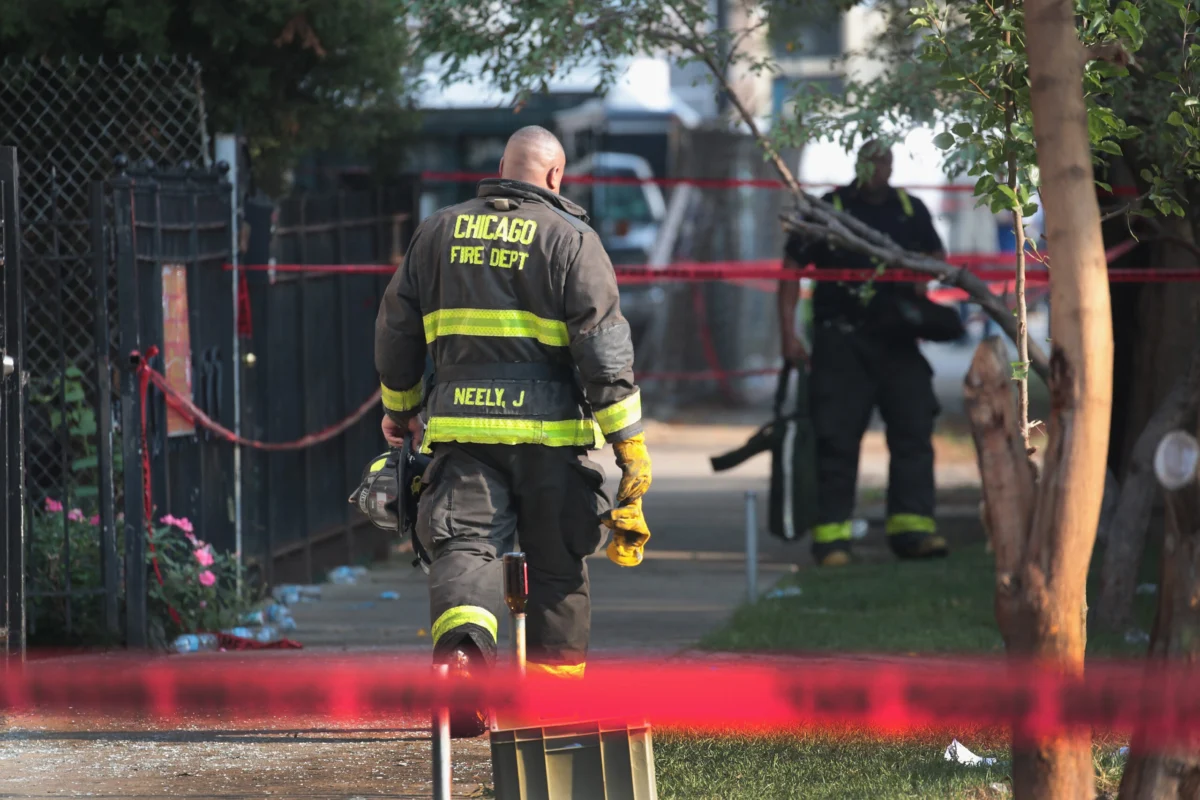
"This long-term University of Illinois study represents a critical step forward in understanding the intricate relationship between firefighting exposures and cancer, offering enhanced screening for current firefighters and vital data for future prevention efforts."
The Oak Park Fire Department has officially joined a significant, multi-decade research initiative spearheaded by the University of Illinois Fire Service Institute (FSI). This long-term study aims to unravel the complex links between occupational exposures in firefighting and the subsequent development of cancer. By enrolling, Oak Park becomes part of an expanding statewide cohort that now encompasses over 100 Illinois fire departments, signifying a unified commitment to addressing a critical health concern within the profession. The study’s design, which involves extensive biological sampling and detailed exposure logging, is poised to provide unprecedented insights into the specific agents and circumstances that contribute to cancer risk among firefighters.
The Illinois Firefighter Cancer Risk Study is more than just a data collection effort; it is a scientifically rigorous endeavor designed to bridge the knowledge gaps that have long persisted regarding the carcinogenic effects of firefighting. For the approximately 79 sworn firefighters, paramedics, and civilian personnel employed by the Oak Park Fire Department, as well as for their colleagues across Illinois, this participation is a proactive investment in long-term health and safety. It adds a crucial data point to one of the few research projects capable of answering questions that decades of smaller, less comprehensive studies have left unresolved, ultimately aiming to protect the health of those who protect communities.
The established scientific consensus on the heightened cancer risk faced by firefighters has reached a critical juncture. In 2022, a comprehensive review by the International Agency for Research on Cancer (IARC), a working group of 25 global experts, definitively classified occupational exposure as a firefighter as carcinogenic to humans. This marks the highest hazard category assigned by the IARC, a significant escalation from its previous classification as "possibly carcinogenic." The agency’s findings were supported by sufficient evidence in humans for specific cancers, including mesothelioma and bladder cancer. Furthermore, limited evidence pointed towards an increased risk for colon cancer, prostate cancer, testicular cancer, melanoma of the skin, and non-Hodgkin lymphoma. These conclusions were reinforced by earlier large-scale federal studies, such as the one involving nearly 30,000 career firefighters from major metropolitan areas like San Francisco, Chicago, and Philadelphia. These studies consistently revealed elevated rates of various cancers when compared to the general population, with a notable twofold increase in mesothelioma incidence among firefighters.
Despite this clear acknowledgment of elevated risk, critical questions regarding the specific mechanisms and contributing factors to these cancers remain open. The precise nature of the occupational exposures that drive particular cancers, the quantitative impact of factors like gear decontamination protocols, the air quality within fire stations, the physiological effects of shift work, and the contribution of diesel exhaust are still areas requiring deeper investigation. Historically, research has often treated firefighters as a homogenous group defined by their job title, rather than by specific, measured exposures. Moreover, significant underrepresentation of women and volunteer firefighters in previous studies has limited the generalizability of findings. The Illinois Firefighter Cancer Risk Study is meticulously designed to address these very limitations, moving beyond inferential data to direct measurement of exposure and its biological consequences.
The Illinois Firefighter Cancer Risk Study distinguishes itself by employing a direct measurement approach to assess occupational exposures and their subsequent health impacts. The project focuses on quantifying the cumulative burden of specific toxicants, including persistent per- and polyfluoroalkyl substances (PFAS), carcinogenic polycyclic aromatic hydrocarbons (PAHs), and various heavy metals, and correlating these with the risk of developing cancer over time. Dr. Farzaneh Masoud, director of research at the Illinois Fire Service Institute, elaborated on the study’s innovative design, which tracks both the exposure to harmful agents and the body’s biological response. Researchers meticulously analyze biomarkers of exposure alongside biomarkers of effect, utilizing annual sample collection to monitor genotoxicity and the long-term impact of accumulated toxicants and carcinogens on the human body. The overarching goal is the early detection of these biological changes, a crucial step toward effective intervention and prevention, particularly for a population group that has been historically understudied in this capacity.
Addressing the logistical challenges inherent in conducting research with a dispersed and shift-working population like firefighters has been a key consideration in the study’s design. To overcome these hurdles, the Institute operates a state-of-the-art 40-foot mobile laboratory. This mobile unit travels directly to fire stations, facilitating the convenient collection of biological samples from participants. This approach eliminates the need for firefighters to arrange separate appointments or travel to distant research facilities, thereby maximizing participation rates and minimizing disruption to their demanding schedules. The study is inclusive, welcoming all firefighters aged 18 and older, including retirees, emergency medical responders, volunteers, and career personnel of any rank. The initiative officially commenced in late 2024, marking the beginning of a potentially life-saving, multi-decade research journey.
For municipal fire departments like Oak Park, the benefits of participating in the Illinois Firefighter Cancer Risk Study extend beyond contributing to broader scientific knowledge. Oak Park Fire Chief JT Terry emphasized that the program offers direct advantages to the department’s current and future members. By participating, firefighters gain access to enhanced screening and early detection of potential health issues, a level of proactive health monitoring that individual fire departments often lack the resources to provide. Chief Terry underscored the unique value of the study, highlighting that it synergistically combines cutting-edge scientific expertise with resources that are simply beyond the capacity of any single fire department to replicate. This collaboration represents a practical and invaluable trade-off for municipal agencies, enabling them to provide crucial health benefits to their personnel through participation in a large-scale, longitudinal biomonitoring program.
The profound impact of this research extends directly to firefighter families, who bear a documented occupational cancer burden and often navigate complex presumptive coverage laws that vary significantly by state. Illinois, along with most other states, has enacted legislation that presumes certain cancers diagnosed in firefighters are job-related for workers’ compensation purposes. However, the specific list of covered cancers and the required years of service can differ. Research of this caliber has the potential to inform and strengthen these legislative frameworks, ensuring that firefighters receive appropriate recognition and support for occupationally-related illnesses. For firefighters outside of Illinois, the Centers for Disease Control and Prevention (CDC) offers the National Firefighter Registry for Cancer. This national registry, which has surpassed 40,000 members, stands as the largest firefighter cohort in the United States and is accessible to both career and volunteer firefighters, whether active or retired, and irrespective of their cancer diagnosis status.
It is crucial to state clearly that the Oak Park Fire Department’s enrollment in the Illinois Firefighter Cancer Risk Study is an important milestone in an ongoing research process, not a declaration of new findings. This observational cohort study is meticulously designed to generate robust evidence over many years, rather than to report immediate results. While such studies are invaluable for identifying potential associations between measured exposures and the subsequent development of diseases, they cannot, in isolation, definitively prove that a specific exposure caused a particular cancer in an individual. Early biomarker findings, when they emerge, will describe biological changes whose full clinical significance may require years of further interpretation and correlation with long-term health outcomes.
Consequently, this enrollment does not alter current medical guidance or safety protocols for firefighters. The established recommendations regarding rigorous gear decontamination, the consistent use of self-contained breathing apparatus (SCBA) during overhaul operations, and adherence to age-appropriate cancer screening remain the paramount standards for firefighter health. The immediate future will bring continued attention to the study’s first published biomarker analyses, further departmental enrollments across Illinois, and the ongoing expansion of the national registry. The confirmed fact is that another Chicago-area fire department has committed to this vital, long-term cancer research cohort. The individuals most directly impacted are the firefighters and their families, and the most prudent action for them is to enroll in either the Illinois study or the national registry. The central, pressing question that this research is specifically designed to answer remains: which specific exposures are driving which cancers within the firefighting profession.
