
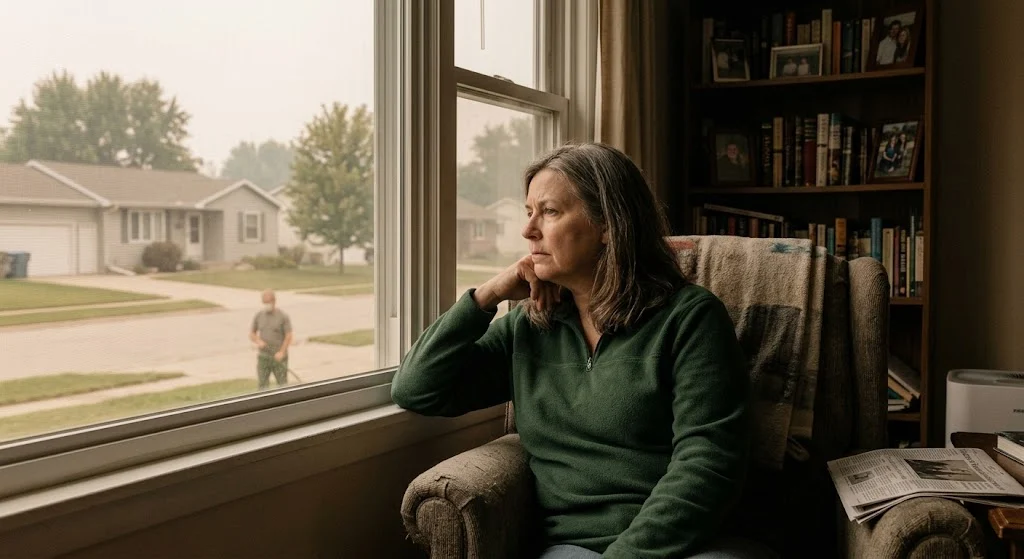
"Wildfire smoke isn’t just a respiratory issue; it can trigger stress, anxiety, and depression symptoms, impacting our mental well-being just as it affects our lungs."
Smoke from distant wildfires has cast a pall over parts of Iowa, leading to moderate air quality advisories. While the immediate concern often centers on respiratory distress, a growing body of evidence and clinical observations suggest that these smoky conditions are also taking a significant toll on mental health. This unseen consequence, manifesting as increased stress, anxiety, and depressive symptoms, highlights a critical dimension of wildfire smoke’s impact that extends beyond physical ailments.
The presence of wildfire smoke in Iowa, even when classified as "moderate" on the Air Quality Index (AQI), warrants careful consideration for a substantial portion of the population. A moderate AQI, depicted by a yellow alert, signifies that air quality is generally acceptable for the majority. However, it signals a potential for health impacts, particularly for individuals who exhibit unusual sensitivity to particulate pollution. This designation is not an all-clear signal, nor does it represent an immediate emergency for the general public. Instead, it serves as a crucial warning for specific demographic groups to modify their behavior to mitigate potential health risks.
Federal air quality guidelines identify several groups as particularly vulnerable to the effects of particulate pollution. These include individuals with pre-existing respiratory conditions such as Chronic Obstructive Pulmonary Disease (COPD) and asthma, as well as those with cardiovascular disease. Additionally, children, older adults, pregnant individuals, and people from lower socioeconomic backgrounds are considered sensitive. Outdoor workers are also at heightened risk due to prolonged exposure. For these populations, days with moderate air quality necessitate adjustments, such as moving strenuous outdoor activities indoors or shortening the duration of outdoor work shifts. For most healthy adults, however, moderate AQI days typically do not require significant changes to daily routines.
The primary culprit behind these health concerns is PM2.5, a classification of fine particulate matter measuring less than 2.5 micrometers in diameter. The minuscule size of these particles is precisely what makes them so insidious. They are capable of bypassing the body’s natural upper airway defenses, such as the nasal passages and throat, and penetrating deep into the lung tissue. Once in the lungs, they can cause inflammation and exacerbate existing respiratory conditions. Iowa residents can stay informed about current air quality conditions by consulting the Iowa Department of Natural Resources’ air quality page or the federal AirNow state page, both of which provide real-time updates. It is imperative to note that air quality can fluctuate significantly throughout the day, especially during smoke events, rendering a morning assessment an unreliable indicator for afternoon conditions.
Kristi White, a clinical health psychologist at the University of Minnesota, has observed a palpable impact of smoky conditions on her patients’ mental well-being. In her clinical practice, White has noted that many patients are expressing concerns about the pervasive smoke during their appointments, reporting that it contributes to increased stress, anxiety, and the exacerbation of depressive symptoms. While this observation stems from direct patient interaction rather than a formal research study, it resonates with a growing body of scientific literature. This anecdotal evidence, coupled with published research, points towards a significant, albeit often overlooked, connection between wildfire smoke and mental health.
White elaborates on the potential physiological pathways through which particulate pollution can affect mental health. She notes that PM2.5 particles are small enough to cross the blood-brain barrier, a protective membrane that normally shields the brain from harmful substances in the bloodstream. Once in the brain, these particles may trigger inflammatory responses or interfere with neurotransmitter function, potentially contributing to mood disturbances. Beyond the direct biological mechanisms, White also highlights a more pervasive psychological impact: the creeping normalization of smoky summers. What was once an unusual event is becoming a recurring feature, fostering a sense of background stress and uncertainty that erodes overall mental resilience. This chronic exposure to an environmental stressor, even at moderate levels, can have cumulative effects on an individual’s psychological state.
The peer-reviewed scientific evidence linking wildfire smoke and mental health is still an evolving field, and it is crucial to interpret findings with precision, avoiding overstatement. A notable study led by researchers at the Harvard T.H. Chan School of Public Health, published in JAMA Network Open, investigated the association between wildfire-specific PM2.5 exposure and mental health-related emergency department visits across California during the 2020 fire season. Analyzing data from 86,588 visits, the study found a statistically significant association. Kari Nadeau, the corresponding author, emphasized in a university statement that "wildfire smoke isn’t just a respiratory issue," underscoring the multifaceted nature of its health implications.
Further reinforcing these findings, a separate analysis published in Nature Mental Health examined nearly 1.9 million emergency department visits for anxiety disorders across the western United States between 2007 and 2018. This study also identified a positive association between wildfire smoke PM2.5 exposure and these visits. The researchers observed a more pronounced effect among women and girls, as well as among older adults, suggesting potential differential vulnerabilities within the population.
It is important to acknowledge the nature of these studies. Both are observational in design, meaning they establish associations rather than direct causation. They meticulously document correlations between smoke exposure and healthcare utilization but cannot definitively disentangle the biological effects of inhaled particles from the psychological impacts of living through disruptive smoke events. The societal disruptions, such as canceled outdoor activities, altered daily routines, and a general sense of unease, can also contribute to mental health challenges. Nevertheless, these studies collectively lend significant weight to the observations made by clinicians like White, making it increasingly difficult to dismiss the reported patterns as purely anecdotal.
Fortunately, practical steps to mitigate the effects of wildfire smoke, both physically and psychologically, are often more accessible and less costly than individuals might assume. For physical protection, the recommendations align with those for any smoke event. Keeping windows and doors closed when smoke is present is a primary defense. Running household heating and cooling systems on a recirculate setting helps prevent outdoor air from entering. Reducing strenuous outdoor exertion during periods of elevated air quality readings is advisable, though complete avoidance of the outdoors may not always be necessary. For those who can afford it, investing in a portable HEPA air purifier for the bedroom can provide a sanctuary of cleaner air. During essential outdoor excursions, wearing a well-fitted N95 respirator offers the most effective protection against PM2.5 particles; cloth and surgical masks are largely ineffective for this purpose.
On the psychological front, understanding the impact of smoke advisories involves recognizing how they subtly erode the routines and activities that individuals rely on for mood regulation. Exercise may be forced indoors or curtailed altogether, social plans can be disrupted, and the altered quality of daylight can contribute to a sense of gloom. Naming these effects—acknowledging that a smoky environment genuinely impacts mood—is a more constructive approach than dismissing resulting low mood as inexplicable. Strategies for coping include finding indoor alternatives for cherished activities, maintaining social connections even if they shift indoors, and diligently adhering to consistent sleep and meal routines. These simple yet effective measures can help buffer the psychological impact of environmental stressors.
When symptoms warrant professional attention, it is important to distinguish between a temporary bad mood and persistent mental health challenges. Persistent low mood, anxiety that significantly interferes with work or sleep, or a noticeable change in daily functioning that lasts for more than two weeks are all indicators that warrant a conversation with a primary care provider. These providers can conduct initial screenings and provide referrals to mental health specialists if necessary. For individuals experiencing immediate distress or suicidal ideation, the Suicide and Crisis Lifeline is available 24/7 by calling or texting 988. On the physical side, urgent medical evaluation is required for escalating shortness of breath, a rescue inhaler that is no longer providing adequate relief, chest tightness, or confusion, particularly in individuals with underlying heart or lung conditions.
Access to care remains an important consideration, and its availability can be uneven. For Iowans without a regular clinician, federally qualified health centers offer services on a sliding fee scale and often integrate behavioral health services. Many employer-sponsored benefit plans also include Employee Assistance Programs (EAPs) that provide a set number of free counseling sessions.
Air quality officials anticipate that conditions will continue to shift based on evolving weather patterns, rather than adhering to a fixed schedule. Advisories are updated dynamically as smoke transport changes. News outlets will continue to report on significant changes to Iowa’s advisory levels and emerging research on the health impacts of smoke exposure. The pervasive nature of wildfire smoke serves as a stark reminder of the interconnectedness of our environment and our health, extending beyond the purely physical to encompass the critical realm of mental well-being. Understanding and addressing these multifaceted impacts is essential for fostering community resilience in the face of increasing environmental challenges.
