
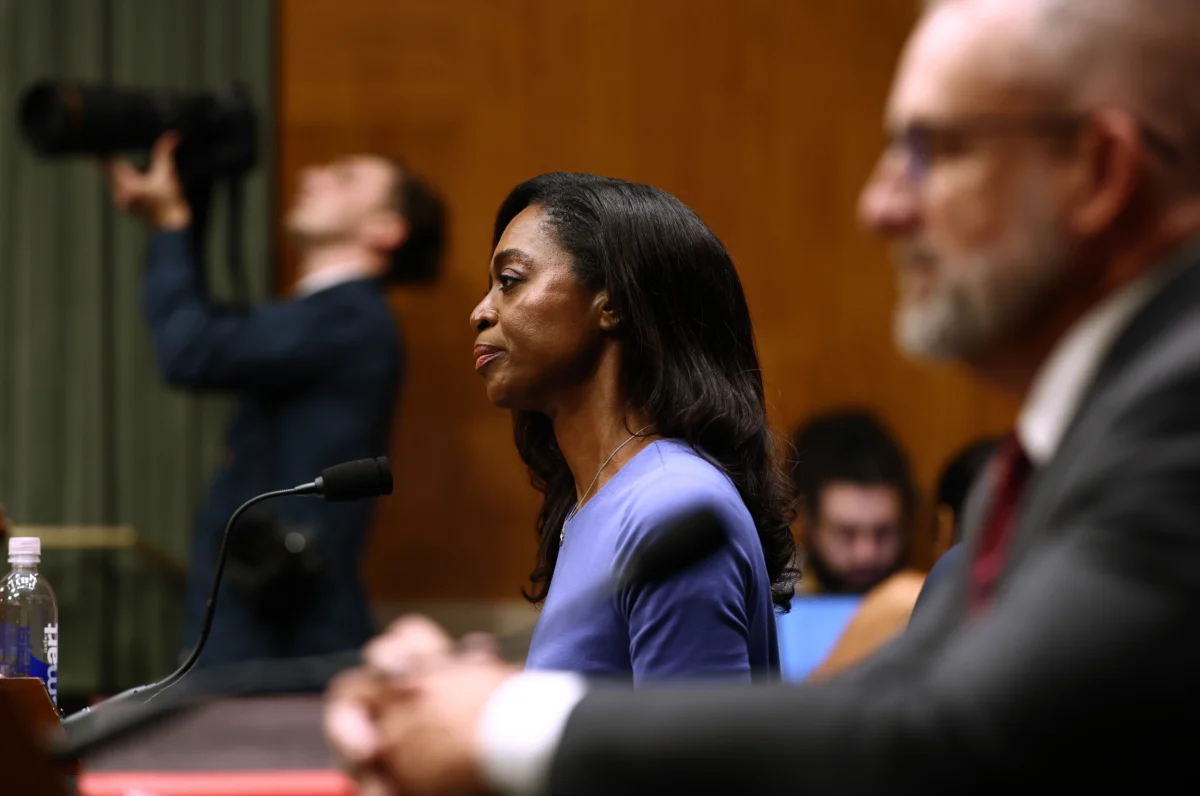
"The CDC’s new director has candidly addressed the agency’s deep-seated challenges: understaffed programs, widespread burnout, and a year-long leadership void. While offering no immediate solutions, Dr. Erica Schwartz’s acknowledgment signals a critical first step toward rebuilding the nation’s leading public health institution."
Dr. Erica Schwartz, the newly confirmed Director of the Centers for Disease Control and Prevention (CDC), used her inaugural agency-wide staff meeting to articulate the stark realities facing the organization, a situation well-understood by its dedicated workforce. In her first all-hands gathering since assuming leadership last week, following approximately a year of acting directors, Dr. Schwartz directly confronted the critical issues of understaffing in congressionally funded programs, pervasive employee burnout, and the significant impact of prolonged leadership absence. While she did not present immediate remedial plans, her address served as a clear diagnosis of the agency’s current state, promising further engagement with staff to gain deeper insights. The implications for the public, though potentially indirect, are tangible, affecting the efficiency of outbreak responses, the timeliness of laboratory diagnostics, and the speed at which local exposure notifications are disseminated. Her frank admission underscores a critical understanding that the operational capacity of vital public health functions is directly contingent upon the availability and well-being of its personnel.
Week One: A Mandate to Fill the Leadership Vacuum
Dr. Schwartz framed her initial week at the helm as the critical period for rectifying a prolonged leadership vacuum that has hampered the CDC’s ability to function at its full potential and advocate effectively on the national stage. Her central assertion revolved around the importance of her confirmed position, stating, "I’m Week 1 of being here," and emphasizing her newfound capacity to serve as a dedicated advocate for the agency. The absence of a permanent leader, she explained, significantly impedes the CDC’s ability to champion its mission and secure necessary resources.
Addressing potential internal dissent and its outward expression, Dr. Schwartz articulated a clear strategy for navigating disagreements with Health Secretary Robert F. Kennedy Jr. She pledged to voice concerns privately when warranted, a discipline she attributed to her prior experience within the uniformed services of the Coast Guard and the Public Health Service. This approach, she clarified, prioritizes constructive dialogue behind closed doors over public pronouncements, a stark contrast to the often contentious public discourse surrounding public health policy.
Furthermore, Dr. Schwartz committed to a path of rebuilding public trust through an unwavering dedication to transparency, scientific rigor, and honest communication. This messaging closely mirrors the public health principles espoused by Secretary Kennedy, suggesting a potential alignment in operational philosophy.
Her background provides a robust foundation for this leadership role. Dr. Schwartz is a physician and attorney with extensive experience in public health leadership. She previously served as the deputy surgeon general during the first Trump administration and as the chief medical officer of the U.S. Coast Guard. A retired rear admiral in the U.S. Public Health Service Commissioned Corps, she holds a diverse academic portfolio, including undergraduate and medical degrees from Brown University, a master’s in public health from the Uniformed Services University, and a law degree from the University of Maryland. Her confirmation by the Senate, on a predominantly party-line vote of 51 to 44, marks her as the 22nd director of the CDC.
The Pervasive Issue of "Zombie Programs" and Workforce Erosion
Within the CDC, the critical problem of understaffed programs has taken on an informal, yet descriptive, moniker: "zombie programs." These are initiatives that, despite receiving congressional appropriations, are functioning minimally or not at all due to the departure or extended leave of the essential personnel who managed them. This phenomenon represents a significant operational deficit, where financial resources are allocated but lack the human capital to be effectively deployed.
The scale of this workforce erosion is starkly documented. The CDC has experienced a substantial reduction in its personnel, shedding more than 3,000 employees through a combination of layoffs and voluntary resignations. This represents a loss of over a quarter of its total workforce, creating substantial gaps in critical public health functions.
This issue was recently highlighted by MedicalDaily’s report on a CDC dementia program that has become critically understaffed, leaving grantees without the anticipated federal support. Dr. Schwartz alluded to similar stalled programs during her address, referencing an Associated Press report, and indicated her intention to engage directly with employees to understand the full scope of work halted or jeopardized by these workforce reductions. While she did not commit to specific program reinstatements or establish a definitive hiring timeline, she addressed a staff member’s concern about the agency’s capacity for detailed outbreak work post-reduction, affirming the CDC’s preparedness to respond.
Reconvening a Vaccine Task Force Amidst Public Scrutiny
A significant point of discussion during the meeting involved a recent presidential executive order concerning childhood immunization schedules. Dr. Schwartz informed staff that a task force dedicated to childhood vaccine safety is in the process of being formed. She will be a member of this task force, alongside representatives from the Food and Drug Administration (FDA) and the National Institutes of Health (NIH). The task force has a 90-day mandate to deliver its findings and has not yet convened.
Dr. Schwartz clarified her understanding that this new task force is not intended to supersede the Advisory Committee on Immunization Practices (ACIP). The ACIP plays a crucial role in formulating vaccine recommendations for the CDC director, which subsequently inform insurance coverage requirements and the Vaccines for Children program, a cornerstone of pediatric vaccination access.
Reinforcing a core tenet of public health, Dr. Schwartz explicitly stated her belief in the efficacy and safety of vaccines. According to the meeting transcript, she declared, "I absolutely believe that vaccines are safe and effective." This sentiment echoes her testimony during her July confirmation hearing, where she affirmed her acceptance of the scientific consensus that vaccines do not cause autism. For parents and guardians, these developments do not alter immediate realities. School immunization requirements and the protocols for pediatric medical care remain unchanged. Questions regarding vaccination schedules and recommendations are best directed to a child’s pediatrician, and state-level immunization mandates continue to be governed by state legislatures.
The Chasm Between Acknowledgment and Restored Capacity
Dr. Schwartz’s frank assessment of the CDC’s challenges is a verified and necessary step. However, the tangible outcomes of her acknowledgment remain to be seen. While she has accurately identified the problems, the articulation of specific remedies, defined timelines, or definitive budget authorities is still forthcoming. It is important to note that a CDC director does not possess unilateral control over appropriations or the ability to reverse workforce reductions without broader governmental action.
Her commitment to private disagreements with the Health Secretary means that the public may not have direct insight into the extent of her advocacy or pushback on policy matters. This dynamic can limit external accountability, potentially shifting the focus from demonstrable outcomes to public statements. The true measure of whether this initial meeting signifies more than a perfunctory first-week message will be evident in three concrete indicators: the resumption of specific stalled programs, the agency’s proactive posting of vacancies to fill critical roles, and the CDC’s demonstrated performance in addressing the ongoing outbreak work already on its plate.
The CDC’s current operational workload is substantial. The agency is actively engaged in responding to the largest recorded U.S. cyclosporiasis outbreak, navigating a challenging year for measles containment, and managing Ebola responses in the Democratic Republic of Congo and Uganda. Simultaneously, it is monitoring a rising summer trend in COVID-19 cases. These multifaceted responses are critically dependent on robust laboratory capacity and the availability of field epidemiologists who can be rapidly deployed to affected states.
For the general public, the operational realities impacting their immediate health concerns are unlikely to change significantly due to new national leadership. Local and state health departments remain the primary conduits for exposure notices, recall alerts, and testing guidance that directly affect individual households. These notifications are typically issued well before a comprehensive national picture is complete. Therefore, for individuals seeking information on local health concerns, their state or county health department remains the most direct and timely source.
The challenges Dr. Schwartz inherits are significant. Her confirmation and the complex landscape of ongoing outbreaks, including measles, cyclosporiasis, and salmonella, were previously reported. The path forward requires not only acknowledgment but also decisive action to restore the CDC’s operational capacity and public trust.
