
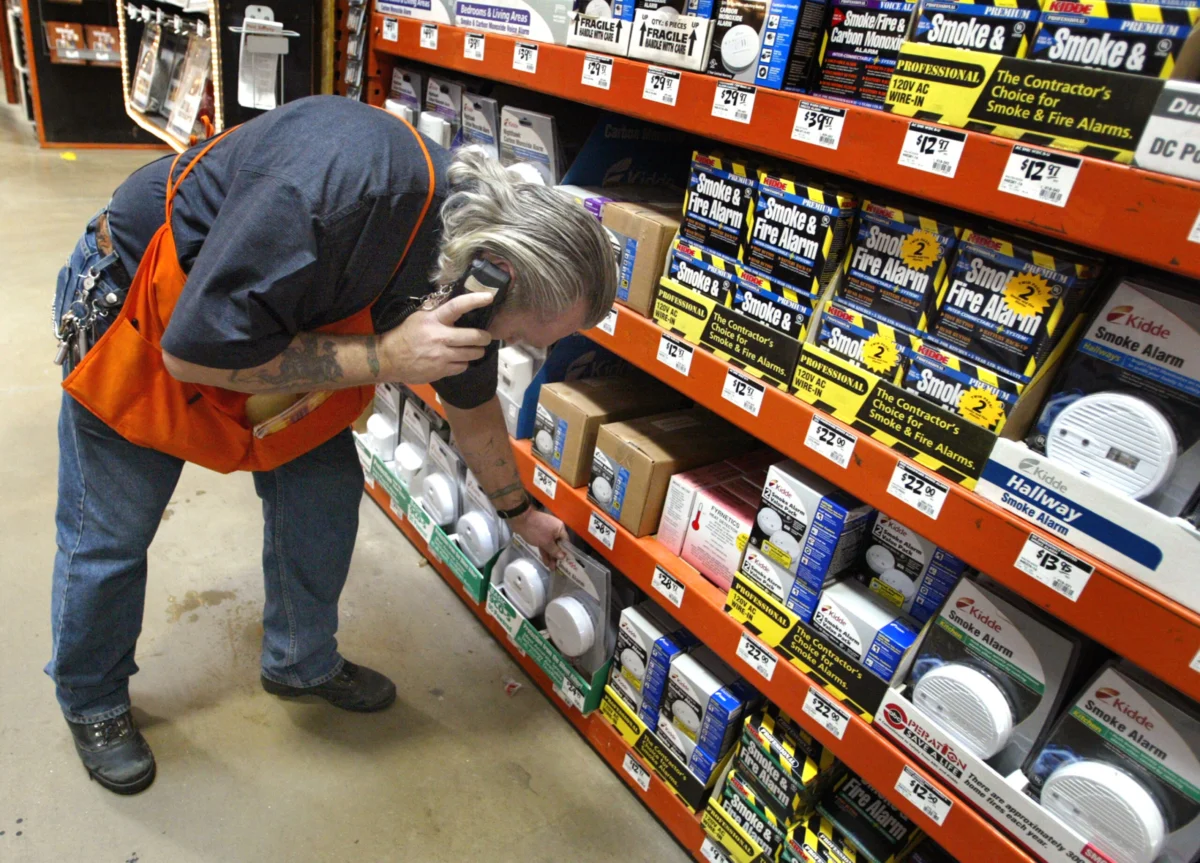
"A silent threat demands immediate action: Federal regulators are urging consumers to discard nearly 377,000 plug-in gas and carbon monoxide detectors that have failed to alarm in potentially deadly situations. This widespread malfunction, affecting a device designed for life-saving, creates a false sense of security and leaves households dangerously vulnerable."
Federal regulators have issued a critical safety alert, mandating that households immediately cease using a plug-in natural gas and carbon monoxide detector sold under an alarming 18 different brand names. The U.S. Consumer Product Safety Commission (CPSC) issued the warning on Thursday, highlighting that the device has demonstrated a severe failure to alert consumers to the presence of hazardous carbon monoxide. This directive impacts an estimated 376,974 units of model KH158, a number that underscores the significant potential risk to public safety. The CPSC has received 91 reports detailing the detectors’ failure to sound an alarm during gas or carbon monoxide leaks, an unusually high number that signals a fundamental flaw in the product’s design or manufacturing.
Carbon monoxide (CO) is a colorless, odorless, and tasteless gas, making it an invisible killer. Without a functioning detection device, households are entirely reliant on these alarms for early warning of CO accumulation. A malfunctioning alarm not only fails to provide crucial protection but actively deceives occupants into believing they are safe, effectively removing the only line of defense against this silent threat. The gravity of this situation is amplified by the fact that the affected units were widely distributed, often found in settings where cost-effectiveness is prioritized, such as rental properties, starter apartments, dorm rooms, garages, recreational vehicles, and basements.
A Single Model, A Multitude of Masquerades
The affected product is a versatile four-in-one plug-in unit designed to detect both natural gas and carbon monoxide. Visually, these devices are typically housed in white, gray, or black plastic casings and feature a digital display, a prominent "SELF-TEST" button, and three indicator lights: POWER, FAULT, and ALARM. The deceptive nature of this product lies in its distribution strategy, with the common model number KH158 appearing under a remarkably diverse array of brand names. The CPSC has identified the following 18 brands: ARIKON, ELECOIN, FLUNGSKY, HAOKESITE, Hembisen, JNHCD, KAKIMENT, KH Alert, KOABBIT, NICGOL, NORJAN, OUMEBIU, Sooguard, Vilfet, Vzmcov, WESHLGD, XLA Alert, and YOJOCK.
These units were available for purchase across popular online marketplaces, including Amazon, eBay, AliExpress, microcenter.com, and snapklik.com. Their availability spanned from June 2024 through July 2026, a period of over two years. The pricing of these detectors ranged broadly from $13 to $140, a spectrum that suggests their appeal to a wide demographic seeking affordable safety solutions. This broad distribution window and price range mean that the problematic devices are likely present in a wide variety of living situations, from student accommodations to long-term rental units and auxiliary living spaces.
The manufacturer responsible for these units is identified as Shenzhen Kanghua Shengshi Industrial Co., which also operates under the business name KH Alert. Notably, the manufacturer has not voluntarily agreed to a recall. Consequently, there are no refund programs or replacement offers currently available to consumers. The CPSC’s directive is unequivocal: "Stop using and dispose of these products immediately." This blunt instruction underscores the severity of the identified safety defect.
Ninety-One Silent Alarms: A Troubling Pattern of Failure
The reported incident count of 91 failures is particularly concerning. In the realm of consumer product safety, warnings and recalls often stem from a relatively small number of complaints. Ninety-one reports of a critical life-safety device failing to perform its primary function—sounding an alarm during a hazardous leak—is a substantial figure. It is also highly probable that the true number of incidents is even higher, as many consumers may not realize their detector has failed or may not file a report with a federal agency following a near-miss event.
Adding to the concern, one of the brands associated with this model number, Hembisen, had surfaced in safety reports months prior. In April, Consumer Reports linked the same model number (KH-158) to documented hospitalizations. These reports cited complaints filed with the CPSC concerning a plug-in detector sold under the Hembisen name. The complaints detailed at least four individuals who became ill, including two teenagers (aged 15 and 14) treated in February and a 60-year-old man hospitalized in March. In response to these early safety signals, Amazon removed the product listings while investigations were conducted. A representative for Hembisen, however, later stated to Consumer Reports that the brand disputes the findings of these investigations.
The statistics surrounding carbon monoxide poisoning are stark and serve as a critical reminder of why reliable detectors are indispensable. According to data from the Centers for Disease Control and Prevention (CDC), accidental carbon monoxide poisoning is responsible for more than 400 deaths and over 100,000 emergency department visits in the United States annually. The insidious nature of CO poisoning lies in its early symptoms, which are often vague and easily mistaken for common ailments like the flu or food poisoning. These symptoms include headache, dizziness, weakness, nausea, confusion, and shortness of breath. For individuals asleep, these subtle signs can go unnoticed, leading to tragic outcomes.
Certain demographic groups are at a higher risk of severe consequences from CO exposure. These include infants, older adults, pregnant individuals, and anyone with pre-existing health conditions such as anemia, chronic heart disease, or chronic respiratory conditions. Households that utilize fuel-burning appliances are at the greatest risk of exposure. This includes homes equipped with gas ranges, gas or oil furnaces, water heaters, fireplaces, wood stoves, or attached garages. Furthermore, the use of generators during power outages, a common occurrence during severe weather events, significantly elevates the risk of CO accumulation.
Replacing the Hazard: Ensuring Future Safety
The CPSC’s guidance on selecting replacement detectors is clear and crucial for ensuring consumer safety and preventing a repeat purchase of a faulty product. The agency strongly advises consumers to purchase only carbon monoxide detectors that bear certification to the UL 2034 safety standard. In previous advisories, the CPSC has also recommended that combination smoke and CO detectors meet both UL 2034 and UL 217 standards. Consumers should look for a UL or ETL certification mark, which should be clearly visible on both the product packaging and the unit itself.
Beyond certification, proper installation and maintenance are paramount. Detectors should be installed on every level of the home and outside each separate sleeping area. A critical point of advice, particularly relevant given the nature of the recalled product, is to opt for units that are battery-operated or equipped with battery backup. Plug-in-only devices are rendered useless during power outages, precisely when the risk of carbon monoxide poisoning from generators is highest. Consumers are also urged to test their alarms frequently and replace batteries according to the manufacturer’s recommendations.
It is imperative that affected units are not resold or given away. Transferring a faulty detector to a relative, tenant, or through a resale platform merely shifts the hazard to another unsuspecting individual or household, rather than eliminating it. Consumers who have experienced a failure with their detector are encouraged to file a report on SaferProducts.gov. This public database is utilized by CPSC investigators to track product defects and build cases for future regulatory action.
The Enforcement Challenge: Bridging the Gap in Foreign Product Regulation
The fundamental challenge in this particular case lies not solely in the product defect but in the efficacy of the remedy. The CPSC’s ability to compel a recall is contingent upon either the cooperation of the manufacturer or the initiation of legal proceedings. Foreign manufacturers operating through online marketplaces can, and in this instance have, chosen to decline participation with limited immediate repercussions. This leaves the CPSC’s primary recourse as a public warning, a message that may unfortunately not reach the vast majority of affected households.
This situation places a significant burden on consumers to identify potentially hazardous devices purchased up to two years ago, often from brands they may not readily recall, and from platforms that may no longer list the specific product. A practical first step for consumers is to review their online order history for any plug-in gas or CO detectors purchased since mid-2024. Regularly checking the CPSC’s recalls and warnings page is also a prudent measure for anyone who has recently purchased low-cost safety devices online.
The recurrence of such incidents is tragically underscored by recent events. In July, MedicalDaily reported on the deaths of three children in Wayne County, Michigan, who succumbed to carbon monoxide poisoning from a generator during storm-related power outages. This incident serves as a chilling reminder that the season for this pervasive hazard often coincides with the arrival of cold weather and the increased reliance on backup power sources.
In the event of an alarm sounding or if any individual in the household experiences symptoms consistent with carbon monoxide exposure, the immediate priority is to evacuate everyone to fresh air and call 911. It is critical not to re-enter the premises until emergency responders have declared the area safe. Furthermore, individuals experiencing symptoms should seek immediate medical attention by calling for help rather than attempting to drive to a hospital, as driving while disoriented by CO poisoning can be extremely dangerous.
Key Questions Answered
Which product is affected? The affected products are four-in-one plug-in natural gas and carbon monoxide detectors, model KH158, sold under 18 distinct brand names. Prominent brands include Hembisen, KH Alert, JNHCD, Sooguard, and NICGOL, among others.
Where were they sold? These detectors were available for purchase on major online retail platforms: Amazon, eBay, AliExpress, microcenter.com, and snapklik.com. The sales period extended from June 2024 through July 2026, with prices ranging from $13 to $140.
Is there a refund or replacement program? No. The manufacturer has not agreed to a recall, and consequently, there is no provision for refunds or replacements. The CPSC’s recommendation is to immediately dispose of the affected units and purchase certified replacements.
How can I determine if my detector is included? Consumers should verify the model number on their device and check their online order history. The affected units typically feature a digital display, a "SELF-TEST" button, and indicator lights for POWER, FAULT, and ALARM.
What type of detector should I buy as a replacement? When purchasing a new detector, it is essential to select one that is certified to the UL 2034 standard for carbon monoxide detection. For combination smoke and CO detectors, ensure they meet both UL 2034 and UL 217 standards. Prioritize units with battery backup capabilities.
What are the symptoms of carbon monoxide exposure? Common symptoms include headache, dizziness, weakness, nausea, confusion, and shortness of breath. These symptoms can often be mistaken for influenza or other common illnesses.
What action should I take if a carbon monoxide alarm sounds? If an alarm activates, or if anyone in the home experiences potential symptoms of CO exposure, immediately evacuate all occupants to fresh air and call 911. Do not re-enter the building until emergency responders have confirmed it is safe to do so.
