
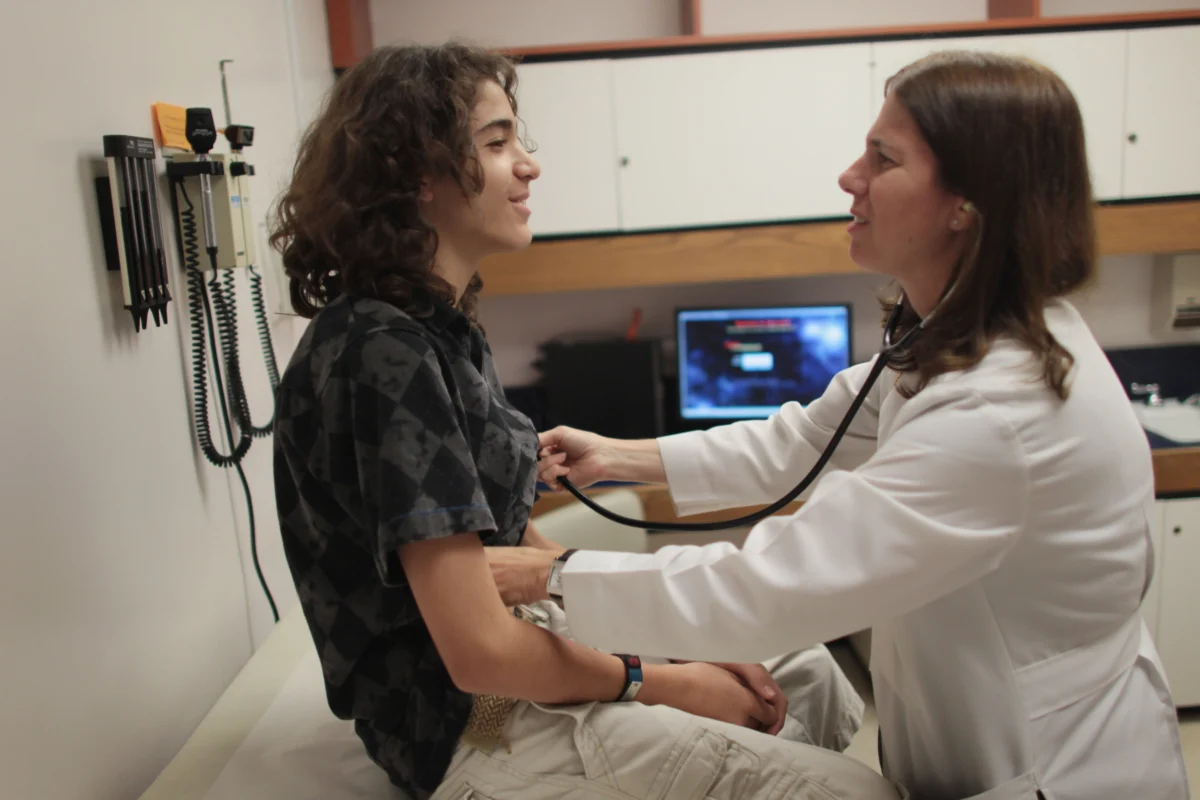
"A more comprehensive approach to mental health screening in pediatric primary care, incorporating anxiety and suicide risk alongside depression, identifies a significant number of adolescents who would otherwise go unrecognized, highlighting the complementary nature of these assessments."
Routine pediatric well-child visits often include mental health screenings, with depression being the most common focus. However, a recent study suggests that this singular focus may leave a substantial portion of adolescents struggling with mental health challenges unidentified. By expanding these screenings to include anxiety and suicide risk, researchers found that for every thirteen teenagers assessed, one additional adolescent with moderate to severe symptoms was flagged. This underscores the critical need for a multi-faceted approach to adolescent mental well-being, moving beyond a singular focus on depression to capture a broader spectrum of distress.
The study, conducted across three academic primary care practices, involved 2,776 adolescents who completed three questionnaires at their well-child visits: the PHQ-9 for depressive symptoms, the GAD-7 for anxiety symptoms, and the Ask Suicide-Screening Questions (ASQ) for suicide risk. This expanded screening protocol yielded a notable increase in positive results for moderate to severe symptoms. Researchers reported that adding the anxiety and suicide risk questionnaires alongside the depression screen identified one additional adolescent with significant concerns for every thirteen screened. This statistic translates into a tangible impact for parents and educators; in a typical classroom of 26 students, this expanded screening would likely flag approximately two additional teenagers whose depression screen alone would not have raised immediate concerns.
The research, led by Mary Carol Burkhardt of the Department of Pediatrics at the University of Cincinnati College of Medicine, was published as a brief report in The Journal of Pediatrics. The study participants had a mean age of 14.2 years, with approximately half identifying as female. A significant majority, 74 percent, self-identified as Black. The data for the study was collected between March and October 2025.
The Significance of the "Number Needed to Screen"
The concept of the "number needed to screen" (NNS) is a straightforward metric that quantifies how many individuals must be assessed to identify one additional case of a condition that would otherwise have been missed. In this study, the NNS was found to be 13 when both anxiety and suicide questionnaires were administered in addition to the standard depression screen. Adolescents were considered to have significant concerns if they met standard cutoffs for moderate to severe symptoms on the depression and anxiety questionnaires, or if they responded positively to the suicide screen.
The authors of the study concluded that these findings "underscore the complementary value of multidomain screening," strongly advocating for the integration of anxiety and suicide assessments into routine primary care for adolescents. This recommendation stems from the understanding that mental distress in teenagers can manifest in ways that a depression-only screen may not capture.
Beyond Sadness: Recognizing Diverse Presentations of Distress
The clinical rationale behind this study’s findings is straightforward. Adolescents experiencing primarily persistent worry, physical tension, avoidance of social or academic situations, or significant sleep disturbances may not exhibit the low mood or loss of interest that a depression-focused questionnaire is designed to detect. While anxiety and depression frequently co-occur, they are distinct conditions requiring separate treatment modalities. A screening tool optimized for one condition is unlikely to be a reliable indicator for the other. Furthermore, thoughts of self-harm represent a critical third dimension of mental health concern that does not always accompany elevated depression scores.
Previous reporting has highlighted that adolescent depression often presents differently from adult depression, with irritability being a more common indicator than overt sadness. This principle extends to the limitations of screening tools: what a questionnaire is designed to ask about directly influences what it can identify.
Federal guidance has begun to acknowledge this broader spectrum of adolescent mental health needs. The U.S. Preventive Services Task Force (USPSTF) currently recommends screening for major depressive disorder in adolescents aged 12 to 18 and screening for anxiety in children and adolescents aged 8 to 18. However, regarding screening specifically for suicide risk in children and adolescents, the task force has concluded that the current evidence is insufficient to definitively weigh the benefits against potential harms. This study contributes valuable data to that ongoing evidence base, suggesting a potential avenue for future recommendations.
The Crucial Distinction: Screening vs. Diagnosis
It is imperative to emphasize that a positive screen result is not a definitive diagnosis. The study authors themselves highlight this distinction, noting that the "number needed to screen" reflects additional positive screening results, not confirmed mental or behavioral health diagnoses. Some of these positive results could represent false positives. Screening questionnaires are intentionally designed to be sensitive, meaning they are built to identify a broad range of potential issues, thus casting a wide net. A positive result serves as a signal for further investigation and a more in-depth conversation, rather than a conclusive determination.
Follow-up evaluation by a qualified clinician is essential to differentiate between an adolescent who requires professional intervention and one who may be experiencing a temporary period of difficulty. The evidence reviews that inform clinical recommendations consistently make this crucial distinction between identifying symptoms and confirming a diagnosis.
This distinction also has significant implications for healthcare capacity. Identifying more adolescents in need of support is only effective if adequate resources and services are available to meet that demand. Shortages of child and adolescent mental health clinicians remain a considerable barrier in many regions across the country. Broadening screening without a corresponding increase in follow-up capacity risks simply shifting the bottleneck rather than resolving it.
Acknowledging the Limitations of a Single Health System Study
The study, while providing valuable insights, is not without its limitations. The authors themselves clearly articulate these constraints. The study was retrospective, meaning it analyzed data that had already been collected. It was also conducted within a relatively small cohort across three practices within a single health system, serving a predominantly publicly insured population. This demographic and geographic specificity limits the generalizability of the findings to the broader national adolescent population. Notably, the demographic profile of the participants, with 74 percent self-identifying as Black, differs from the national average, underscoring the need for further research across more diverse populations.
An additional limitation worth noting is that the screenings were completed electronically. This raises the possibility that some questionnaires may have been completed by a parent or caregiver rather than the adolescent themselves, potentially not reflecting the adolescent’s direct experience and self-reported symptoms.
For families, these findings do not necessitate immediate action beyond a simple inquiry at their next pediatric appointment. Parents can proactively ask their pediatrician about the types of mental health screenings used and whether anxiety and suicide risk are assessed in addition to depression. In the United States, adolescent mental health screening is generally covered as a preventive care service, meaning that inquiring about these services typically does not incur additional costs.
Certain warning signs should prompt a conversation with a pediatrician without delay, irrespective of the timing of an annual visit. These include marked changes in sleep patterns or appetite, withdrawal from friends and usual activities, a decline in academic performance, persistent expressions of hopelessness, and any talk of death or self-harm.
This is a sensitive subject, and resources are available for those in distress. In the United States, individuals experiencing mental health struggles or concerned about a young person can reach the 988 Suicide and Crisis Lifeline by calling or texting. In cases of immediate danger, emergency services should be contacted.
The future trajectory of mental health screening practices will depend on further research. This brief report from three primary care practices represents a starting point, not a definitive basis for altering national recommendations. Confirmation of these findings across a wider range of diverse settings would be necessary before any shifts in official guidance could be considered. Future research and any subsequent changes to task force recommendations will be closely monitored and reported.
