
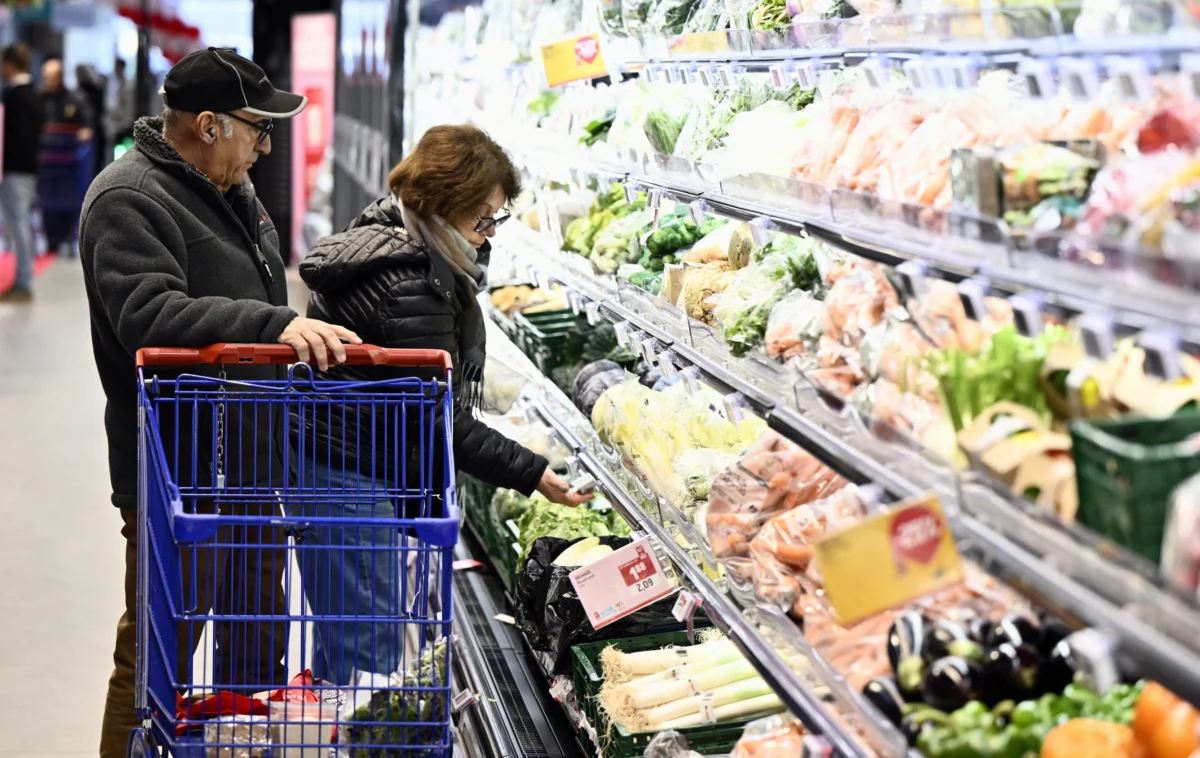
"A federal court ruling has temporarily halted South Carolina’s planned restrictions on SNAP purchases, extending the window for recipients to buy items like candy and soda as the USDA navigates legal challenges and procedural requirements."
The U.S. Department of Agriculture (USDA) has officially requested South Carolina to postpone its "Healthy Food SC" project, which aimed to restrict the purchase of certain food items by Supplemental Nutrition Assistance Program (SNAP) recipients. Initially slated to begin on August 31, the restrictions are now tentatively rescheduled for November 1, following a directive issued in a memo dated August 25. This two-month reprieve offers over 235,000 South Carolina households, encompassing nearly 482,000 individuals, an extended period of unchanged grocery purchasing rules. During this interim, items such as candy, energy drinks, soft drinks, and other sweetened beverages will continue to be eligible purchases.
The delay stems not from a simple scheduling conflict, but from a complex interplay of ongoing legal reviews and necessary administrative procedures. The USDA has indicated that its legal counsel, in conjunction with the Department of Justice, is meticulously examining court orders that have already vacated similar restrictions in five other states. Furthermore, the agency emphasized the requirement for the state to publish a formal notice in the Federal Register and to solicit public comment before the project can commence – a procedural step that was reportedly overlooked in previous instances, leading to judicial challenges.
A Landmark June Ruling Fuels the Pause
The judicial decision that precipitated this nationwide pause was handed down in June, impacting more than just the five states directly involved in the lawsuit. A federal district judge ruled that the USDA had overstepped its legal authority when it approved state waivers that sought to restrict SNAP purchases of items like candy and soda. The legal challenge was initiated by SNAP participants in Colorado, Iowa, Nebraska, Tennessee, and West Virginia, all of whom had received approval for such waivers.
Judge Amy Berman Jackson of the U.S. District Court for the District of Columbia, in her ruling, determined that these state-level waivers conflicted with the statutory definition of "food" as outlined in the Food and Nutrition Act. Her judgment explicitly stated that "Congress defined what ‘food’ is supposed to be," and that the agency lacked the authorization to amend or waive this fundamental definition. This ruling also highlighted that the USDA had failed to adhere to public notice requirements, leading to the vacating of approved restrictions in the five named states. The judge mandated that the agency would need to re-evaluate its approach and design pilot projects that strictly comply with federal law. Importantly, the ruling did not take a stance on the policy merits of restricting certain food purchases, focusing solely on the legal authority and procedural compliance of the USDA.
In response to the ruling, Agriculture Secretary Brooke Rollins publicly voiced her dissent, characterizing the decision as the work of an "activist judge" on the social media platform X. Rollins argued that taxpayer funds should not be used to subsidize products she associated with health issues such as obesity and diabetes. The USDA’s official stance and information regarding its waiver program remain accessible on its food restriction waiver page.
South Carolina’s Role in a Broader Initiative
While South Carolina’s initiative has been sometimes framed as groundbreaking, it is important to note that it is part of a much larger and more established federal effort. By the time the June ruling was issued, the USDA had already granted approval for food restriction waivers in 23 states, with several of these states having already implemented their respective programs. For instance, Texas initiated its restrictions on candy and sweetened drinks on April 1, 2026, and Florida also began enforcing its own version earlier this year. The five states named in the lawsuit were either already operating under approved waivers or were in the process of doing so.
South Carolina’s journey toward implementing these restrictions began in August 2025, when Governor Henry McMaster announced his intention to seek a waiver. This was followed by an executive order in September, directing the state’s Department of Social Services to formally file the request. The USDA granted its approval in December 2025. The approval letter for South Carolina specifically details a demonstration project designed to exclude candy, energy drinks, soft drinks, and other sweetened beverages from eligible purchases. It is important to note that diet and zero-sugar soft drinks are slated to remain allowable purchases under this program.
The state has indicated that all SNAP-approved retailers are expected to participate once the two-year program commences, and participation will be mandatory for SNAP households. This suggests a comprehensive rollout aimed at ensuring widespread compliance once the project is fully operational.
The Health Evidence: A Nuanced Perspective
The policy arguments supporting these restrictions are primarily rooted in observed associations between certain food consumption patterns and adverse health outcomes. The link between sugar-sweetened beverage consumption and issues such as weight gain, type 2 diabetes, and dental disease is well-documented in observational research, forming a substantial body of evidence. However, a crucial distinction exists between correlation and causation. What remains less definitively established is whether the removal of specific products from SNAP eligibility directly leads to improved health outcomes for the affected households.
To date, no completed evaluation of a state waiver program has definitively demonstrated such an improvement, largely because most of these programs are still in their nascent stages, having been operational for only a few months. Critics of these restrictions have raised alternative concerns, arguing that they could inadvertently increase stigma towards SNAP participants. Furthermore, these restrictions might disproportionately affect households residing in areas with limited access to fresh, nutritious food options. In such circumstances, the restrictions could narrow dietary choices without providing access to healthier alternatives.
Conversely, proponents of the policy contend that federal nutrition assistance funds should not be allocated to the purchase of products that offer little to no nutritional value. Both perspectives can be articulated without definitive resolution, as the empirical data necessary to conclusively settle the debate is not yet available. The judge’s ruling, therefore, centered on statutory authority and procedural correctness rather than an assessment of the policy’s efficacy.
Practical Guidance for South Carolina Households
For SNAP households in South Carolina, the immediate practical impact of this delay is straightforward: two additional months of unchanged purchasing options. The core benefits and eligibility criteria for SNAP remain unaffected. This postponement solely concerns the types of products that can be purchased with SNAP benefits, not the amount of assistance a household receives or their qualification status. No action is required from recipients, and there is no need to reapply to maintain benefits.
As the program eventually rolls out, households can anticipate receiving formal notification from the state’s Department of Social Services and from participating retailers. This advance notice is crucial for ensuring clarity on what will and will not be covered. Other states that have implemented similar programs have typically provided educational materials through local offices and in-store signage prior to their start dates. It is advisable for households to rely on these official notices rather than secondhand information, as the specific definitions of restricted items can vary significantly from state to state. For instance, Iowa’s approved waiver encompasses a broader range of products compared to many other states.
It is also important for households to understand that the November 1 date is not an immutable deadline. The USDA has presented this date as contingent upon the ongoing legal and procedural reviews. Further legal developments could potentially alter this timeline or even lead to the program’s complete halt. Therefore, while households that rely heavily on beverages may wish to prepare for eventual restrictions, they should remain aware that the implementation date is subject to change. The program’s future hinges on the successful navigation of legal challenges and the fulfillment of all procedural mandates.
