
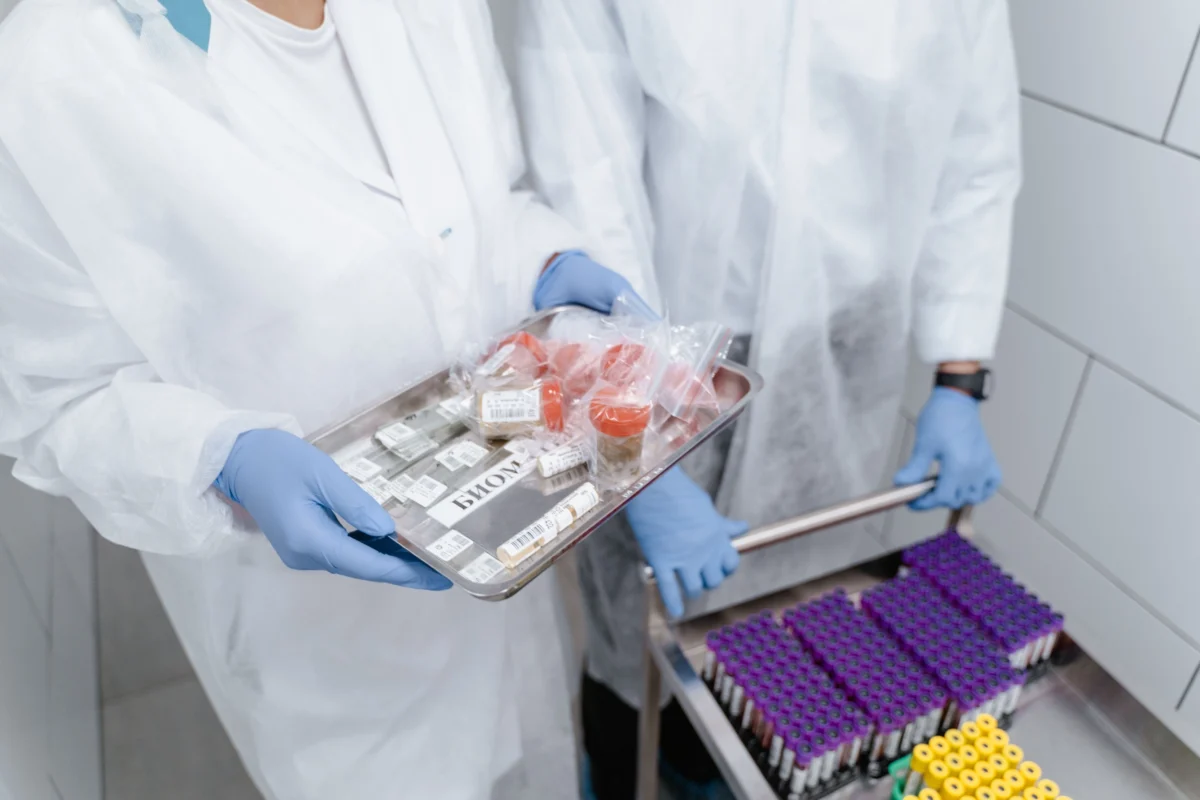
"Federal regulators have declared a Scottsdale, Arizona company’s umbilical cord products unapproved drugs and unlicensed biological products, citing critical manufacturing failures in sterility validation and raising concerns about their widespread distribution to clinics nationwide."
The U.S. Food and Drug Administration (FDA) has issued a potent warning to R3 Medical Companies and its chief executive, Dr. David L. Greene, asserting that the company’s widely distributed umbilical cord products are, in fact, unapproved drugs and unlicensed biological products. This significant regulatory action, detailed in a letter dated August 14 and publicly released on August 25 by the FDA’s Center for Biologics Evaluation and Research, underscores the agency’s ongoing scrutiny of the burgeoning regenerative medicine market. Beyond the immediate implications for R3 Medical Companies, the FDA’s findings offer a crucial glimpse into the regulatory landscape for stem cell and exosome treatments, particularly for individuals considering such cash-paid therapies in major metropolitan areas like Phoenix, Nashville, and Los Angeles.
The core of the FDA’s enforcement action stems from an inspection conducted between November 17 and December 16 of the previous year at two facilities co-located under the banners of Bello Bio and Regen Suppliers. During this inspection, investigators identified significant deficiencies in the manufacturing processes for four specific products: ReBellaWJ, ReBellaXO, ReBellaXOL, and ReBellaCB. The FDA concluded that these products, marketed and sold to a network of clinics, are subject to stringent drug and biologics regulations, requiring premarket approval which the company has not obtained.
At the heart of the FDA’s legal reasoning is the concept of "homologous use." Under FDA regulations, human tissue products are subject to a less rigorous regulatory pathway only if they perform the same basic function in the recipient as they did in the donor. For umbilical cord tissue, its natural functions are primarily as a conduit and, in the case of cord blood, to form and replenish the blood-forming system. The FDA determined that R3 Medical Companies’ marketing of these products for indications such as arthritis and inflammation falls outside this definition of homologous use. Consequently, these products are classified as drugs and biological products, necessitating full premarket approval, including rigorous clinical trials to demonstrate safety and efficacy.
Furthermore, the FDA’s inspection raised serious questions about the integrity of the exosome preparations offered by the company. The manufacturing processes described by R3 Medical Companies did not appear to adequately isolate exosomes, a crucial step for ensuring the purity and intended function of such products. The full details of these findings are available in the official warning letter published on the FDA’s website, providing a transparent account of the agency’s regulatory concerns.
This is not the first time regulatory authorities have engaged with Dr. Greene and his affiliated companies. The warning letter references a previous notice issued in 2019 concerning the marketing of regenerative stem cell therapies for a range of serious conditions, including Amyotrophic Lateral Sclerosis (ALS), diabetes, kidney failure, Lyme disease, Parkinson’s disease, and stroke. Despite this prior interaction, the FDA noted that current company websites indicate a continuation of similar offerings, suggesting a persistent pattern of alleged non-compliance.
It is important to understand that FDA warning letters are not the final step in the regulatory process. They serve as formal notification to companies of identified violations and provide an opportunity for the company to respond and implement corrective actions. The FDA publicly posts these letters in a searchable database, empowering patients to conduct due diligence and check for potential regulatory issues before committing to expensive treatments.
The scope of R3 Medical Companies’ marketing claims, as detailed in the warning letter, is extensive and concerning. The FDA cited company websites, social media accounts, and videos that promoted these products as treatments for a wide array of conditions. These alleged claims include benefits for neurological disorders, heart, kidney, and lung failure, autism, cerebral palsy, diabetes, Lyme disease, joint pain, and erectile dysfunction. Notably, some marketing materials suggested that exosomes could penetrate the blood-brain barrier, with potential future benefits for Alzheimer’s and Parkinson’s disease.
The FDA emphatically states that none of these claimed uses are supported by an approved application. Consumer information from the agency clearly delineates that the only stem cell products currently approved in the United States are blood-forming stem cells derived from umbilical cord blood, and these are approved only for a limited set of blood and immune disorders. The pattern of conditions named in R3 Medical Companies’ marketing is particularly striking; they are often chronic, serious, and in many cases, lack definitive curative treatments. This profile makes individuals suffering from these conditions particularly vulnerable to confident marketing claims. The inclusion of autism and cerebral palsy in the cited marketing materials indicates that children were also part of the target demographic for these unproven therapies.
The FDA’s patient information on regenerative medicine therapies highlights serious risks that have been reported following the use of unapproved products in this category. These reported adverse events include blindness, tumor formation, and infections, underscoring the potential dangers associated with unproven treatments.
The sterility findings at the Scottsdale facilities represent a concrete safety concern. The FDA cited the company for failing to validate the aseptic processes employed in the manufacturing of products intended to be sterile and subsequently injected into patients. This failure means there is no validated assurance that the products are free from microbial contamination. Inspectors also observed that product samples were subjected to freezing and thawing cycles before sterility testing. This practice can compromise or destroy microbial content, potentially masking the presence of contamination and leading to unreliable test results. Furthermore, the company had not validated the cleaning and disinfection procedures for the biological safety cabinets used in the manufacturing process, which are critical for maintaining a sterile environment.
Adding to the manufacturing concerns, R3 Medical Companies assigned a 24-month expiration date to its products without providing supporting data from stability testing. At the time of the inspection, written quality unit procedures, which are essential for overseeing product approval or rejection and managing customer complaints, had not been established.
In response to the inspection observations, the company committed to temporarily suspending manufacturing operations. However, the FDA clarified that this suspension does not rectify the fundamental violations. The company still lacks the necessary Investigational New Drug (IND) application to legally study these products or an approved biologics license to market them. The agency has provided R3 Medical Companies with 15 working days to formally respond to the warning letter. The FDA cautioned that failure to adequately address the cited violations could lead to further enforcement actions, including product seizure or injunctions, without additional notice.
For individuals contemplating stem cell or exosome treatments, especially those paying out-of-pocket, independent verification of a clinic’s legitimacy and the products they offer is paramount. Patients should inquire whether the specific product has an approved biologics license from the FDA or if the treatment is being administered under an FDA-authorized clinical trial. Legitimate clinical trials are typically listed on ClinicalTrials.gov and rarely involve substantial patient fees.
Patients should also seek clarity on the exact nature of the product, its manufacturer, and whether that manufacturer has been subject to regulatory inspection. The FDA’s public warning letter database offers a valuable resource for checking a company’s compliance history. A critical red flag should be raised by overly broad claims. A single injectable product being marketed for vastly different conditions, such as autism, arthritis, erectile dysfunction, and neurodegenerative diseases, suggests a lack of plausible scientific mechanism and is highly suspect.
Individuals who have received any unapproved cellular or tissue-based product and subsequently experience adverse events, such as fever, spreading redness, swelling, severe pain at an injection site, or new neurological symptoms, should seek prompt medical attention. It is crucial to inform the healthcare provider precisely what substance was administered. Patients can also report adverse events directly to the FDA through its MedWatch program, a system designed to capture reports from patients and healthcare professionals, and which does not require a clinician’s involvement for reporting. This proactive engagement with regulatory information and transparent communication with healthcare providers can help mitigate the risks associated with unproven regenerative medicine therapies.
