
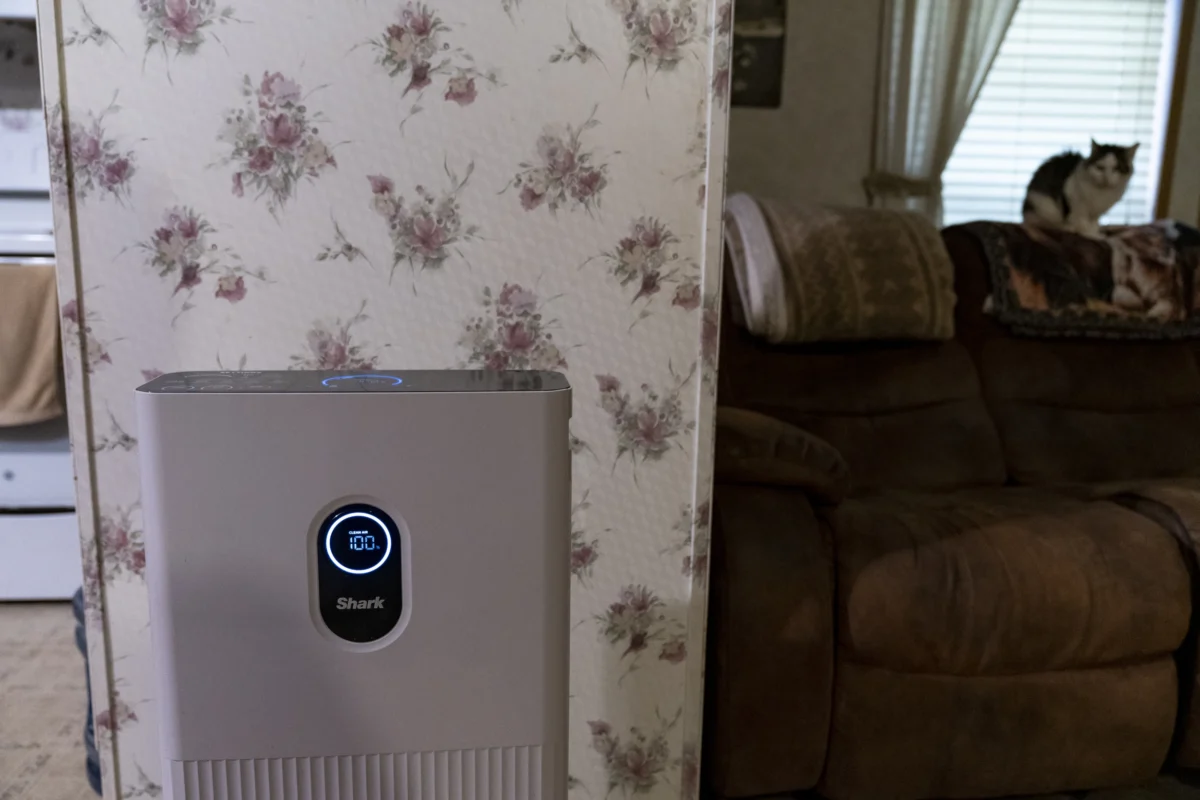
"A recent study suggests that HEPA air purifiers may offer a measurable cognitive benefit, specifically enhancing mental flexibility by approximately 12% in adults aged 40 and older who live in areas with high traffic-related air pollution."
A randomized crossover trial, published in Scientific Reports, has provided intriguing evidence that improving indoor air quality through HEPA filtration could positively impact cognitive function in a specific demographic. The study, conducted in the densely populated urban environment of Somerville, Massachusetts, focused on participants living in close proximity to major highways. Researchers found that adults aged 40 and above demonstrated a notable improvement in mental flexibility after one month of using a HEPA air purifier compared to a month using a sham device. While acknowledging the study’s limitations, including its secondary outcome analysis and modest sample size, the findings align with a growing body of research linking exposure to particulate matter with adverse effects on brain health. This suggests that interventions to reduce indoor air pollution could be a plausible strategy for supporting cognitive well-being, particularly for vulnerable populations residing in heavily trafficked areas.
New Research Suggests HEPA Air Purifiers May Boost Cognitive Function in Older Adults Near Highways
A groundbreaking study conducted in Somerville, Massachusetts, a city known for its significant traffic-related air pollution, has yielded promising results regarding the impact of HEPA air purifiers on cognitive function. The research, a secondary analysis of a randomized crossover trial published in Scientific Reports, indicated that adults aged 40 and older experienced a nearly 12% improvement in mental flexibility after utilizing a HEPA air purifier in their homes for one month. This enhancement was observed when compared to their performance after a month using a sham purifier, a device that mimicked the appearance and operation of a real purifier but lacked the crucial filtering component.
The study’s deliberate choice of Somerville, situated adjacent to major thoroughfares like Interstate 93 and Route 28, was strategic. This location provided an ideal setting to investigate whether filtering indoor air could produce discernible cognitive effects in an environment characterized by elevated levels of traffic-generated air pollutants. While the researchers emphasize that these findings are a secondary outcome, derived from a modest sample size, and specifically observed in one cognitive domain and age group rather than across the board, the direction of the results is consistent with a broader scientific consensus linking particulate matter exposure to detrimental impacts on brain health.
Inside the Somerville Crossover Trial: Methodology and Findings
The Home Air Filtration for Traffic-Related Air Pollution trial enrolled 119 participants, aged between 30 and 74, all of whom resided full-time within 200 meters of major highways. This stringent inclusion criterion ensured that the study population was directly exposed to the target environmental factor: traffic-related air pollution. The trial employed a randomized crossover design, a robust methodology that allows for within-subject comparisons. Participants were randomly assigned to one of two sequences: either using a genuine HEPA purifier for one month followed by a sham purifier for another month, or vice versa. A month-long washout period was incorporated between the two intervention phases to minimize any carryover effects. The sham device was meticulously designed to be indistinguishable from the actual HEPA purifier in terms of appearance and operation, thereby controlling for placebo effects.
Following each one-month intervention period, participants underwent cognitive assessments. The primary tool utilized was the Trail Making Test, a widely recognized neuropsychological assessment. Part A of this test evaluates visual scanning and motor speed by requiring participants to draw lines connecting sequential numbers. Part B, however, is more cognitively demanding, assessing executive function and mental flexibility by asking individuals to alternate between connecting numbers and letters in sequential order (e.g., 1-A-2-B-3-C).
Crucially, the study did not reveal any significant overall difference in completion times between the real HEPA purifier and the sham purifier conditions when analyzing the entire participant cohort. This underscores the importance of examining subgroup effects. Age emerged as a significant moderator of the intervention’s impact. The observed 12% improvement in performance was specifically noted among participants aged 40 and older. This age group constituted approximately 42% of the total sample, equating to roughly 50 individuals. For this subgroup, the average completion time for the Trail Making Test Part B was 54.0 seconds after using the HEPA purifier, a statistically significant reduction from the 61.4 seconds recorded after using the sham purifier. This finding remained consistent even after researchers adjusted for variables such as the amount of time participants spent indoors and their self-reported stress levels during the test.
The researchers provided valuable context by comparing the magnitude of this cognitive benefit to that associated with increasing daily physical exercise. This comparison helps to frame the practical significance of the observed effect. Furthermore, the study authors contributed to public understanding by authoring a plain language summary of their findings for The Conversation, making the research accessible to a broader audience.
Highways, Filters, and the Unequal Burden of Pollution Exposure
The connection between particulate matter exposure and adverse health outcomes is well-established. Research has consistently linked exposure to fine particulate matter, commonly found in traffic-related air pollution, with an increased risk of respiratory and cardiovascular diseases, as well as neurological conditions such as Alzheimer’s and Parkinson’s disease. HEPA (High-Efficiency Particulate Air) filters are designed to effectively remove these microscopic particles from indoor air. Consequently, environmental health researchers have increasingly advocated for the use of home air purifiers as a proactive measure to mitigate indoor exposure to harmful pollutants.
What has been notably absent from the scientific literature is direct evidence demonstrating whether reducing indoor air pollution through such filtration translates into measurable cognitive benefits for individuals residing in close proximity to significant pollution sources. The study authors specifically highlighted the scarcity of research focusing on people living near highways, a population segment that faces a particularly high burden of traffic-related air pollution.
This exposure is far from uniform. Communities situated near highways and major traffic corridors consistently experience higher levels of air pollution and, consequently, higher rates of pollution-related diseases. The study authors astutely point out that individuals from minority racial and ethnic groups and those from lower-income households are disproportionately more likely to reside in these areas. This distributional aspect of pollution exposure represents one of the study’s most critical public health implications. It echoes findings from other areas of environmental health research, such as the documented link between prolonged exposure to extreme heat and increased mental health hospitalizations, underscoring how environmental factors can exacerbate health disparities.
Navigating the Nuances of a Twelve Percent Improvement
It is imperative to approach the study’s findings with careful consideration of its inherent limitations, which warrant prominence rather than being relegated to a footnote. The cognitive enhancement observed was the result of a secondary outcome analysis. This means that the study was not originally designed with cognitive function as its primary endpoint; instead, the primary focus was on blood pressure. The decision to examine the age subgroup was made after the trial’s design was finalized. Findings derived from secondary and subgroup analyses generally carry a higher probability of being spurious or due to chance compared to results from pre-specified primary endpoints, which are determined before data collection begins.
The subgroup that exhibited the 12% improvement in mental flexibility comprised approximately 50 individuals. This is a relatively small sample size within the broader study population of 119 participants. Furthermore, fewer than 10 of the total participants were over the age of 60. This limitation is particularly significant, as the age group where cognitive decline is most consequential and concerning is precisely the older adult population. The authors themselves acknowledge this limitation explicitly in their report. Additionally, the study’s enrollment criteria excluded individuals taking blood pressure medications or those with a history of major cardiovascular events. This exclusion further narrows the scope of the population to whom the findings can be definitively applied.
The duration of the intervention period was also limited to one month per condition. Consequently, the study offers no insight into what might occur over extended periods, such as one year or a decade. It remains unknown whether the observed cognitive improvement persists, accumulates over time, or eventually fades. The Trail Making Test itself is known to be susceptible to practice effects, meaning that performance can improve simply through repeated exposure to the test. While the crossover design of the study inherently helps to mitigate some of these practice effects by having each participant serve as their own control, it is likely that some degree of practice-related improvement still contributed to the results.
The precise biological mechanism by which HEPA filtration might influence cognitive function remains unresolved. However, the study authors reference existing research suggesting that exposure to particulate matter can negatively impact the brain’s white matter. They also note that the specific brain regions most affected by air pollution are those responsible for governing mental flexibility and executive function, the very domains where the observed cognitive improvement occurred. The researchers have outlined plans for follow-up studies to investigate these potential mechanisms further. At present, these proposed pathways are hypotheses rather than definitively demonstrated causal links.
The Economic and Practical Considerations of Cleaner Indoor Air
For households contemplating the purchase of an air purifier, the findings of this study offer a compelling reason to consider its potential benefits, particularly if they reside in areas with heavy traffic. However, it is crucial to view this as a plausible intervention rather than an established medical treatment. Commercial air purifiers and their replacement filters represent an ongoing financial commitment. Moreover, the efficacy of these devices is contingent upon regular filter replacement according to the manufacturer’s schedule. It is not uncommon for consumer products marketed to reduce environmental exposures to overstate their benefits, a phenomenon that has been observed in other product categories, such as the discrepancies between sunscreen labeling and actual UVA protection.
For households facing financial constraints, more affordable alternatives exist. DIY air filter designs, often utilizing box fans and readily available filter materials, have been evaluated for their effectiveness in removing particulate matter. Some local health departments and community organizations are actively involved in distributing air purifiers to residents in high-pollution neighborhoods. Investigating available resources through a local city or county health department is often a prudent initial step.
Renters living in close proximity to highways may also have grounds to discuss ventilation and filtration improvements with their landlords. Certain jurisdictions have implemented building standards that address air quality in new construction projects located near major roadways.
For households that do decide to purchase an air purifier, understanding the operational details that ensure its effectiveness is paramount. Proper sizing of the unit to the intended room is critical. Air purifiers are most effective when placed in the rooms where individuals spend the most time, which is often a bedroom rather than a living room, as sleep represents the longest continuous period of indoor exposure. Running the purifier continuously, rather than intermittently, maximizes its particulate removal capacity. Adhering strictly to the manufacturer’s recommended filter replacement schedule is also non-negotiable; a clogged filter in an unused room offers no environmental or health benefit.
It is essential to emphasize that this research should not be interpreted as a treatment for cognitive decline or a substitute for a professional clinical evaluation of memory concerns. The distinction between a potential population-level benefit and an individual clinical effect is a critical one that permeates much of the research in this field. For instance, a large trial involving statins in older adults found no significant benefit in terms of independence, highlighting the need for nuanced interpretation of research findings. Anyone experiencing new memory problems, difficulties with familiar tasks, or noticeable changes in their thinking abilities should consult a healthcare professional. Such symptoms can stem from a variety of underlying causes that require thorough medical assessment, not simply the installation of an appliance.
Key Takeaways from the Somerville Study:
- Cognitive Enhancement in Older Adults: The trial found that participants aged 40 and older demonstrated a notable improvement in mental flexibility, completing a cognitive task approximately 12% faster after a month of using a real HEPA air purifier compared to a month using a sham device.
- Study Population: The research involved 119 participants aged 30 to 74 residing in Somerville, Massachusetts, an area with significant traffic-related air pollution. The 12% improvement was observed in the subgroup of approximately 50 participants aged 40 and above.
- Methodological Strengths and Weaknesses: The study utilized randomization and a sham comparison, which are considered strengths in research design. However, the cognitive outcome was a secondary analysis, meaning it was not the primary focus of the original trial, which reduces the confidence in the findings compared to pre-specified primary endpoints.
- Limited Applicability to Very Elderly: The study’s findings cannot be generalized to adults over 60, as fewer than 10 participants fell into this age bracket. Cognitive decline is most consequential in older age groups, a population not adequately represented.
- Short-Term Intervention: Participants used the purifiers for only one month per condition. The study does not provide information on whether any observed benefits are sustained, increase, or diminish over longer periods.
- Disproportionate Exposure: Individuals living near highways and heavy traffic corridors face higher pollution levels. The study authors highlight that people of color and low-income households are disproportionately represented in these high-exposure areas, underscoring potential health equity implications.
- Not a Treatment for Memory Issues: The study does not position air purifiers as a treatment for memory problems. New or noticeable changes in cognitive function warrant a clinical evaluation by a healthcare professional, as these symptoms can have multiple underlying causes requiring medical assessment.
