
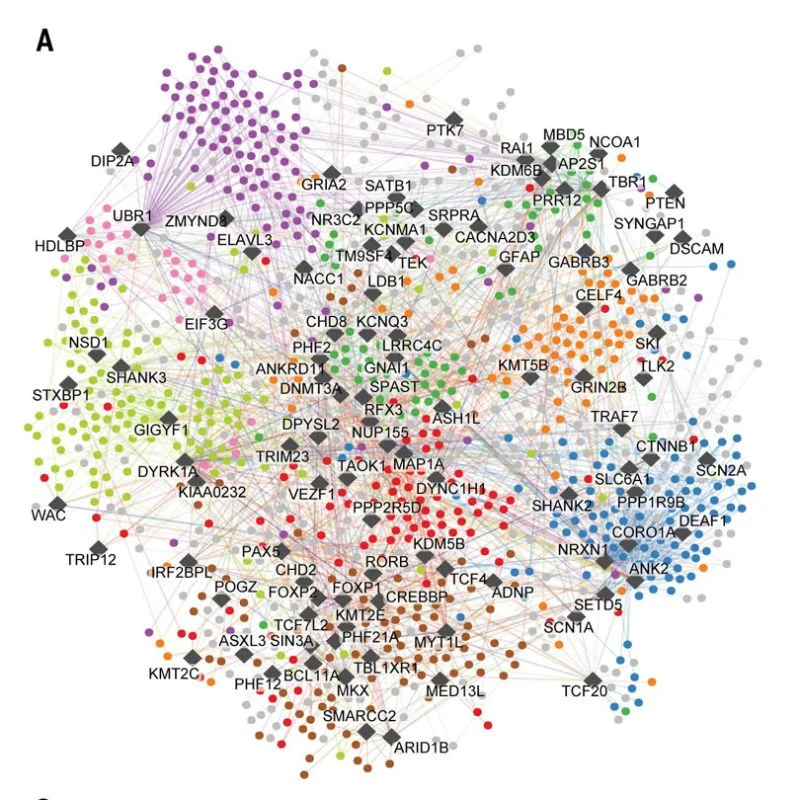
"By shifting the scientific focus from a static list of genetic mutations to the dynamic ‘wiring diagram’ of protein interactions, researchers have unlocked a blueprint for precision medicine that could finally make autism a treatable biological condition."
This landmark study, published in the journal Science, represents a fundamental shift in how we perceive neurodevelopmental disorders, moving beyond the identification of risk genes to understanding the functional machinery of the developing brain. By utilizing cutting-edge artificial intelligence and lab-grown brain organoids, a team of researchers has mapped the complex web of protein interactions—the "interactome"—providing a new level of clarity that could bridge the gap between genetic discovery and clinical intervention.
The Complexity of the Autism Puzzle
For decades, autism spectrum disorder (ASD) has remained one of the most significant challenges in modern medicine. While researchers have identified more than 250 genes associated with the condition, this "parts list" has rarely translated into effective pharmacological treatments. The primary hurdle has been the sheer diversity of the disorder; with hundreds of different genetic mutations potentially leading to the same clinical diagnosis, developing a single drug to address the root cause seemed impossible.
The traditional approach to drug discovery in neuropsychiatry often involves targeting a single gene or a specific neurotransmitter system. However, in the context of autism, this is akin to trying to fix a complex computer by looking at individual transistors without understanding the circuit board. The new research, led by Dr. Nevan Krogan, a professor at the University of California, San Francisco (UCSF) and a senior investigator at the Gladstone Institutes, suggests that we should stop looking at the "transistors" and start looking at the "wiring."
Mapping the Interactome: From Genes to Proteins
The study’s breakthrough lies in its focus on proteins—the workhorse molecules that physically build and maintain the brain. While genes provide the instructions, it is the proteins and their interactions that determine how a brain develops and functions. By systematically mapping how genetic mutations tied to autism influence these protein-protein interactions (PPIs), the UCSF team has created the largest "mutant map" ever generated for any disease area.
The researchers discovered more than 1,800 protein-protein interactions tied to autism. Perhaps most startling was the finding that 87% of these interactions had never been documented before. This suggests that a vast majority of the biological "conversations" happening within a developing autistic brain have been invisible to science until now. By observing how these proteins "rewire" themselves in the presence of mutations, scientists can identify common pathways where many different genetic risks converge. This convergence is the "holy grail" of autism research, as it suggests that a single drug targeting a shared protein complex could potentially help patients with many different genetic backgrounds.
The Role of Artificial Intelligence and Brain Organoids
The scale of this research was made possible by two of the most transformative technologies in modern biology: AlphaFold and brain organoids.
AlphaFold, the Nobel-winning AI system developed by Google DeepMind, allows scientists to predict the 3D structures of proteins with unprecedented accuracy. In this study, the researchers used AI to prioritize which mutations were most likely to disrupt the brain’s internal wiring. This computational filter allowed them to focus their laboratory efforts on the most high-impact biological targets.
Once the targets were identified, the team turned to "mini-brains"—formally known as brain organoids. These are tiny, three-dimensional clusters of brain tissue grown from human stem cells in a laboratory. Unlike animal models, which often fail to replicate the nuances of human neurodevelopment, organoids allow researchers to observe the effects of genetic mutations in a context that mimics the early stages of a human fetus’s brain development. By introducing autism-linked mutations into these organoids, the team could physically see how the protein rewiring altered the growth and connectivity of neural cells.
Precision Medicine for Profound Autism
While the map offers hope for the entire spectrum, its immediate implications are most profound for those with "profound autism." This term generally refers to individuals who require 24-hour care and may be non-verbal or have significant intellectual disabilities. This group accounts for approximately 30% of the autism population.
For families in this demographic, the quest for treatment is not about changing who a person is, but about addressing the debilitating biological symptoms—such as severe seizures, sleep disturbances, and extreme sensory processing issues—that often accompany profound autism. Alison Singer, president of the Autism Science Foundation, described the study as a "huge watershed moment." She noted that for families dealing with rare genetic variants, the promise of precision medicine has always been the hope that science would eventually move beyond behavioral therapy to address the underlying biology.
Beyond Autism: A Blueprint for Neuropsychiatry
The implications of this molecular map extend far beyond the borders of autism research. Dr. Krogan and his colleagues have noted that many of the protein pathways identified in this study overlap with those involved in other neuropsychiatric conditions, including schizophrenia, obsessive-compulsive disorder (OCD), and various tic disorders.
The discovery of shared biological "hubs" suggests a future where psychiatric diagnoses are based not just on observed behavior, but on specific molecular signatures. If a patient with schizophrenia and a patient with autism share the same disrupted protein complex, they might eventually benefit from the same targeted therapy. Furthermore, the techniques used to create this map—combining AI-driven protein modeling with organoid validation—provide a template for studying other complex diseases, including cancer and neurodegenerative disorders like Alzheimer’s.
The Path to Drug Discovery
The ultimate goal of this research is, of course, the development of new medications. Dr. Krogan revealed that his team already has three drug development programs underway based on the insights from this map. The strategy is to identify "small molecule" drugs that can either stabilize a protein complex that has been disrupted or block a pathological interaction caused by a mutation.
However, experts caution that the road from a "map" to a "medicine" is long. Dr. Andy Shih, Chief Science Officer at Autism Speaks, emphasized that while the study provides invaluable targets, the process of clinical testing for safety and effectiveness will take years. The transition from lab-grown organoids to human clinical trials involves navigating rigorous regulatory hurdles and ensuring that any intervention does not interfere with the delicate balance of a developing brain.
The Political and Funding Landscape
The publication of this study comes at a pivotal moment in the United States, as the federal government prepares to update its national strategic plan for autism research. The Interagency Autism Coordinating Committee (IACC), which operates under the Department of Health and Human Services, is currently debating a new draft plan.
There is significant debate within the advocacy community regarding the direction of federal funding. Some, like Alison Singer, have expressed concern that the new administration may shift focus away from genetics and neurobiology toward "injury models" or unproven environmental links, such as the widely debunked connection between vaccines and autism. Singer warns that redirecting federal investments away from biological evidence could slow progress just as these unprecedented therapeutic opportunities are emerging.
Conversely, other leaders in the field, including Dr. Shih, remain optimistic that the strategic plan will continue to support large-scale, data-driven approaches. They argue that the momentum generated by studies like the UCSF map is too significant to ignore and that continued investment in understanding developmental trajectories is essential for the next generation of treatments.
A New Era of Hope
The mapping of the autism interactome marks the end of the "parts list" era and the beginning of the "functional era" in neurodevelopmental science. By providing a clear wiring diagram of how the brain develops—and how that development can be diverted by genetic mutations—scientists have finally gained the upper hand in a decades-long struggle.
While the complexities of the human brain remain vast, the combination of human ingenuity, artificial intelligence, and advanced cellular biology has brought a treatable future into view. As Dr. Krogan reflected, the vision is that one day, doctors will look back at this map as the starting point for the first-ever biological treatments for autism, transforming the lives of millions of families worldwide.
