
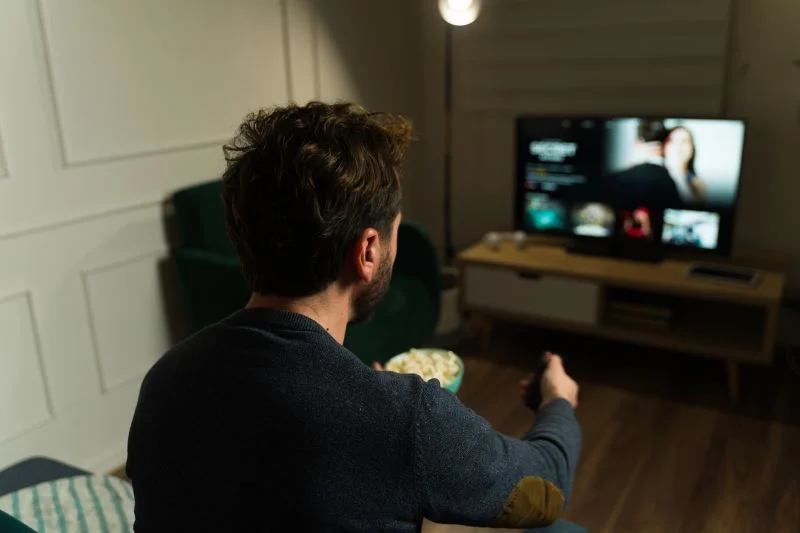
"While all sitting may appear equal to the body, the brain distinguishes between passive consumption and active engagement; frequent television viewing in midlife is linked to diminished brain volume and vascular injury that physical exercise alone may not fully offset."
Emerging neurological research suggests that the nature of our sedentary leisure time during middle age may serve as a critical predictor of cognitive longevity. A long-term study involving over 1,700 participants has identified a significant correlation between high frequencies of television viewing and reduced gray matter volume in regions of the brain responsible for language and executive function. Conversely, sedentary behavior in a professional or cognitively demanding environment does not appear to carry the same risks, suggesting that "cognitive passivity" is a distinct risk factor for structural brain aging and the eventual development of dementia.
The Long-Term Impact of Midlife Habits
For decades, public health messaging has focused predominantly on the physical toll of a sedentary lifestyle, linking prolonged sitting to obesity, cardiovascular disease, and type 2 diabetes. However, new data derived from the Atherosclerosis Risk in Communities (ARIC) study—a rigorous, multi-decade project funded by the National Institutes of Health—shifts the focus toward the neurological consequences of how we spend our stationary hours.
The study monitored participants starting in their mid-40s to early 60s, a period often described as "midlife," which is increasingly recognized as a window of high vulnerability for the "seeding" of late-life cognitive decline. By tracking self-reported television habits over twenty years and following up with high-resolution MRI scans, researchers have been able to map the long-term structural trajectory of the brain. The results were stark: those who reported watching television "very often" exhibited significantly lower brain volumes in areas that are typically the first to show atrophy in the early stages of Alzheimer’s disease.
The Anatomy of Brain Aging: Gray and White Matter
To understand the gravity of these findings, one must look at the specific markers of brain health measured by the researchers. The study focused on two primary indicators: brain volume (the amount of gray matter) and white matter hyperintensities.
Gray matter contains the majority of the brain’s neuronal cell bodies and is essential for processing information, controlling muscles, and sensory perception. A reduction in volume in the frontal and temporal lobes—areas associated with language and cognitive control—suggests a loss of functional capacity. More concerningly, the study found that heavy TV viewers had a higher prevalence of white matter hyperintensities. These are small lesions in the brain that appear as bright spots on an MRI and are indicative of "small vessel disease." These lesions reflect damage to the brain’s microvasculature, which restricts blood flow and oxygen to vital tissues. In clinical settings, white matter hyperintensities are considered a precursor to vascular dementia and a significant risk factor for stroke and global cognitive impairment.
The Passive vs. Active Sedentary Divide
Perhaps the most illuminating finding of the research is the disparity between sitting at a desk and sitting in front of a television. Traditionally, "sedentary behavior" was treated as a monolithic category. However, the ARIC data suggests that the brain reacts very differently to various forms of inactivity.
Watching television is categorized as a "passive" sedentary activity. In this state, the viewer is a recipient of information, requiring minimal intellectual output, problem-solving, or critical analysis. In contrast, sitting at work often involves "active" sedentary behavior. Whether an individual is drafting a report, managing a complex schedule, or engaging in professional dialogue, the brain is forced to utilize multiple neural networks simultaneously. This mental stimulation may provide a protective effect, a concept known as "cognitive reserve." Cognitive reserve is the brain’s ability to improvise and find alternate ways of getting a job done, allowing it to remain functional even as some structural damage occurs.
This distinction suggests that the danger is not necessarily the act of sitting itself, but rather the "cognitive vacuum" that often accompanies modern leisure entertainment. While professional environments demand engagement, the passive consumption of broadcast media allows the brain’s "muscles" to remain dormant for hours at a time.
The Limits of the Gym: Why Exercise Isn’t a Cure-All
A common misconception in wellness is the "offset" theory: the idea that sixty minutes of vigorous exercise can neutralize the effects of eight hours of sitting. While physical activity is one of the most potent tools for maintaining brain health, the ARIC study revealed a sobering reality. The association between high television viewing and reduced brain volume remained significant even after adjusting for the participants’ physical activity levels.
This implies that passive sedentary behavior is an independent risk factor. You cannot necessarily "run away" from the neurological impact of a five-hour binge-watching session. While exercise improves blood flow and releases neurotrophic factors that support neuron growth, the structural "disuse" of the brain during passive screen time may create a separate pathway for decline. Health experts now suggest a dual-track approach: increasing moderate-to-vigorous physical activity while simultaneously auditing and reducing periods of passive mental inactivity.
Causality and the "Reverse Direction" Hypothesis
As with any observational study, the question of causality remains. Critics and researchers alike must consider whether television causes brain shrinkage, or if individuals with early, undiagnosed brain changes are simply more prone to seeking out passive entertainment. This "reverse causality" suggests that as the brain begins to tire or lose its processing efficiency, cognitively demanding tasks—like reading or social engagement—become more difficult, leading the individual to gravitate toward the ease of the television.
However, the twenty-year span of the ARIC study provides a stronger argument for the "TV-as-a-cause" hypothesis. Because the habits were recorded in healthy midlife and the brain changes were measured decades later, the timeline suggests that the behavior preceded the structural decline. Regardless of which comes first, the link is undeniable: a life dominated by passive screens is a life at higher risk for accelerated brain aging.
Redefining Screen Time in the Digital Age
While the study focused on television, the modern landscape is saturated with other forms of passive consumption, such as scrolling through social media feeds or watching short-form videos on tablets. Experts suggest that the same logic applies to these devices. Mindless scrolling shares the same passive characteristics as television viewing.
The goal, however, is not to swear off technology entirely. The digital world offers numerous "active" alternatives. Engaging in an online strategy game, participating in a virtual language course, or even writing an interactive blog requires the kind of mental effort that television lacks. The key takeaway for the public is to prioritize "active engagement" over "passive absorption." If screen time is used as a tool for learning or connection, its impact on the brain is likely far more benign than if it is used as a tool for total mental disengagement.
A Holistic Framework for Brain Protection
Reducing television time is only one piece of the puzzle in the fight against dementia. To truly protect the brain, individuals must adopt a multi-faceted lifestyle strategy. Current medical consensus highlights several "pillars" of brain health:
- Vascular Management: Since the brain is highly dependent on a healthy blood supply, controlling blood pressure and cholesterol is paramount. Conditions like diabetes must be managed aggressively to prevent microvascular damage.
- Nutritional Neuroprotection: The Mediterranean diet, rich in omega-3 fatty acids, antioxidants, and anti-inflammatory compounds, has been consistently linked to slower cognitive decline.
- Social Connectivity: Isolation is a major risk factor for dementia. Meaningful social interaction stimulates the brain in ways that no solo activity can.
- Sensory Maintenance: Recent studies have shown that treating hearing loss can significantly reduce dementia risk, as it prevents the brain from withdrawing and losing the stimulation provided by environmental sound and conversation.
In conclusion, while a single evening of television is harmless, a lifelong pattern of passive consumption appears to leave a measurable mark on the brain’s architecture. By trading passive hours for active ones—whether through physical movement, professional engagement, or cognitively demanding hobbies—individuals can build a more resilient brain capable of weathering the challenges of aging. The choices made in the living room at age 50 may very well determine the clarity of the mind at age 80.
