
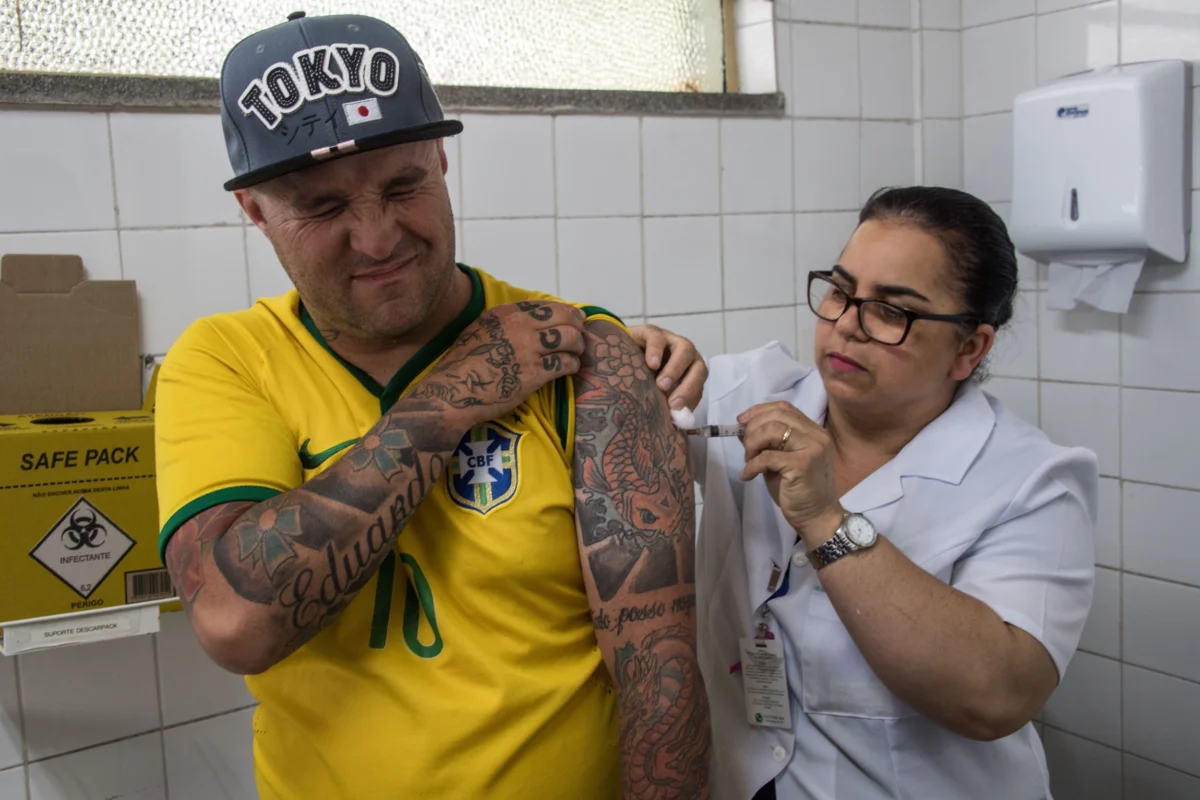
"Yellow fever is appearing in unexpected regions, prompting a critical re-evaluation of vaccination recommendations for travelers, especially those planning trips to South America."
The traditional understanding of yellow fever risk is being challenged by a notable geographic drift of the virus, with cases now being detected in areas where vaccination was not previously a routine recommendation. This evolving disease map necessitates a proactive approach for international travelers, particularly those planning excursions to South America, underscoring the importance of consulting health advisories and securing necessary vaccinations well in advance of their departure. The World Health Organization (WHO) and the Pan American Health Organization (PAHO) have both issued alerts, highlighting a concerning trend of sustained transmission and the emergence of cases beyond historical hotspots, raising the specter of potential urban spread.
The global distribution of yellow fever is a significant concern for public health officials, even if current case numbers appear modest. The World Health Organization’s latest global assessment, published in late June and encompassing data through May 26, reported 79 human infections across six countries in the Americas. This figure, alongside multiple outbreaks detected in wildlife, indicates active virus circulation within forested ecosystems. Beyond the Americas, three African nations have reported 16 confirmed human cases between January and May, with an additional 32 suspected cases under investigation in five other countries. While these numbers might seem relatively low, the crucial aspect is their presence in areas that have not historically experienced yellow fever transmission. This expansion into new territories, some of which are proximate to urban centers, has led health agencies to cautiously raise the possibility of transmission within cities, facilitated by the Aedes aegypti mosquito – the same vector responsible for dengue fever.
The Pan American Health Organization has amplified these concerns through an epidemiological alert, specifically detailing sustained yellow fever transmission in parts of South America and the appearance of cases well outside the traditionally recognized areas of the Amazon basin. Since September 2024, reports have emerged from regions where yellow fever had not been previously recorded. Notably, the alert points to São Paulo state in Brazil and the department of Tolima in Colombia as areas experiencing this unprecedented transmission, both lying outside the established zones where yellow fever vaccination had been a standard recommendation for travelers.
Understanding the differing risk assessments from the WHO and PAHO is crucial for a comprehensive grasp of the situation. In May 2025, PAHO’s regional office classified the overall public health risk in the Americas as high, citing a confluence of factors: rising case numbers, a high case fatality rate among those infected, and the detection of the virus in novel geographical locations. PAHO has indicated that the current situation maintains a similar level of concern. In contrast, the WHO’s global assessment in June categorized the risk as low globally, while acknowledging a moderate risk within the two affected regions. These distinct classifications stem from different reference points and reporting methodologies; importantly, neither assessment is a direct projection of an individual traveler’s personal risk. However, both organizations concur on a single, vital finding: the overwhelming majority of confirmed yellow fever cases in 2025 and the current year have occurred in individuals who had never received the yellow fever vaccine.
The surveillance figures for yellow fever are collected and reported on varying schedules by different agencies, and aggregating these numbers can sometimes lead to misleading totals. The regional alert from PAHO, for instance, documented 346 confirmed cases and 143 deaths across seven countries in the preceding year. Brazil reported 120 cases with 48 deaths, Colombia had 125 cases with 46 deaths, Peru recorded 49 cases and 19 deaths, Venezuela noted 32 cases and 19 deaths, Ecuador had 11 cases and 8 deaths, Bolivia reported 8 cases and 2 deaths, and Guyana registered one death. In the initial seven weeks of the current year, 34 human cases and 15 deaths were confirmed in Bolivia, Colombia, Peru, and Venezuela. The WHO’s figure of 79 infections, covering January 1 through May 26, is derived from a separate assessment with a different cutoff date. Each of these reported figures is accurate for its respective reporting period and should be understood as a snapshot in time rather than a continuously updated running total.
The case fatality rate associated with yellow fever requires careful interpretation. The regional figure of approximately 41% for the previous year, while numerically accurate for reported cases, can be easily misconstrued. It is imperative to understand that most individuals infected with the yellow fever virus experience either no symptoms or a mild illness that resolves within a few days. Only about 15% of infected individuals progress to severe disease, and it is within this severe group that the fatality rate approaches 50%. The cases that are officially counted and reported during an outbreak are disproportionately the severe ones that necessitate hospitalization. This selection bias inflates the apparent death rate far above the true risk of infection for any given individual. During epidemics, it is estimated that actual infections can run many times higher than the reported figures. More detailed information on these nuances can be found in the full regional alert document published by PAHO.
For American travelers, the practical challenge lies in the timing of yellow fever vaccination. The vaccine requires approximately ten days to confer full protection against the virus. Consequently, both the WHO and PAHO strongly advise travelers to be vaccinated at least ten days prior to their departure date. This ten-day window means that a trip booked with three weeks’ notice allows for adequate vaccination timing, whereas a trip booked with only five days’ notice presents a logistical hurdle. Furthermore, securing an appointment for the yellow fever vaccine is not as straightforward as visiting a local pharmacy or a primary care physician’s office. The vaccine is administered exclusively at designated travel clinics. In many metropolitan areas, these specialized clinics have booking schedules that extend several weeks into the future, necessitating early planning.
The U.S. Centers for Disease Control and Prevention (CDC) maintains an active Level 2 Travel Health Notice for Colombia, advising travelers to take enhanced precautions. Federal guidance also recommends yellow fever vaccination for the majority of travelers aged nine months and older who are planning to visit areas deemed at risk in South America. For most individuals, a single dose of the yellow fever vaccine provides lifelong protection, and booster doses are typically not required. However, travelers venturing into regions with ongoing outbreaks may consider a booster dose if ten or more years have passed since their last vaccination. The cost of the vaccine can vary significantly and is frequently not covered by standard health insurance plans. County health department travel clinics and university-based travel medicine programs often offer the vaccine at a lower cost compared to private practices. Additionally, some countries mandate proof of yellow fever vaccination for entry, transforming the medical necessity into a documentation requirement.
The yellow fever vaccine, being a live, attenuated virus product, is not suitable for all individuals and may require careful consideration by a physician. Federal guidance from the CDC distinguishes between contraindications, situations where the vaccine should not be administered, and precautions, where the risk of a reaction might be higher but vaccination may still be considered beneficial after a risk-benefit assessment. Contraindications include infants aged six months and younger, individuals with a known allergy to the vaccine or its components (such as eggs), organ transplant recipients, those with malignant tumors, thymus disorders associated with impaired immune function, primary immunodeficiency, individuals undergoing treatment with immunosuppressive or immunomodulatory therapies, and those with symptomatic HIV infection or a low CD4 count. Precautions, which are handled on a case-by-case basis with a clinician, include infants between six and eight months old, adults over the age of 60, and pregnant or breastfeeding individuals.
While serious adverse reactions to the yellow fever vaccine are rare, they are a potential reality. These can include anaphylaxis, inflammation of the brain or spinal cord (encephalitis or myelitis), Guillain-Barré syndrome, and internal organ failure. For travelers for whom vaccination is not advisable or is contraindicated, the focus shifts from preventive vaccination to itinerary management. Some individuals may be advised to entirely avoid high-risk areas rather than travel unprotected. In situations where countries require proof of vaccination for entry, a medical waiver may be necessary for those who cannot be vaccinated.
Regardless of vaccination status, all travelers are strongly encouraged to implement mosquito bite prevention measures. These same precautions also serve to reduce the risk of contracting other mosquito-borne illnesses such as dengue, chikungunya, and malaria, which may be prevalent in the same travel destinations. The WHO unequivocally states that "Vaccination remains the primary means for the prevention and control of yellow fever."
The trajectory of yellow fever in the coming months remains an open question. To date, no imported cases have been detected outside the two primary affected regions. However, public health agencies have flagged several factors that could contribute to future spread, including expanding mosquito habitats due to climate change, increasing urbanization, and higher volumes of international travel. These conditions collectively create an environment where the virus could potentially emerge in new areas. Therefore, travelers are advised to consult destination-specific health notices and advisories close to their departure date, rather than relying solely on information published months in advance, which may not reflect the most current risk assessment.
