
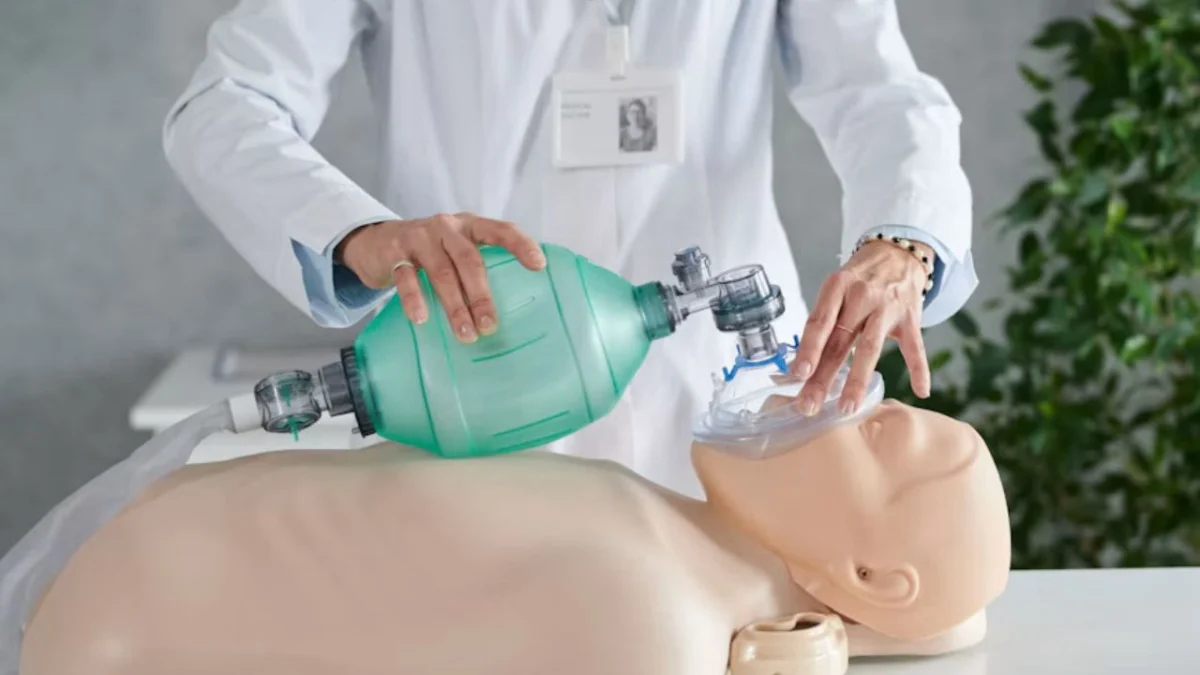
"While some states are mandating anti-choking devices in schools, the FDA’s current stance and independent research emphasize that established first aid protocols, like back blows and abdominal thrusts, remain the primary and most effective response to choking incidents."
In an evolving landscape of emergency preparedness, public schools are increasingly confronting the integration of new technologies aimed at mitigating choking emergencies. Texas has recently mandated that its public school campuses maintain a suction-based anti-choking device in student eating areas, contingent upon districts securing these through donations or dedicated funding. New York City has also enacted a similar measure, though its implementation is pending further developments. However, this push for new devices occurs against a backdrop of cautious guidance from the U.S. Food and Drug Administration (FDA). Currently, only one such device holds federal marketing authorization, and its use is strictly limited to situations where standard first aid has proven ineffective. The FDA’s updated guidance, issued in March, continues to prioritize traditional life-saving techniques such as back blows and abdominal thrusts for parents, educators, and caregivers, underscoring the critical importance of immediate and proven interventions in time-sensitive choking situations.
The urgency to act swiftly in choking incidents cannot be overstated. The FDA explicitly warns that any delay in administering critical life-saving measures can lead to severe brain injury within minutes due to oxygen deprivation. This warning is particularly relevant when considering the introduction of new devices. The time required to unpack and assemble a device could inadvertently postpone the commencement of established protocols, thereby increasing the risk to the choking individual. Therefore, for parents and guardians, the crucial question is not merely whether a school possesses an anti-choking device, but rather whether the staff responsible for supervising students during mealtimes and recreational activities are adequately trained in current choking response protocols and understand that any device is, by definition, a secondary measure.
One Device Authorized, with Specific Conditions
The regulatory landscape for anti-choking devices took a significant turn in March when the FDA granted De Novo marketing authorization to LifeVac. This authorization established a new Class II device category specifically for suction-based anti-choking devices intended for use as a second-line treatment. According to a company announcement, this authorization is applicable to choking victims aged one year and older who are experiencing a complete airway obstruction, but only after basic life support choking protocols have been exhausted. The device can be operated by lay rescuers or medical professionals who are 18 years of age or older.
The FDA’s safety communication regarding choking rescue was updated on March 4 to reflect this authorization. Concurrently, the agency closed out a warning letter that had been issued to LifeVac in September 2025. This action followed an import alert issued in October 2025, which identified multiple suction devices that lacked the necessary authorization. The FDA continues to caution the public that a device’s presence in its registration database does not signify review or approval. The agency has documented reports of devices failing to dislodge blockages due to insufficient suction, as well as instances of bruising around the face, lips, and mouth, and abrasions in the posterior pharynx. To verify whether a product has received FDA authorization, schools and families are encouraged to consult the FDA’s comprehensive medical device databases.
Examining the Evidence Behind Anti-Choking Devices
The independent evidence supporting the efficacy of these suction-based anti-choking devices is considerably less robust than their marketing might suggest. LifeVac’s founder indicated to NY1 that the FDA authorization followed two years of testing, which included force analysis and cadaver simulations. The company also highlights a number of reported successful rescues. However, Dr. Darria Long, an emergency physician who independently purchased and tested several such devices, informed NY1 that independent human data has not demonstrated that these devices are "more effective than traditional first aid." Dr. Long also pointed to cadaver studies that indicated swelling in the airway following repeated device use.
In contrast, standard first aid protocols have undergone recent refinements. The American Heart Association’s (AHA) 2025 guidelines outline a clear sequence for managing severe choking in conscious adults and children, recommending cycles of five back blows followed by five abdominal thrusts. For infants, the protocol involves alternating five back blows with five chest thrusts. Notably, no device is incorporated into this sequence.
This does not render the devices entirely without potential utility. The FDA’s authorization acknowledges a regulatory determination that the device can serve as a backup under specific controlled conditions. However, a critical unanswered question remains: does the addition of a device genuinely improve survival rates when staff are already proficient in established choking response techniques? To date, no randomized human trials have definitively settled this question.
In summary, the current support for anti-choking devices primarily stems from laboratory and cadaver investigations, alongside reported rescue instances. These sources, while informative, do not provide conclusive evidence that these devices surpass the effectiveness of back blows and abdominal thrusts. Consequently, current guidance from the FDA, the AHA, and the American Red Cross unequivocally prioritizes standard manual maneuvers as the initial course of action.
Divergent Approaches in Texas and New York
Texas has taken a decisive legislative step with House Bill 549, also known as the Westyn Bryan Mandrell Act, which became law in June 2025 and is effective from the 2025-26 academic year. This legislation mandates that each public school district provide at least one airway clearance device at every campus, with principals responsible for determining the most appropriate placement, considering student eating areas. Furthermore, a trained employee must be present whenever a significant number of students are gathered. It is important to note that compliance is contingent upon the district’s ability to obtain a device through donations or through funds specifically allocated or donated for this purpose, meaning availability may vary across different campuses.
New York City has adopted a more measured approach. The City Council passed a similar requirement in December 2025, but as of a May report by NY1, the law had not yet taken effect. The New York City requirement is tied to specific conditions: it will only become active once an anti-choking device receives authorization for use in school-aged children, and both the American Red Cross and the American Heart Association issue formal guidance on their use. Both of these influential organizations are still in the process of evaluating the safety and efficacy of these devices.
Prioritizing Student Safety Through Training
Parents can proactively engage with their child’s school by asking a few practical questions that can illuminate the institution’s preparedness for choking emergencies. Key inquiries include: Are lunchroom and recess staff trained in the current sequence of back blows and abdominal thrusts? How frequently is this training updated? Is a device readily available on-site, and if so, where is it stored? Crucially, do the staff understand that any device is intended solely as a backup measure?
For families at home, caregivers can acquire the same vital skills by enrolling in a certified first aid course. The FDA emphasizes that rescue maneuvers are designed for situations involving a complete airway obstruction or when an individual is unable to cough effectively. This is because certain actions, such as back blows, can inadvertently convert a partial blockage into a complete one. If a person is coughing forcefully, they should be encouraged to continue doing so. In any choking emergency, the immediate step is to call 911, and if the individual becomes unresponsive, CPR should be initiated.
Families considering purchasing an anti-choking device for home use should meticulously review the instructions prior to an emergency and ensure the device is stored in a location that is easily and quickly accessible to caregivers. Individuals who encounter issues with an anti-choking device are encouraged to report these incidents through the FDA’s MedWatch reporting program, which facilitates the collection of vital safety information.
The future evolution of guidelines for anti-choking devices will likely be shaped by organizations responsible for setting first aid standards. Should the American Red Cross or the American Heart Association issue formal guidance that includes suction devices, New York City’s legislative requirement could be activated, potentially influencing other jurisdictions. For the present, the most reliable form of protection for students remains the presence of well-trained adults capable of immediate and appropriate action during a choking emergency.
