
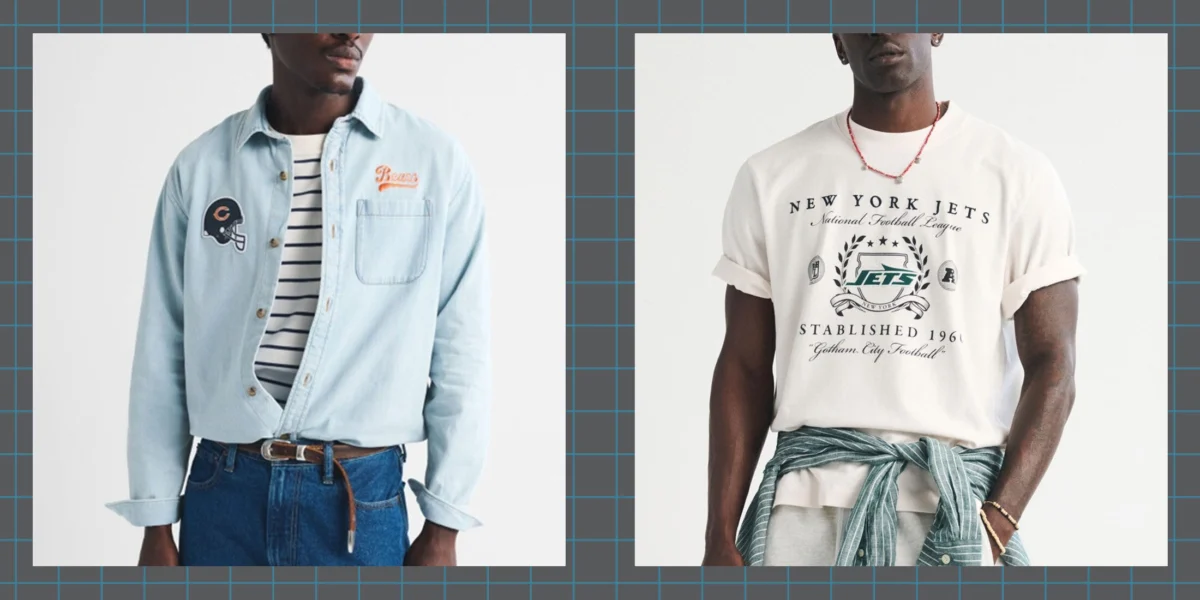
“The modern sports fan is no longer limited to the oversized polyester jersey; today’s team apparel blends 90s nostalgia with office-ready versatility, proving that fandom can be both a lifestyle and a sophisticated fashion statement.”

The intersection of professional sports and high-street fashion has undergone a radical transformation, moving away from purely functional athletic wear toward a curated "lifestyle" aesthetic that prioritizes comfort, fabric quality, and vintage-inspired design. This shift is best exemplified by the recent collaboration between legacy retailers and major sports leagues, which reimagines iconic team logos through the lens of mid-century Americana and 1990s streetwear, allowing fans to integrate their team loyalty into professional and social environments with unprecedented ease.
The Shift from Stadium to Street
For decades, the standard for showing team spirit was the replica jersey—a garment designed for the field of play but often awkward in a daily wardrobe. However, a new era of sports merchandising has arrived, characterized by a "stealth wealth" approach to fandom. Retailers like Abercrombie & Fitch have leaned into this trend, producing collections that favor heavyweight cottons, corduroy, and denim over the shiny synthetics of the past. This evolution is not merely about aesthetics; it reflects a change in how the modern consumer views their wardrobe, seeking pieces that offer "office-to-end-zone" versatility.

One of the standout pieces in this movement is the denim button-up shirt, specifically seen in recent New England Patriots designs. By utilizing a light wash that evokes the classic denim trends of the early 1990s, these garments provide a subtle nod to team identity without the "in-your-face" aggression of a traditional jersey. For the professional, such a piece represents a breakthrough in workplace-appropriate fan gear. It offers a layering option that is more refined than a hoodie, yet more spirited than a standard oxford, earning what fashion enthusiasts call "brownie points" for its ability to navigate diverse social settings.
Nostalgia as a Design Language
The current wave of NFL apparel draws heavily from specific historical eras, particularly the "Golden Era" of the 1970s and the bold graphic language of the 1990s. This is perhaps most visible in the resurgence of retro headwear. While modern performance caps focus on moisture-wicking technology, the "en vogue" trend has shifted back to corduroy and structured "dad hats." Interestingly, market data suggests that the most-searched item in the sports-fashion niche recently was the "Knicks baseball hat," signaling a broader cultural movement where the "baseball" silhouette is applied to basketball and football franchises alike. The Dallas Cowboys graphic baseball hat, for instance, utilizes these classic materials to create a piece that feels like a vintage find rather than a mass-produced souvenir.

This nostalgia is further explored through reversible garments. A Dallas Cowboys "Home & Away" reversible tee acts as a bridge between two distinct periods of franchise history. One side utilizes a navy blue with an intentional fade to capture a 1990s "grunge" aesthetic, while the alternate side features cleaner lines and typography reminiscent of the Roger Staubach era of the 1970s. This "two-for-one" utility appeals to the pragmatic consumer while satisfying the craving for historical authenticity.
Technical Fabrics and the "Heavyweight" Standard
A critical component of this fashion evolution is the focus on "premium heavyweight" materials. In the past, fan tees were often thin and prone to losing their shape after a few washes. The new standard, seen in pieces like the Seattle Seahawks Premium Heavyweight Rugby Polo and the New York Jets 2.0 Tee, utilizes a much denser cotton weave.

The rugby polo, in particular, serves as a bridge between traditional sportswear and "preppy" ivy-league style. The heavier material provides structural integrity, making it suitable for the late-season chill of the NFL playoffs. Similarly, the New York Jets heavyweight tee is designed with a relaxed fit that allows it to function as a standalone statement piece or a high-quality undershirt. This focus on "heft" in the fabric gives the clothing a premium feel that justifies its place in a modern adult wardrobe, moving it away from the "disposable" category of sports merchandise.
The Social Acceptance of Athletic Silhouettes
The boundaries of what is considered "socially acceptable" casual wear have expanded significantly for men in their 30s and 40s. A prime example is the muscle tank, once relegated strictly to the gym or the beach. Modern iterations, such as the Pittsburgh Steelers muscle tank, utilize vintage-style graphics—reminiscent of "Golden-era" professional wrestling aesthetics—to elevate the silhouette. In a contemporary context, these are increasingly viewed as acceptable casual wear, provided the styling is intentional.

Parallel to the muscle tank is the rise of the "5-inch short." The trend toward shorter inseams in men’s fashion has finally hit the sports merchandising world. The Detroit Lions unlined shorts represent a move toward "athleisure" that prioritizes freedom of movement and a flattering, higher cut. These pieces are designed for a dual-purpose life: capable of handling a rigorous gym session while looking stylish enough for a casual weekend outing. For fans of teams with volatile performance records, such as the Cowboys or the Lions, these lifestyle pieces provide a way to maintain team pride while avoiding the high-stakes emotional visibility of a full game-day uniform.
Sophisticated Branding and Typography
The final element of this fashion shift is the move toward sophisticated branding. Traditional fan gear often relies on large, centered logos that can feel repetitive. The new wave of apparel, such as the San Francisco 49ers half-zip sweatshirt, utilizes sleeker cursive scripts and complementary color palettes. By moving away from the standard block-lettering and primary-color dominance, these garments feel more like "designer" pieces.

The 49ers half-zip, for example, uses typography that feels curated rather than computer-generated. This attention to detail—using sleek cursive to show off "team spirit" with a bit of extra flair—is what separates these items from the standard fare found in stadium gift shops. It acknowledges that the fan is also a consumer of fashion, someone who wants their clothing to reflect their personal style as much as their regional loyalty.
Conclusion: The Future of the Fan Wardrobe
The evolution of NFL apparel into the realm of high-street fashion is a reflection of a broader cultural trend where the lines between work, play, and fandom are increasingly blurred. By prioritizing high-quality materials like denim, heavyweight cotton, and corduroy, and by looking back to the 70s and 90s for design inspiration, brands are creating a new category of "heritage sports-wear."

This movement suggests that the future of sports merchandising lies not in more advanced "on-field" technology, but in "off-field" versatility. As fans continue to seek ways to incorporate their passions into their everyday lives, the demand for apparel that can survive a boardroom meeting, a gym session, and a Sunday afternoon at the stadium will only continue to grow. The modern fan is no longer just a spectator; they are a curator of a lifestyle that celebrates the history of the game through the lens of contemporary fashion.
