
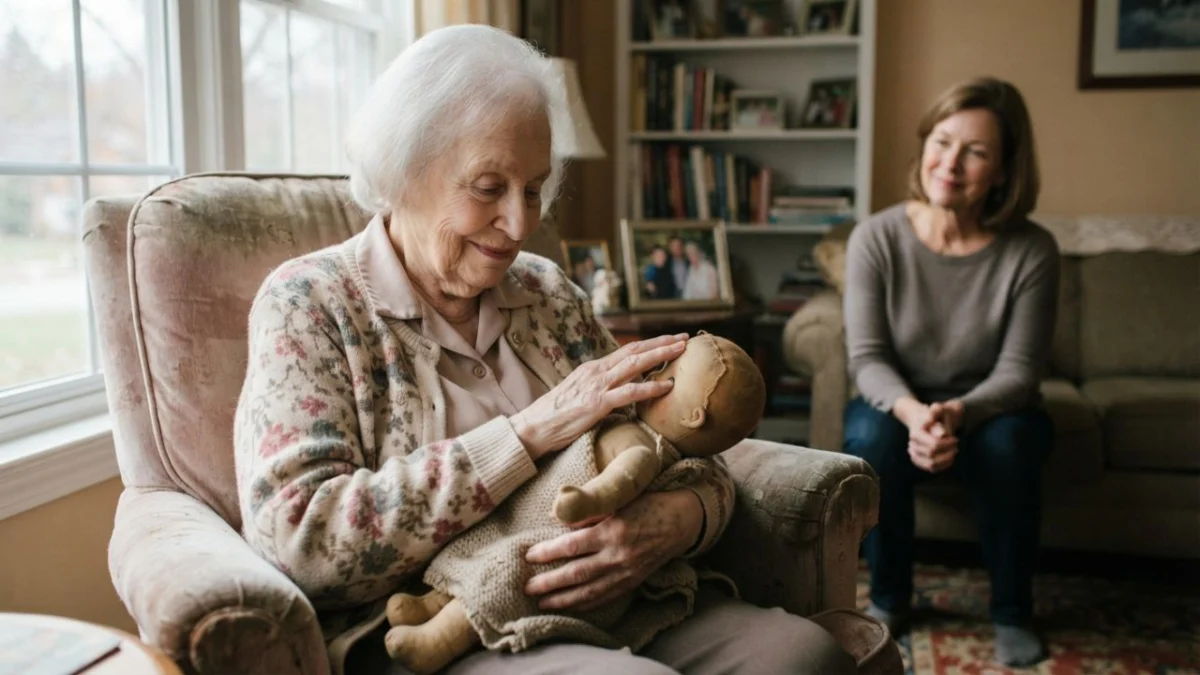
"A year of distress dissolved within days for an 88-year-old woman with Alzheimer’s, not through medication, but by reconnecting with a deeply personal childhood toy, suggesting that emotional memory and attachment can be potent non-pharmacological tools in dementia care."
This remarkable case study, published in Clinical Case Reports, offers a compelling glimpse into the profound impact that familiar objects with personal histories can have on individuals living with Alzheimer’s disease. While doll therapy is a recognized, albeit sometimes debated, approach in dementia care, this instance highlights a crucial nuance: the therapeutic power may lie not just in the doll itself, but in its unique, individual significance. The story underscores the potential of leveraging preserved emotional memories to enhance the well-being of those grappling with the complexities of neurodegenerative conditions, particularly within the comforting confines of home-based care.
A Year of Unrelenting Distress Despite Comprehensive Medical Intervention
For approximately twelve months preceding a significant shift in her condition, an 88-year-old woman diagnosed with Alzheimer’s disease had been experiencing a persistent constellation of challenging symptoms. These included marked agitation, a distressing pattern of repetitive speech, pervasive anxiety, and severely disturbed sleep. Her medical team had implemented a multi-faceted pharmacological approach, involving medications such as rivastigmine and memantine, commonly prescribed for cognitive enhancement in Alzheimer’s, alongside antidepressants like escitalopram and fluoxetine, and the antipsychotic quetiapine, aimed at managing behavioral disturbances. Despite this intensive regimen, her symptoms persisted, only partially controlled, leaving her and her caregivers in a state of ongoing distress.
The woman’s medical history further complicated her care. In addition to Alzheimer’s, diagnosed roughly two years prior, she managed type 2 diabetes, high blood pressure, and had a history of heart surgery. Neurological assessments, including a brain CT scan, revealed "generalized cortical atrophy, most pronounced in the temporal and parietal lobes," findings consistent with moderate to severe Alzheimer’s disease. This atrophy impacts areas of the brain crucial for memory, language, and spatial awareness, contributing to the cognitive and behavioral challenges she faced.
Her daily life was significantly impacted. She often experienced misrecognition of close relatives, a common symptom in advanced dementia, and her mobility was severely limited, requiring assistance to walk even short distances. She spent the majority of her time in bed or a chair, a reflection of her physical and psychological state. The repetitive vocalizations, frequently involving religious phrases, along with persistent anxiety, nocturnal sleep disturbances often accompanied by visual hallucinations, and general restlessness, painted a picture of a woman enduring considerable suffering.
The Unforeseen Therapeutic Impact of a Cherished Childhood Doll
The turning point in this woman’s experience came unexpectedly during a household rearrangement. Amidst the familiar objects of her home, she rediscovered a doll that had belonged to her granddaughter during her childhood. The immediate and profound impact of this discovery was striking. The woman "quickly developed a strong emotional attachment" to the doll, engaging in what the researchers described as "caregiving behaviors," such as cradling, rocking, singing to it, and making feeding gestures.
Within a mere few days of reconnecting with this specific doll, a remarkable transformation began to unfold. Her agitation and repetitive speech "markedly decreased," according to the authors of the case report. Her sleep patterns showed significant improvement, becoming more continuous and restful. Concurrently, her daytime activity levels increased, and her emotional expressiveness became richer and more varied. She exhibited greater cooperation during mealtimes, displayed modest gains in her ability to move, and even began to communicate basic needs, such as indicating a need to urinate. The frequency and intensity of her visual hallucinations and incoherent speech also appeared to lessen.
Crucially, no adjustments were made to her medication regimen during this period of observed improvement. This detail is significant, as it strengthens the hypothesis that the doll, rather than a pharmacological intervention, was the primary driver of these positive changes. While it does not offer definitive proof, it significantly elevates the doll’s role in her recovery from distress.
Perhaps the most telling aspect of this case was the woman’s pronounced selectivity regarding the doll. She "refused interaction with other dolls," a behavior that led the researchers to conclude that "the personal and emotional significance of this specific doll was central to the observed improvement." This suggests that the doll was not merely a generic comfort object, but a vessel carrying deep personal meaning and cherished memories, capable of tapping into a part of her emotional landscape that other, more generic, dolls could not reach.
Understanding Doll Therapy: A Look at Broader Research
Doll therapy, in its more generalized form, involves providing individuals with dementia a lifelike doll to hold and care for. It has been a recognized practice in various care settings, particularly nursing homes, for many years. Research into its efficacy has yielded mixed but generally positive results, particularly concerning behavioral and psychological symptoms.
A comprehensive meta-analysis, published online in 2023 in Geriatric Nursing, synthesized data from ten studies involving 573 older nursing home residents with dementia. This analysis indicated that doll therapy "significantly improved all behaviors" examined, including reductions in agitation, apathy, irritability, and wandering. Furthermore, it was associated with increased pleasure and decreased anxiety and depression among residents. However, the meta-analysis noted no significant improvements in cognitive functions such as thinking or memory.
Despite its reported benefits, doll therapy has also been a subject of criticism. A 2024 scoping review conducted by researchers at Queen’s University Belfast, published in Nursing Reports, delved into ethical considerations and thematic findings across twelve studies spanning from 2013 to 2023. Earlier debates had centered on concerns about the "infantilization of individuals with dementia," questioning the appropriateness of treating adults in a childlike manner. However, the more recent research reviewed by the Belfast team indicated fewer ethical concerns. The review identified three primary themes emerging from recent studies: a reduction in behavioral and psychological symptoms of dementia (BPSD), enhanced communication, and a decrease in distress experienced by caregivers.
The Significance of Personal History in Therapeutic Objects
The case of the 88-year-old woman introduces a critical distinction into the discourse on doll therapy. Most existing research has focused on the use of standard, therapeutic dolls. This particular instance, however, raises a compelling question: can an object imbued with an individual’s personal history and emotional connections elicit a deeper and more profound therapeutic response than a generic doll? The authors of the report propose that "activating preserved emotional memory and attachment systems can provide a powerful, nonpharmacological strategy" to improve overall well-being. This suggests that the doll, by virtue of its personal significance, acted as a powerful mnemonic, unlocking dormant emotional pathways and facilitating a sense of comfort and purpose.
Furthermore, the setting in which this intervention occurred is noteworthy. While much of the existing research originates from institutional settings like nursing homes, this woman was cared for in her own home. The authors highlight the potential of meaningful personal objects, "especially within home care settings," where families often have a wealth of such items readily available. This resonates with broader recommendations for dementia care. The National Institute on Aging, for instance, advises keeping well-loved objects and photographs accessible in the home as a strategy to help alleviate agitation in individuals with Alzheimer’s.
Acknowledging the Limitations and Future Directions
The researchers themselves are candid about the limitations of their findings. They emphasize that, as a "single case report, the findings lack generalizability and should be interpreted with caution." The study did not employ standardized tools, such as the Neuropsychiatric Inventory (NPI) or the Cohen-Mansfield Agitation Inventory (CMAI), to objectively measure symptom severity and improvement. The observed benefits were primarily based on caregiver observations, and the follow-up period was relatively short.
The authors also wisely caution that "variability across patients with different disease etiologies, ages, and comorbidities must be acknowledged." This means that a comfort object that proves profoundly beneficial for one individual may have little to no impact on another, due to the unique trajectory of their disease, their personal history, and their co-existing health conditions.
The implications for families grappling with Alzheimer’s are substantial. The Alzheimer’s Association’s 2026 Facts and Figures report estimates that a staggering 7.4 million Americans aged 65 and older are living with Alzheimer’s dementia. The emotional and practical toll on families is immense, making the search for effective, non-pharmacological interventions a critical endeavor.
For families considering the use of comfort objects like dolls, the consensus among experts is to engage in open communication with the individual’s care team. Close observation of the person’s response to the object is paramount, and any decisions regarding medication changes should always be made in consultation with a healthcare professional.
Key Takeaways from the Case Report:
- A Profoundly Positive Response: An 88-year-old woman with Alzheimer’s experienced a significant reduction in agitation, improved sleep, and less repetitive speech after rediscovering and engaging with her granddaughter’s childhood doll.
- The Power of Personal Significance: Her refusal to interact with other dolls strongly suggests that the doll’s unique personal and emotional meaning was the crucial factor in her positive response.
- Medication Stability: Her medications remained unchanged throughout the period of improvement, bolstering the case for the doll’s therapeutic impact.
- Doll Therapy’s Broader Efficacy: Existing research, including a meta-analysis of ten studies, indicates that generalized doll therapy can effectively reduce behavioral symptoms of dementia in nursing home residents, though it does not improve cognitive function.
- Evolving Ethical Considerations: While past concerns about infantilization existed, more recent research suggests a decrease in ethical objections related to doll therapy.
- Limitations of the Report: As a single case study, the findings are not generalizable, lacked standardized objective measurements, and had a limited follow-up period.
