
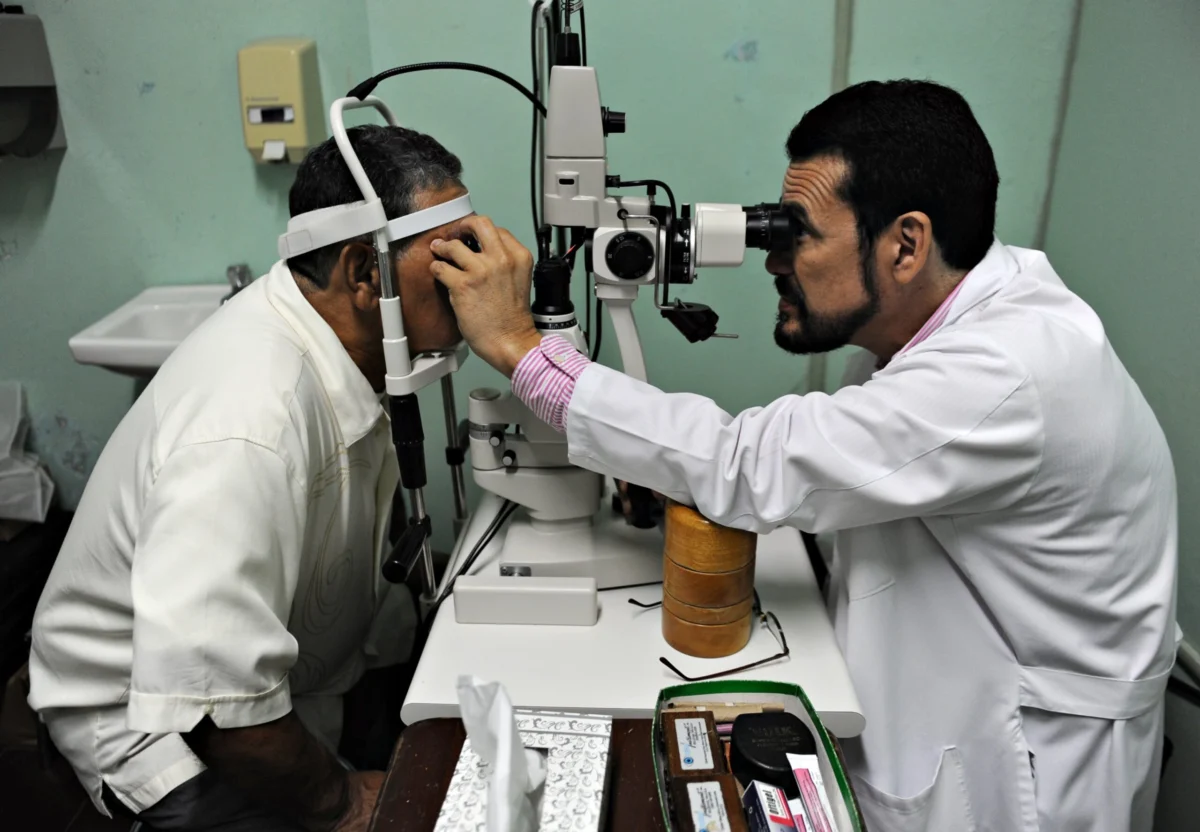
"A seven-year observational study presented at the American Academy of Ophthalmology suggests that GLP-1 receptor agonists may be associated with a significantly lower incidence of diabetic macular edema compared to metformin, a difference that emerged gradually over time."
A recent presentation at the 2026 American Academy of Ophthalmology annual meeting in New Orleans has introduced intriguing findings regarding the potential ocular benefits of GLP-1 receptor agonists in individuals with diabetic eye disease. The observational analysis, which compared patients with diabetic retinopathy who were taking GLP-1 drugs to those on metformin, indicated a notable difference in the development of diabetic macular edema (DME) over a seven-year period. While the disparity was not apparent in the first year of treatment, it emerged and widened progressively, reaching its largest point at the seven-year mark. This suggests a possible long-term protective effect that warrants further investigation, though experts caution that these findings, presented as abstracts and not yet fully peer-reviewed, do not establish causality and should not alter current treatment decisions.
The research focused on adults aged 40 and older diagnosed with diabetic retinopathy, a common complication of diabetes characterized by damage to the blood vessels in the retina. The study meticulously matched 3,920 patients in the GLP-1 group with an equal number of patients taking metformin, ensuring comparability based on age, demographics, other health conditions, the severity of retinopathy, and previous eye treatments. This rigorous matching process aimed to minimize confounding factors, allowing for a more robust comparison of the two treatment regimens’ impact on eye health.
The results of this observational analysis paint a compelling picture of a diverging trend in the incidence of diabetic macular edema. At the one-year mark, the rates of DME were remarkably similar, with 12.2% of GLP-1 users and 12.7% of metformin users developing the condition. However, this near-identical starting point began to diverge over time. By the three-year mark, the figures shifted to 24.3% for GLP-1 users and 27.9% for metformin users. This trend continued, with five-year data showing 29.8% of GLP-1 users and 35.9% of metformin users affected. The most significant difference was observed at the seven-year mark, where only 30.9% of GLP-1 users developed DME, compared to a substantially higher 39.5% of metformin users, representing a gap of 8.6 percentage points.
The study authors characterized this observed difference as a "protective association," inferring a "favorable ocular safety profile" for GLP-1 drugs. While these terms suggest a potential benefit, it is crucial to acknowledge the limitations inherent in observational studies. The lack of reported hazard ratios, the specific database utilized, and the methodology for handling missing follow-up data are critical details that will be scrutinized by the broader scientific community during the peer-review process. These methodological nuances are essential for a thorough evaluation of the study’s robustness and the generalizability of its findings.
Diabetic macular edema is far from a minor complication; it is a serious condition that can lead to significant vision loss. DME occurs when blood vessels in the retina leak fluid and blood, causing swelling in the macula, the central part of the retina responsible for sharp, central vision crucial for activities like reading and recognizing faces. The Centers for Disease Control and Prevention (CDC) identifies DME as "the most common cause of blindness in people with DR," affecting approximately half of all individuals diagnosed with diabetic retinopathy. Therefore, any potential intervention that could mitigate the risk of DME holds considerable importance for the diabetic population.
The gradual emergence of the protective effect observed in the study aligns with a plausible, albeit currently unproven, hypothesis. GLP-1 drugs are known to exert a range of beneficial effects, including lowering blood sugar levels, promoting weight loss, and reducing blood pressure. It is conceivable that these systemic benefits, when accumulated over extended periods, may translate into a protective effect on the delicate vasculature of the retina, thereby reducing the incidence of DME. However, the presented research does not definitively establish this causal link.
It is also imperative to consider existing concerns and known short-term risks associated with GLP-1 drugs concerning vision. The SUSTAIN-6 trial, published in 2016, reported a higher incidence of diabetic retinopathy complications in semaglutide users (3.0%) compared to placebo users (1.8%). Some researchers have attributed this finding to the rapid reduction in blood sugar levels that these drugs can induce. Furthermore, in June 2025, the European Medicines Agency’s safety committee recommended listing non-arteritic anterior ischemic optic neuropathy (NAION), a condition that can cause vision loss, as a very rare side effect of semaglutide, affecting up to 1 in 10,000 individuals. The current findings of a long-term association with reduced macular edema do not negate these previously identified signals and underscore the complexity of GLP-1 drugs’ impact on ocular health.
The observational nature of this study is a significant limitation that prevents definitive conclusions about causality. In such studies, patients are not randomly assigned to their medications. This means that individuals prescribed GLP-1 drugs might differ systematically from those on metformin in ways that could influence their eye health outcomes. Factors such as differences in insurance coverage, socioeconomic status, access to regular eye care, or the overall diligence in managing their diabetes could play a role. While the researchers employed matching techniques to mitigate some of these confounding variables, it is impossible to account for all unmeasured factors that might have influenced the results.
In essence, the evidence presented is a preliminary finding from an observational database comparison involving 7,840 adults. It was shared as a poster at a conference and has not yet undergone the rigorous scrutiny of peer review. The study observed lower rates of macular edema in GLP-1 users after the first year but did not prove that these drugs cause this protective effect. Consequently, these findings do not warrant a change in current clinical practice guidelines for managing diabetes and its ocular complications.
A companion poster presented at the same meeting explored a related aspect of GLP-1 drug efficacy. This analysis, which examined 16,753 matched pairs of adults with type 2 diabetes and glaucoma, suggested that GLP-1 users required fewer glaucoma surgeries over a three-year period. Specifically, the incidence of tube shunt procedures was lower among GLP-1 users (0.97%) compared to non-users (2.12%). However, as with the DME findings, AJMC noted that these results also require independent validation.
For the millions of Americans managing type 2 diabetes, particularly those with existing diabetic retinopathy, these findings are of significant personal interest. Individuals with long-standing or poorly controlled diabetes, and those already experiencing moderate to severe retinopathy, face the highest risk of vision-threatening complications. Therefore, understanding the potential impact of their diabetes medications on eye health is paramount.
It is crucial to emphasize that no patient should alter their prescribed diabetes medication regimen based solely on a conference poster. The decision to switch from metformin to a GLP-1 drug, or to use them in combination, is a complex one that must be individualized. It should be based on a comprehensive assessment of the patient’s overall health profile, including their cardiovascular and kidney health, weight management goals, tolerance for side effects, and financial considerations such as insurance coverage and drug costs. Patients who are curious about these findings are strongly encouraged to discuss them with their primary care physician or endocrinologist to understand how eye health fits into their broader treatment plan.
The cornerstone of preserving vision in individuals with diabetes remains regular, comprehensive eye examinations. The CDC recommends that all individuals with diabetes undergo a dilated eye exam at least once a year. For those newly diagnosed with type 2 diabetes, an initial eye exam is recommended immediately. Early stages of diabetic retinopathy often present without any noticeable symptoms. However, as the condition progresses, warning signs may include blurred vision, the appearance of spots or dark shapes (floaters), difficulty distinguishing colors, blind spots or dark areas in the visual field, and eventually, vision loss.
Sudden changes in vision, particularly sudden vision loss or the abrupt onset of new visual disturbances like floaters or blind spots, especially after initiating a new medication, necessitate prompt evaluation by an ophthalmologist or optometrist. Effective treatments for macular edema exist, including injectable medications and laser therapy. Early detection and intervention are critical for maximizing the chances of preserving vision.
The cost of GLP-1 medications can be a significant barrier for many patients, and insurance coverage for their use in diabetes management can vary widely. Patients who encounter treatment denials or high out-of-pocket expenses should consult their healthcare provider about options such as prior authorization, the appeals process, or manufacturer assistance programs. Metformin, on the other hand, remains a highly effective and affordable generic medication.
The next critical step for these findings will be their full publication in a peer-reviewed scientific journal. This process will allow for a detailed examination of the data source, hazard ratios, and the study’s inherent limitations. Ultimately, randomized controlled trials will be necessary to definitively establish whether GLP-1 drugs truly offer a protective benefit for the eyes and to clarify the mechanisms behind any observed effects.
Key Questions Answered:
What did the new research find?
Among adults with diabetic retinopathy, those taking GLP-1 receptor agonists developed diabetic macular edema less frequently than those taking metformin, with the difference becoming more pronounced over a seven-year period. At seven years, 30.9% of GLP-1 users and 39.5% of metformin users had developed DME.
Does this prove GLP-1 drugs protect the eyes?
No. This study was observational, meaning it identified an association but cannot prove cause and effect. The findings have been presented as a poster and have not yet been published in a peer-reviewed journal.
Why did the difference appear only over time?
The rates of DME were nearly identical at one year, and the gap widened progressively at three, five, and seven years. Researchers have not definitively explained this, but potential long-term effects of GLP-1 drugs on blood sugar, weight, and blood pressure are a plausible factor.
What is diabetic macular edema?
Diabetic macular edema (DME) is swelling in the macula, the central part of the retina, caused by leaking blood vessels. The CDC states it is the most common cause of blindness in individuals with diabetic retinopathy.
Should I switch from metformin to a GLP-1 drug?
Do not change your diabetes medication based on this poster. Discuss any treatment changes with your healthcare provider, considering your overall health, treatment goals, and costs.
How often should people with diabetes get an eye exam?
The CDC recommends a dilated eye exam at least once a year for people with diabetes, and an initial exam immediately after a type 2 diabetes diagnosis.
What eye symptoms need urgent attention?
Sudden vision loss, a sudden change in vision, or the appearance of new spots, dark shapes, or blind spots should be evaluated by an eye doctor promptly.
